

Product
Article
NameDescriptionContent
How can small beauty brands scale with just one mascara product
Source:
|
作者:selina
|
Release time:2026-02-10
|
212 Second visit:
|
🔊 Click to read aloud
❚❚
▶
|
Share:
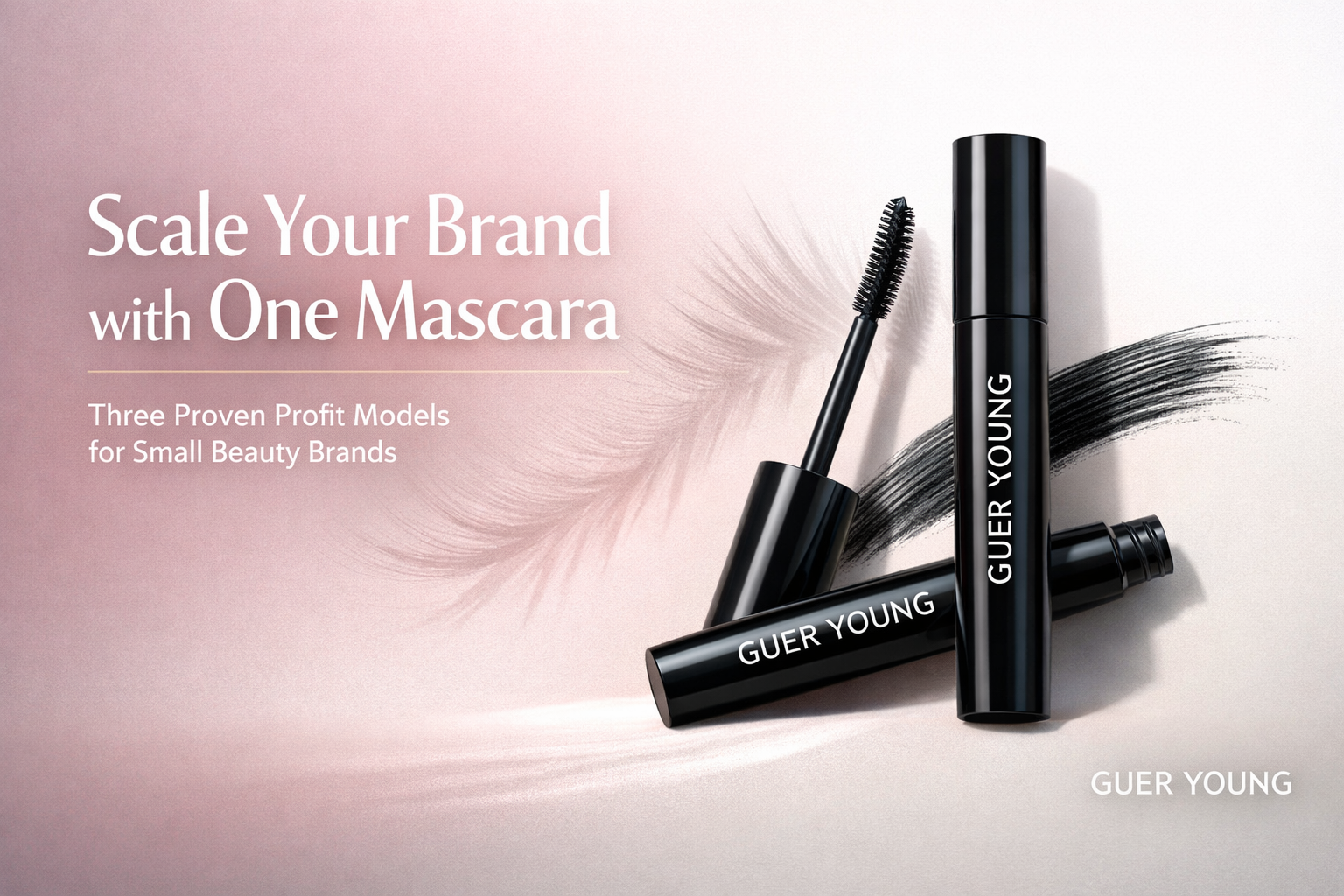
This article explains how small beauty brands can achieve scalable growth with just one mascara product. By building three repeatable profit models—hero product focus, bundle strategy, and subscription model—brands can increase margins, improve cash flow, and grow sustainably in the US and UK markets.
Part 1|Opening: Market Reality & Shared Pain Points
Across the US and UK beauty markets, small and emerging brands are facing the same contradiction:
the beauty industry keeps growing, but it’s becoming harder for small brands to grow inside it.
Most small beauty brands don’t have dozens of SKUs.
Many operate with only one hero product — often a single mascara — while competing against well-funded brands with massive ad budgets and full product lines.
Common challenges include:
Too few SKUs to scale
Low margins after ads, platforms, and logistics
Unstable marketing performance
Inventory pressure and slow cash flow
Mascara, in particular, is often seen as too basic or too competitive.
But in reality, mascara is one of the most underutilized growth engines for small brands.
So the real question is:
How can one mascara become more than a product — and turn into a scalable business system?
Is there a simple, repeatable profit structure that small brands can actually execute?
This article breaks down how small beauty brands scale with one mascara product, using three proven mascara profit models for small cosmetic brands that work specifically for emerging brands.
Part 2|Three Scalable Profit Models Built on One Mascara
Model 1: Hero Product Focus Model
The most successful single-product brands don’t try to serve everyone.
They win by owning one clear use case for one clear audience.
Many small brands use Private Label Mascara solutions to create sharp positioning such as:
Sensitive-eye mascara
Waterproof / sports-use mascara
Easy-removal, minimalist ingredient mascara
Instead of competing head-on with big brands, they leverage Mascara OEM ODM capabilities to differentiate through:
Brush structure
Formula texture
Application experience
This approach forms the foundation of a strong private label mascara business model, where the product itself communicates value without heavy explanation.
Model 2: Bundle & AOV Expansion Model
The second profit driver isn’t about selling more customers — it’s about selling smarter to existing ones.
Successful brands increase revenue by designing:
Daily mascara + waterproof mascara
Full-size + travel-size sets
Mascara + remover combinations
This mascara bundle strategy to increase AOV allows brands to:
Improve margins without discounting
Reduce the impact of rising ad costs
Increase perceived value
With flexible Mascara OEM ODM support, small brands can test bundle structures without carrying excessive inventory risk.
Model 3: Subscription & Repeat Purchase Model
Mascara is a natural subscription product — yet most brands ignore this.
Average replacement cycles range from 2–3 months, making mascara ideal for:
Auto-replenishment plans
Member-only editions
Periodic limited packaging drops
Brands that adopt a subscription model for mascara brands often see:
2–3× higher lifetime value
More predictable cash flow
Lower dependency on constant paid acquisition
This is one of the most sustainable single product beauty brand growth strategies available today.
Part 3|15 Ways to Build Differentiation with One Mascara
A. Product Strategy (5 Methods)
Differentiate by brush design, not shade count
Build for a specific eye type or lifestyle
Keep ingredient logic simple and explainable
Localize packaging language for US/UK consumers
Evaluate OEM vs ODM mascara profit margin early
B. Marketing Strategy (5 Methods)
Focus on usage lifecycle, not instant results
Prioritize educational content over promotion
Sell scenarios, not features
Control ad testing pace
Maintain consistent brand visuals
C. Channel & Data Strategy (5 Methods)
Own your customer data via DTC
Combine DTC and wholesale strategically
Limit SKU expansion intentionally
Use repurchase data to guide growth
Partner with a reliable Cosmetic B2B Supplier
Part 4|Conclusion & Call to Action
A mascara may look like a simple product —
but behind it, three scalable growth engines can be built:
Product value maximization
Order value expansion
Long-term repeat revenue
This is the real answer to how small beauty brands scale with one mascara product.
As GUER YOUNG, an independent finished-cosmetics supplier and B2B seller focused on the US and UK markets, we work closely with brands through Mascara OEM ODM, Private Label Mascara, and Cosmetic B2B Supplier partnerships to support these exact models.
Which of these models have you already tried?
And which one feels hardest to execute for your brand?
Want to discuss further? Get in touch with us
Keywords
#MascaraOEMODM#PrivateLabelMascara#CosmeticB2BSupplier#MascaraManufacturer#CosmeticsOEM#CosmeticsODM#MascaraSupplier#BeautyB2B#SmallBeautyBrands#EmergingBeautyBrands#USBeautyMarket#UKBeautyMarket#MascaraProduct#FinishedCosmetics#BrandScaling#LowSKUBrand#HeroProductStrategy#BeautyProfitModel#InventoryPressure#HighCAC#RepeatPurchaseModel#BeautySubscription#BundleStrategy#IncreaseAOV#BrandDifferentiation#IndieBeautyBrand#DTCBeauty#B2BSeller#CosmeticsFactory#CustomMascara#WhiteLabelCosmetics#PrivateLabelBeauty#SupplyChainPartner#BrandGrowth#ProfitOptimization#BeautyStartup#CrossBorderBeauty#GUERYOUNG
Other language editions of this article
• French version: https://www.gueryoungcosmetics.com/article/fr-news-how-small-beauty-brands-scale-with-one-mascara
• Spanish version: https://www.gueryoungcosmetics.com/article/es-news-how-small-beauty-brands-scale-with-one-mascara


+86 13825629636
winnie.zhong@gueryoung.com

We have 10 years of experience, focusing on the development and sales of high quality eyelash growth serum, mascara, eyebrow gel, eyebrow color and other products. We also offer custom services, from tube
design to cosmetic fillings and packaging


+86 13825629606

Room 1, C3 Factory Building, No.8803 Zhuhai Avenue, Lianwan Industrial Zone, Pingsha Town, Gaolan Port Economic Zone, Zhuhai, Guangdong,China
PRODUCTS
QUICK LINKS

andy.li@gueryoung.com
lynn.zhou@gueryoung.com
+86 13825629985
+86 13825629619
niki.xu@gueryoung.com