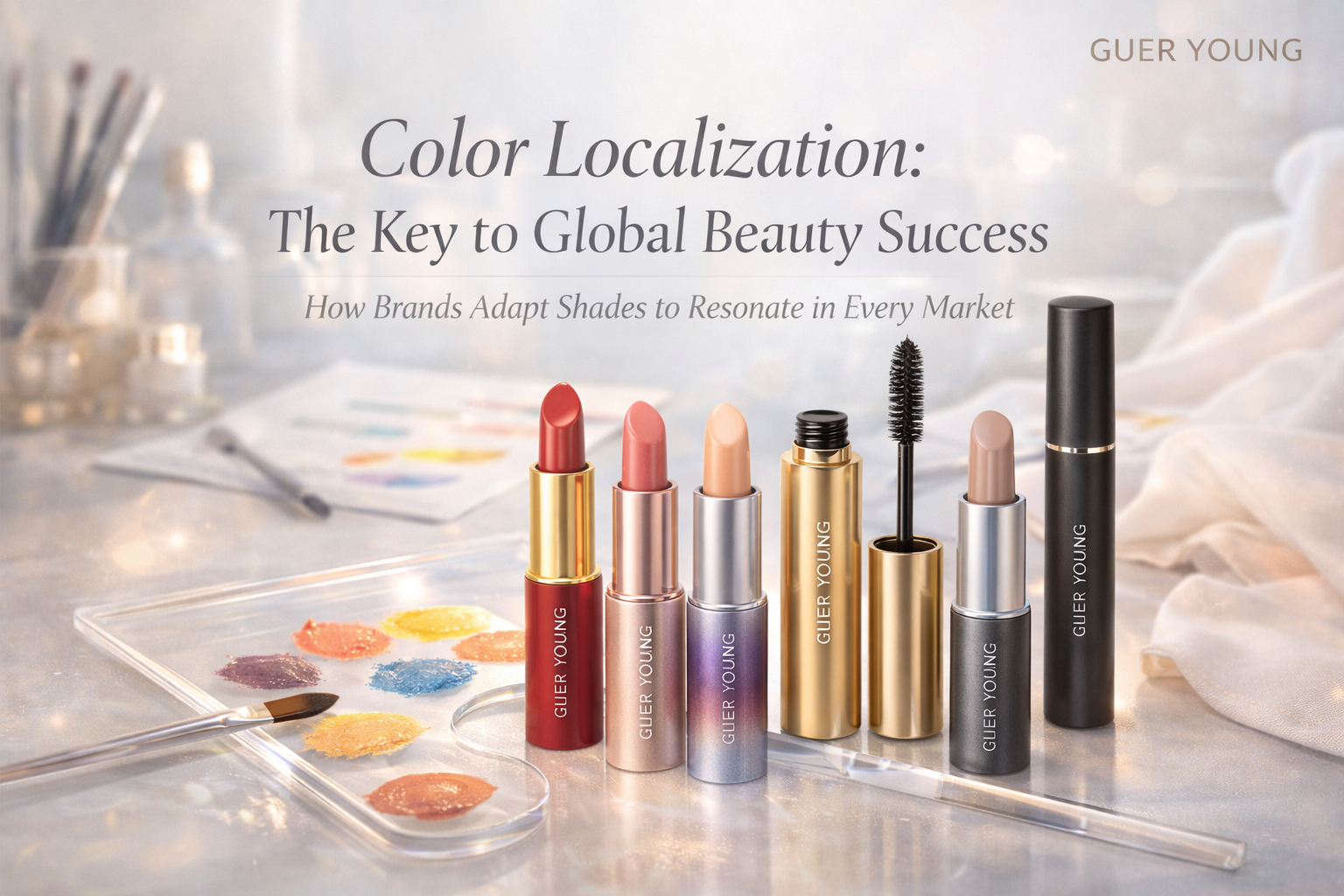
Why do so many cosmetic products struggle when entering new markets?
We’ve seen it happen countless times—one product, two countries, completely different outcomes.
A lip color that’s a best-seller in Southeast Asia completely flops in the US.
An eyeshadow palette embraced in the Middle East is overlooked in Japan.
Often, it’s not the formula, packaging, or even pricing that’s the issue—it’s color.
More specifically: a lack of color localization. When beauty brands fail to align their color offerings with local skin tones, aesthetic preferences, and daily usage habits, they risk becoming irrelevant—even if everything else is perfect.
What is Color Localization in Cosmetics—and Why It’s More Than Just Switching Shades?
Color localization is not just “changing a few shades.” It’s a strategic product development process grounded in understanding:
The structure and undertones of skin across regions
Cultural beauty standards and makeup aesthetics
The role of makeup in daily routines (minimalist vs. glam)
In other words, color is not just a visual choice—it’s a market strategy.
When brands treat it as an afterthought, they miss the chance to connect meaningfully with consumers.
How Can Color Become a Brand’s Breakthrough Lever?
From the lens of brand strategists and product managers, localized color strategy plays three key roles:
Reduces cognitive load for consumers by immediately resonating with their expectations
Boosts first-glance conversion—whether on an e-commerce site or retail shelf
Enhances shareability on social media, where aesthetics drive engagement
Color localization helps new brands build immediate recognition in unfamiliar markets—and can be the fastest path to establishing trust and curiosity.
4 Common Mistakes Brands Make in Color Localization
Copy-pasting domestic best-sellers without understanding the new market
Blindly following global color trends, ignoring local context
Lack of real market data, skipping A/B tests and consumer interviews
Rigid supply chains that can’t quickly respond to what’s working or not
The result? High trial-and-error costs, wasted inventory, and missed first impressions.
From a B2B Lens: How Can Brands Implement Color Localization Practically?
At GUER YOUNG, we work closely with private-label and OEM cosmetic brands to help color localization become a reality—not just a concept.
Here’s how it works:
Small-batch color testing in selected markets
Rapid prototyping and sampling to shorten lead times
Flexible shade adjustments aligned with real market feedback
Color portfolio planning based on regional consumer data
In the world of OEM cosmetic manufacturing, a successful market entry depends on agile product development. And color must be at the center of that plan.
How GUER YOUNG Helps Brands Execute Color Localization
As a B2B supplier of ready-to-sell cosmetics, GUER YOUNG offers more than just products—we provide strategic support to help brands succeed in unfamiliar markets.
Our capabilities include:
Custom color matching + shade library access
Market-specific product development advice
Fast-turnaround sampling for rapid market validation
End-to-end OEM cosmetic solutions for global brands
We help brands lower trial-and-error costs, reduce go-to-market time, and bring truly localized products to life.
Conclusion: Color Is Not a Visual Choice—It’s a Market Decision
In today’s global beauty landscape, success doesn’t come from simply being trendy—it comes from being relevant.
And that relevance begins with the right color.
For brand strategists and product managers, this is a call to treat color localization as a core strategic pillar. It’s how you break into new markets, earn attention, and build a product line that speaks your consumers’ visual language.
At GUER YOUNG, we don’t just sell makeup—we co-create globally relevant color experiences with our partners.
#cosmeticproductdevelopment #cosmeticbrandgoesglobal #OEMcosmetics #colorlocalizationstrategy #makeupcolorpreferencesacrossmarkets #cosmeticbrandlocalization #privatelabelmakeupproductplanning #howcosmeticbrandsenternewmarkets #formulationandcolorcustomization #B2Bcosmeticsupplier #makeupbrandgoesoverseas #makeupmarketentrychallenges #OEMcosmeticonestopsolution #beautyproductstrategy #cosmeticshadematching #fastcosmeticprototyping #globalskintoneanalysis #aestheticpreferencebyregion #flexiblesupplychainOEM #makeuptestingkits #consumerdrivenbeauty #beautybrandexpansionstrategy #GUERYOUNGcolorcustomization #GUERYOUNGOEMsolutions #GUERYOUNGmakeupdevelopment #socialmediareadycosmetics #firstimpressionconversionmakeup #microbatchbeautyproduction #productmanagersinbeauty #beautybrandstrategisttools #newmarketcosmeticlaunch #makeupsuccessfactors #crossculturalbeautyinsights #makeupcolorpalettematching #marketadaptedmakeupproducts #trendtofittransition #beautyinclusivityacrossmarkets #regionalbeautystandards #makeupuserbehavior #makeupconsumerinsights #beautybrandmistakesoverseas
Other language editions of this article
• Arabic version: https://www.gueryoungcosmetics.com/article/ar-news-why-color-localization-is-the-missing-link-in-global-beauty-brand-success
• French version: https://www.gueryoungcosmetics.com/article/fr-news-why-color-localization-is-the-missing-link-in-global-beauty-brand-success






