
How to Choose Mascara Colors for a Spring Collection
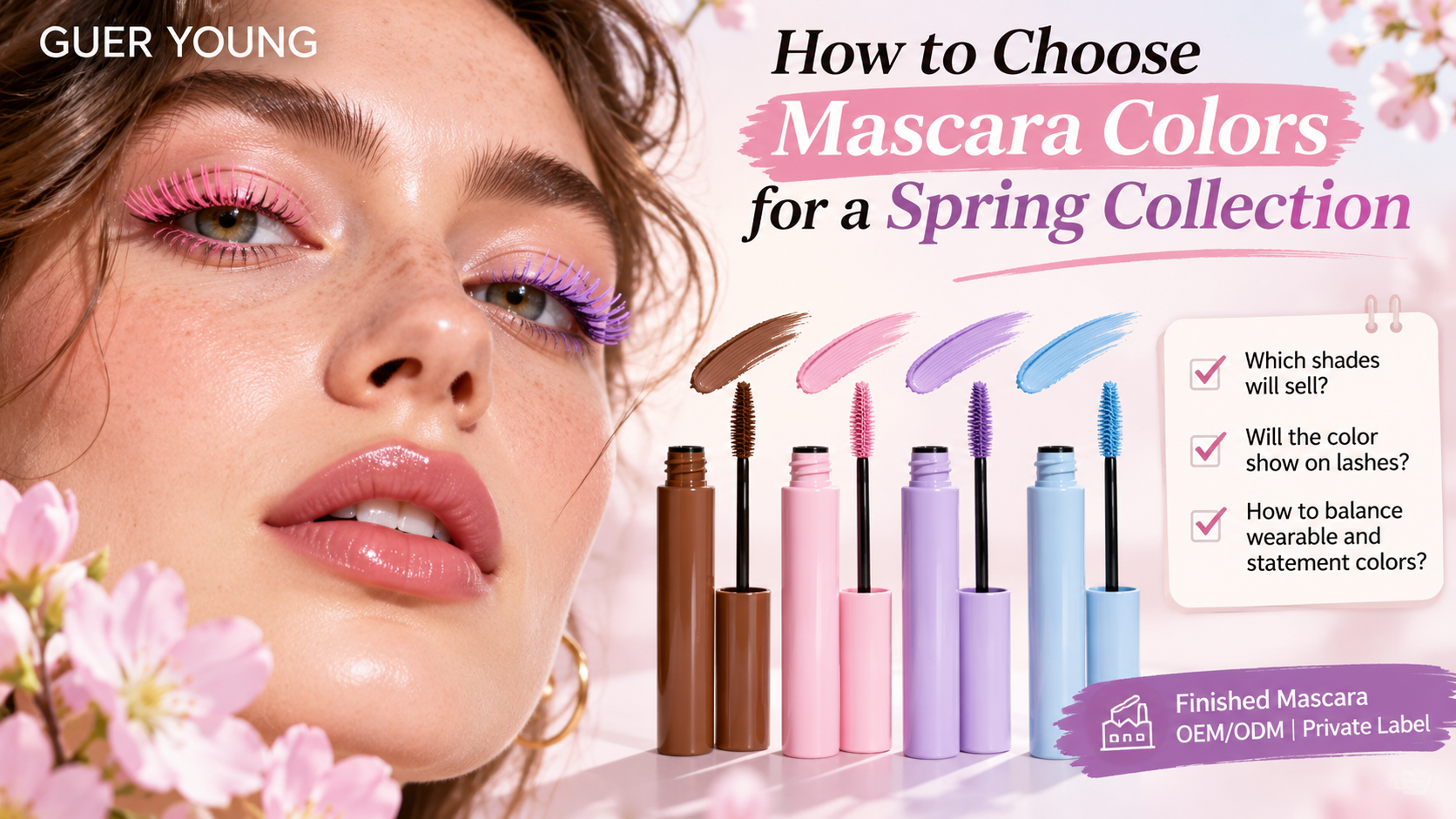
For beauty brands planning a spring collection, choosing mascara colors involves more than following seasonal color trends. Each shade needs to fit the brand’s identity, appeal to its target customers, and work within the existing product range.
A well-planned color assortment can help a brand introduce something new without making its product line difficult to manage. However, adding too many shades or selecting colors without considering formula performance can create unnecessary development costs and inventory pressure.
For beauty brand founders, product managers, and private label buyers, the key is to balance visual appeal, commercial potential, and production feasibility. This guide explains how to select mascara colors, organize a practical shade assortment, and evaluate color performance before production.
1. How to Build a Spring Mascara Color Palette
Spring collections often feature lighter, fresher, and more expressive colors. However, not every trending shade is suitable for every brand. Start by identifying color directions that complement your target market and product positioning.
1.1 Choose Core Color Families for Spring Mascara Collections
A spring mascara palette can include several color families, each serving a different customer preference.
Brown and warm neutrals: Light brown, chocolate brown, and soft warm shades offer a more natural alternative to traditional black mascara. They can suit everyday makeup collections and brands focused on wearable beauty.
Pastel shades: Soft pink, lavender, and light blue can create a fresh seasonal appearance. These colors may appeal to brands targeting customers who enjoy playful or trend-driven makeup.
Nature-inspired shades: Sage green, muted olive, and soft teal can introduce a distinctive color direction while maintaining a relatively understated look.
Expressive colors: Burgundy, purple, and brighter blue can help brands create statement products for customers interested in more noticeable eye makeup.
The best approach is not to include every color family. Instead, select shades that support a clear spring collection concept and make sense for your existing product range.
1.2 Balance Wearable and Statement Shades
A collection made entirely of neutral shades may lack visual differentiation, while one dominated by bright colors may be difficult to position as an everyday product range.
A more practical approach is to combine familiar shades with a small number of distinctive options.
For example, brown can serve customers looking for a softer everyday look, while pink or lavender can introduce a seasonal element. This balance allows a collection to offer variety without becoming overly complicated.
When selecting colors, consider how customers are likely to use each shade. A color that looks attractive in packaging may not necessarily translate into a wearable lash appearance.
2. How to Match Mascara Colors With Your Brand Identity
Mascara colors should reinforce the brand’s overall positioning rather than simply follow seasonal trends. Before finalizing shades, consider how they fit your existing products, visual identity, and target customer expectations.
2.1 Select Colors for Different Brand Positions
Different brand positions may require different color strategies.
Natural and minimalist brands: Soft brown, warm brown, and muted neutral shades can support a clean, understated makeup identity.
Youth-oriented makeup brands: Pink, lavender, and light blue can introduce a playful direction and create more visually distinctive products.
Professional color cosmetics brands: Burgundy, purple, and deep blue can expand the range while maintaining a more defined color story.
Premium beauty brands: Carefully selected muted shades, refined packaging colors, and coordinated product details can create a more sophisticated collection.
These are starting points rather than fixed rules. A brand should also consider its existing customer base, product price range, and the visual language used across its other makeup products.
2.2 Create a Distinctive Color Story
Instead of choosing individual shades independently, develop a consistent color story for the collection.
For example:
Soft Spring: Warm brown, dusty pink, and light lavender create a gentle and feminine direction.
Fresh Nature: Olive green, soft brown, and muted teal offer a more nature-inspired palette.
Creative Bloom: Pink, purple, and blue create a more expressive and playful direction.
A coordinated color story makes it easier to present multiple SKUs as part of the same collection. It can also guide decisions about packaging colors, product names, promotional visuals, and other products launched alongside the mascara.
The goal is to make each shade distinctive while maintaining a recognizable connection to the brand.

3. How to Plan a Mascara Shade Assortment for Your Target Market
Choosing attractive colors is only one part of collection planning. Brands also need to decide how many shades to launch and what role each SKU should play.
3.1 Define Core, Supporting, and Seasonal SKUs
A practical mascara assortment can be organized into three groups:
Core SKUs: Black and brown are familiar choices that can support ongoing product demand.
Differentiating SKUs: Burgundy, purple, or other distinctive shades can help the brand offer something beyond standard mascara options.
Seasonal SKUs: Pink, blue, or green can be introduced as limited seasonal products or part of a themed collection.
This structure helps brands balance established customer preferences with opportunities to test new color directions.
Not every collection needs a large number of shades. For a new launch, starting with a focused assortment can make product development, inventory planning, and marketing easier to manage.
3.2 Evaluate Market Demand and Purchasing Requirements
Before confirming the shade list, evaluate how each color fits the intended market and sales channels.
Consider the following factors:
Target customer preferences: Does the audience prefer natural everyday makeup or more expressive eye looks?
Sales channel: Are the products intended for beauty retail, professional makeup distribution, brand websites, or other channels?
Price positioning: Does the expected retail price support the planned formula, packaging, and decoration choices?
Order quantity: Can the brand support the minimum order quantity for each shade?
Inventory risk: Is there a realistic demand expectation for less familiar colors?
For brands introducing colored mascara for the first time, a smaller selection of carefully chosen shades may be more practical than launching a wide range immediately.
SKU planning should also consider whether the new shades can complement existing products rather than compete with them for the same customer demand.
4. What Formula Factors Affect Colored Mascara Performance?
A mascara shade needs to perform well beyond its appearance in the tube. Pigments, formula texture, and brush compatibility can all influence the final result.
4.1 Evaluate Pigment Dispersion and Color Payoff
Pigment dispersion affects how evenly color is distributed throughout the formula. If pigments are not properly dispersed, the mascara may show uneven color, inconsistent application, or visible differences between strokes.
When reviewing colored mascara samples, evaluate:
Color payoff: Does the shade appear clearly on the lashes?
Application uniformity: Does the formula distribute evenly without visible patches?
Dried color appearance: Does the final color remain close to the approved shade after application and drying?
Visual consistency: Does the shade look reasonably consistent under different lighting conditions?
The color inside the tube does not always represent the final appearance on lashes. This is particularly important for pastel and lighter shades, where the visible result may differ depending on the base formula and pigment selection.
A supplier should help evaluate pigment compatibility and make formula adjustments where necessary. Different shades may require individual development considerations rather than simply using the same formula with different pigments.
4.2 Maintain Consistent Formula Performance Across Shades
A collection should feel consistent as a product range, even when its colors vary.
For example, a brown mascara and a lavender mascara should both meet the brand’s expectations for application, texture, and wear. However, different pigments can affect formula characteristics, so performance should be checked for each shade.
Important evaluation points include:
Formula texture and ease of application
Drying time and finish
Curling or volumizing performance, according to the product positioning
Smudging, flaking, and wear resistance
Compatibility with the selected mascara brush
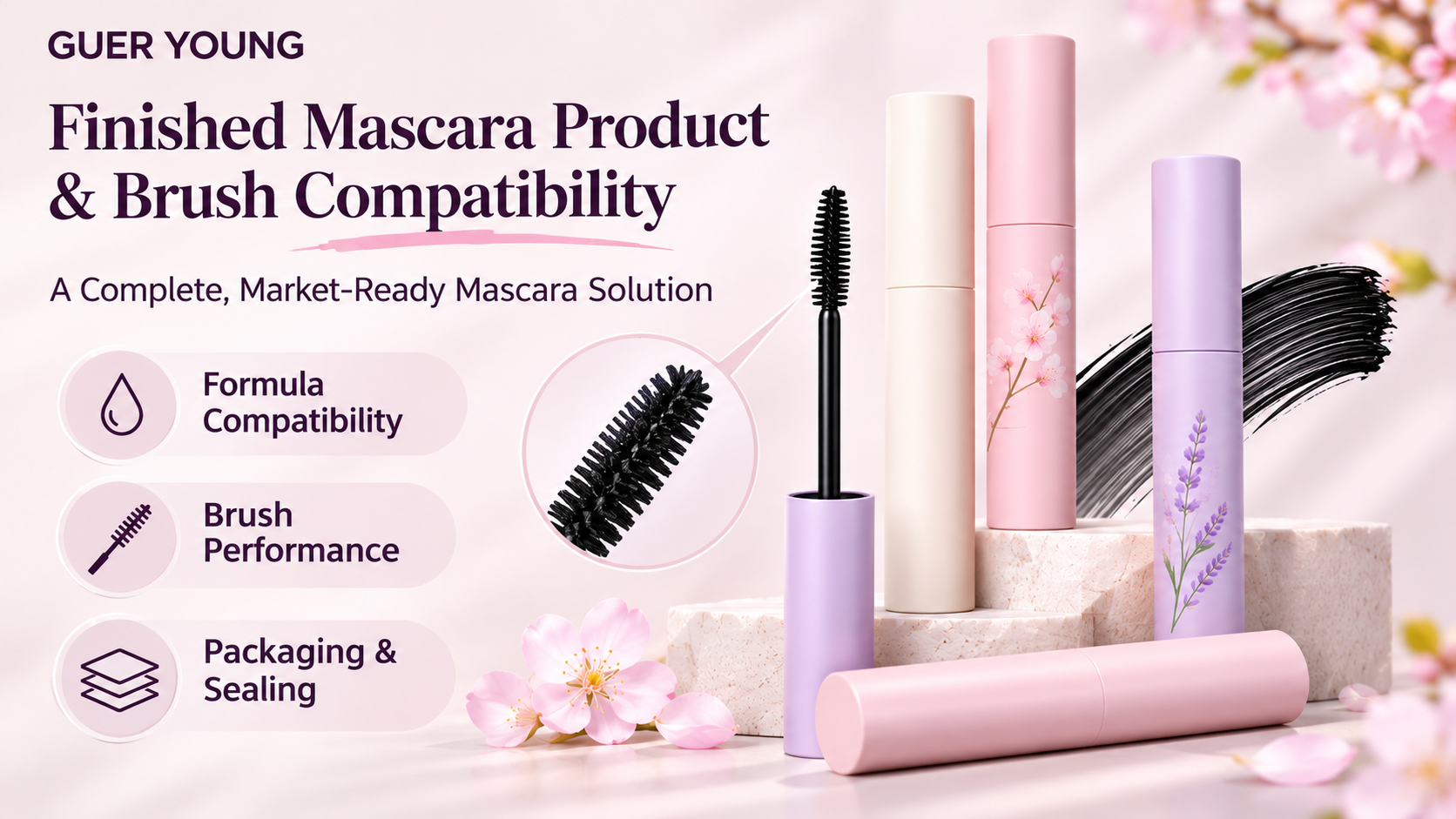
Brush design also matters. A dense spiral brush, for example, may support a different application experience from a slim precision brush. The formula and brush should be evaluated together to ensure the finished product delivers the intended result.
For brands developing several colored mascara SKUs, confirming performance across all shades helps reduce the risk of inconsistent customer experiences.
5. How to Validate Your Mascara Color Selection Before Production
Before moving into bulk manufacturing, brands should confirm that the selected colors, formulas, and packaging work together as intended. Sample evaluation is an important step in reducing development risks.
5.1 Review Physical Samples and On-Lash Results
Digital color references and product images are useful during the initial design stage, but they cannot fully represent the final appearance of colored mascara.
Physical samples allow brands to assess the actual formula and color result.
During sample review, check:
Whether the formula color matches the approved reference
How the shade appears on natural lashes
Whether the color is visible under different lighting conditions
Whether the brush supports the intended application effect
Whether the formula applies evenly and dries as expected
Whether the tube color and decoration coordinate with the overall collection
For a multi-shade collection, review all samples together. This helps identify whether the colors look balanced as a range rather than evaluating each SKU in isolation.
If adjustments are needed, provide clear feedback on the shade, formula, brush, or packaging. Specific feedback makes the next sampling round more efficient.
5.2 Confirm Final Shade Specifications and Production Requirements
Once the samples are approved, document the final product specifications before production.
These should include:
Approved color references and shade names
Confirmed formula and brush configurations
Tube color and packaging decoration details
Sample approval records
Minimum order quantities for each SKU
Quality standards and batch consistency requirements
Clear specifications help align the brand, supplier, and production team. They also provide a reference for future reorders, particularly when the collection includes multiple shades.
For brands planning to extend the range in the future, keeping consistent shade records can make it easier to maintain the original color direction across subsequent production runs.
Conclusion
Choosing mascara colors for a spring collection requires more than selecting shades that look attractive. Brands need to consider product positioning, target customer preferences, SKU structure, formula performance, and production feasibility.
A focused color assortment can help introduce seasonal variety while keeping the product range manageable. Equally important is working with a supplier who can support shade evaluation, formula development, sample approval, and consistent production.
GUER YOUNG provides finished mascara products, OEM/ODM, and Private Label services for beauty brands developing or expanding their eye makeup collections. From color selection and product sampling to customized finished mascara solutions, our team supports brands throughout the product development process.
Explore our finished mascara products to learn more about available options for your next collection.


andy.li@gueryoung.com

We have 10 years of experience, focusing on the development and sales of high quality eyelash growth serum, mascara, eyebrow gel, eyebrow color and other products. We also offer custom services, from tube
design to cosmetic fillings and packaging


Room 1, C3 Factory Building, No.8803 Zhuhai Avenue, Lianwan Industrial Zone, Pingsha Town, Gaolan Port Economic Zone, Zhuhai, Guangdong,China
QUICK LINKS
D Zone,5/F, NO.8 CuiZhu 5th Street,
Qianshan Xiangzhou District,Zhuhai,
Guangdong,China,519070

lynn.zhou@gueryoung.com
winnie.zhong@gueryoung.com
niki.xu@gueryoung.com