
Seasonal vs. Standard Mascara Packaging: Which Is Right for Your Spring Collection?
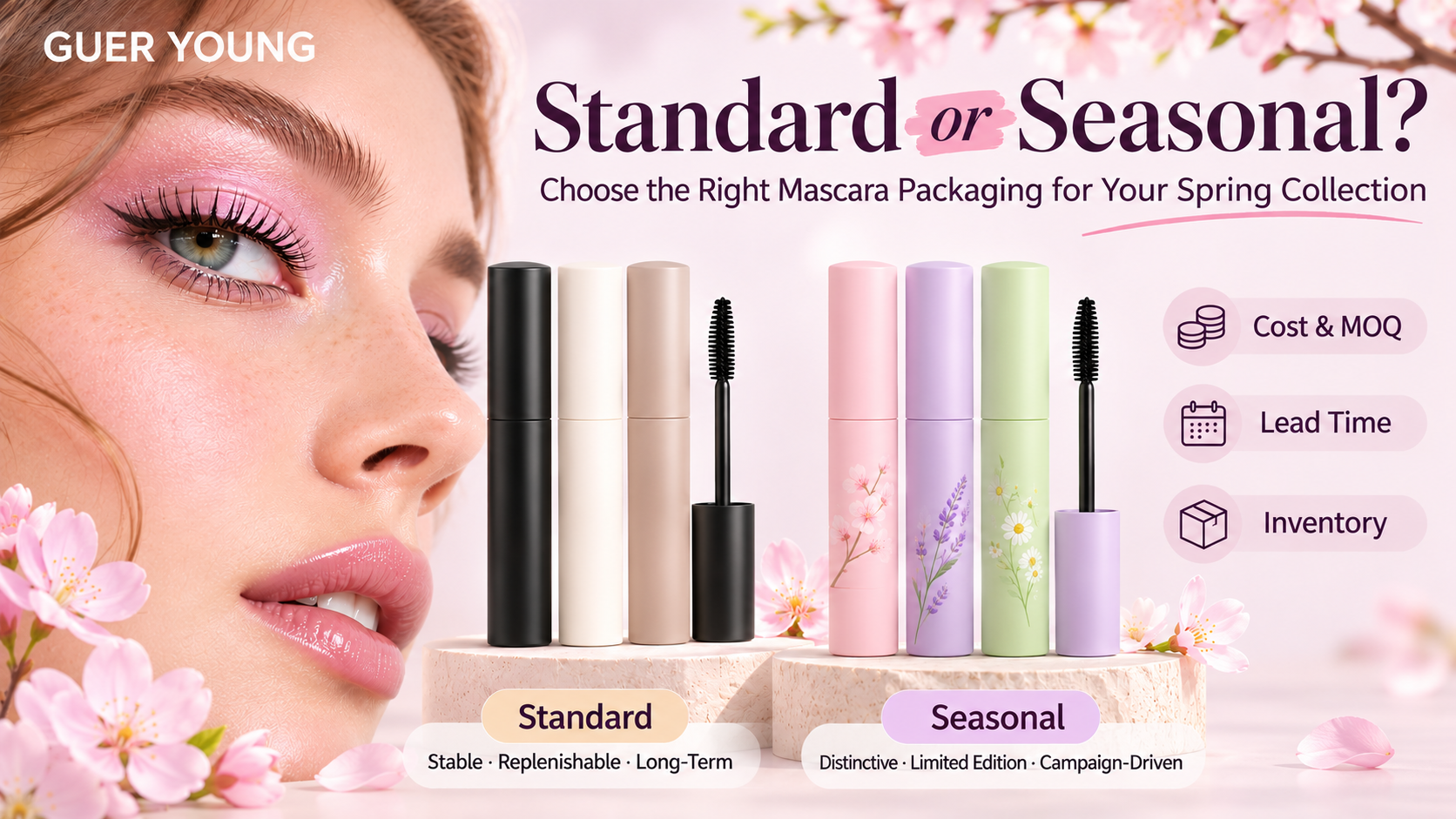
When developing a spring mascara collection, packaging affects more than the product's appearance. It can also influence development costs, launch timing, and inventory planning.
Standard packaging is generally suitable for year-round products and ongoing replenishment. Seasonal custom packaging, on the other hand, can help a limited-edition collection create a more distinctive look. For brands seeking both visual differentiation and development flexibility, combining the two approaches is also an option.
The right choice depends on product positioning, budget, order quantity, and launch plans. This guide explores how different packaging strategies affect development costs, production schedules, and inventory management.
1. What Is the Difference Between Seasonal and Standard Mascara Packaging?
The main differences lie in the intended sales period, level of customization, and how easily the packaging can be used for future production.
1.1 Standard Mascara Packaging for Year-Round Products
Standard packaging typically uses established designs and specifications that a brand can maintain over time. Examples include classic tube shapes, core brand colors, and relatively consistent decorative details.
This approach works well for everyday products that are expected to remain in a brand's assortment.
Its main advantages include:
Long-term usability: The design is not tied to a specific season or holiday.
Easier replenishment: Consistent specifications make repeat production easier to plan.
Development flexibility: Brands can focus more on formula selection, brush design, and product performance without making extensive packaging changes.
For a mascara intended to become a permanent product, standard packaging is often the more manageable option.
1.2 Seasonal Custom Mascara Packaging for Limited Collections
Seasonal custom packaging is designed around a specific theme, such as fresh spring colors, holiday details, or a limited-edition collection concept.
Compared with standard packaging, it places greater emphasis on visual storytelling and product recognition. It can be useful when a brand wants a seasonal launch to stand out and bring something new to its product presentation.
Possible customization options include:
Seasonal tube colors or surface finishes
Holiday patterns, decorative details, or themed graphics
Visual elements that complement the overall collection
However, seasonal packaging also requires careful planning around launch timing and the intended sales period. If a product is only sold for a limited time, unused packaging may be difficult to reuse for regular products.
2. How Do Packaging Choices Affect Development Costs and Lead Times?
Packaging decisions influence not only the final appearance but also the budget, order requirements, and schedule during product development.
2.1 Customization, Initial Costs, and MOQ
Standard packaging may allow brands to work with existing packaging options and focus on selecting a suitable appearance and configuration. Seasonal customization may involve additional adjustments, such as special colors, printed patterns, or other decorative details.
A higher level of customization does not automatically mean costs will increase by a fixed amount. Actual costs depend on the production process, order quantity, available options, and specific requirements.
Before confirming a design, brands should clarify:
Whether existing packaging specifications can be used
Whether special colors or printing involve additional MOQ requirements
How costs vary across different order quantities
Whether customized elements can be reused in future collections
For a brand launching its first seasonal mascara, it is worth defining the budget and expected sales volume before deciding how much customization is necessary.
2.2 Sampling and First Production Lead Times
Standard packaging may be easier to develop using established options, but compatibility with the formula, brush, and filling requirements still needs to be checked.
Seasonal customization may add steps such as color approval, print confirmation, and sample revisions. Brands should therefore include design approval and sampling in the overall launch schedule rather than considering production time alone.
Before starting the project, confirm:
The timeline for approving packaging specifications and appearance
The time required for sampling and revisions
The production schedule for the first order
Whether each development stage fits the intended launch date
Planning these steps early can reduce the risk of delays caused by last-minute sample adjustments or specification changes.
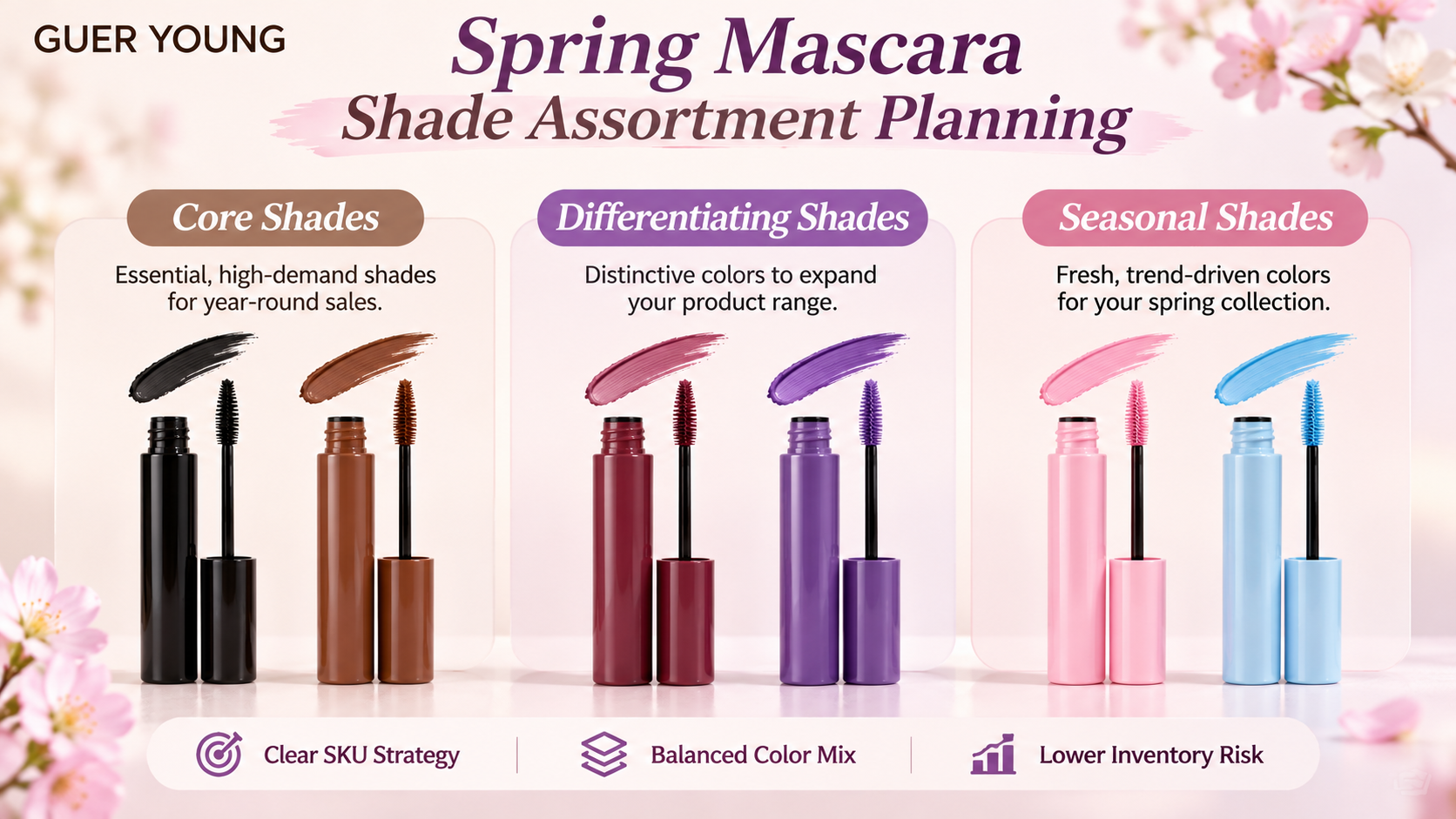
3. How Do Packaging Choices Affect Inventory and Reordering?
Packaging decisions should account for more than the initial launch. Brands also need to consider how long the product will sell and how future orders will be managed.
3.1 Standard Packaging for Ongoing Replenishment
For a mascara intended to remain on sale, standard packaging generally makes inventory planning more straightforward.
Because the design and specifications can remain consistent, brands can arrange repeat orders according to sales performance without developing a new packaging design each time.
This approach is particularly suitable for:
Core mascara products
Everyday collections with long-term sales plans
Established products that require regular replenishment
Standard packaging can also help maintain a consistent appearance across production batches, making it easier for customers to recognize an ongoing product.
3.2 Seasonal Packaging and Limited-Edition Inventory Risks
Seasonal packaging can strengthen the theme of a limited collection, but it also requires careful order planning.
For example, if a spring-limited mascara still has a large amount of unused packaging after the selling season, that packaging may not be suitable for other seasonal or year-round products.
When planning seasonal packaging, brands should consider:
The expected sales period and launch date
Initial order quantity and inventory capacity
Whether the collection may return in a future season
Whether unused packaging can be applied to other products
For a new product with uncertain demand, controlling the initial order quantity may be more important than choosing extensive customization.
4. Which Packaging Strategy Best Fits Your Spring Collection?
There is no single packaging approach that works for every brand. The decision should reflect the product's positioning, launch goals, and order plan.
4.1 Choosing Packaging Based on Budget and Launch Goals
If a brand is developing a spring product for long-term sales, standard packaging may be the better starting point. Differentiation can come from the formula, brush design, and product performance without requiring major packaging changes.
If the product is intended as a limited seasonal launch and the brand has a clear theme and sales plan, seasonal customization may be more appropriate.
A practical way to approach the decision is:
Year-round products: Prioritize standard packaging for easier replenishment.
Seasonal limited editions: Set the level of customization according to budget and expected sales.
New products being tested: Keep initial customization and inventory risks under control.
The goal is not to choose the most elaborate packaging. It is to make sure the packaging investment matches the product's sales plan.
4.2 Using Standard Packaging with Seasonal Custom Details
For brands seeking both visual differentiation and development flexibility, a hybrid approach is worth considering.
A brand can retain relatively consistent packaging specifications while introducing selected seasonal details. For example, it could adjust the tube color, add localized decorative elements, or use a limited-edition pattern.
This creates a seasonal identity without requiring a completely different packaging approach.
Brands can also decide which elements should be limited to one collection and which can remain part of their regular product range. This helps preserve the collection's character while keeping future product planning more flexible.
5. What Should Brands Confirm with a Finished Mascara Supplier?
Once a packaging direction has been selected, brands still need to confirm the product requirements from a finished-product development and production perspective. Packaging appearance is only one part of the process. Formula, brush design, and overall user experience matter too.
5.1 Packaging Compatibility, Sampling, and Product Specifications
Before approving the final solution, brands should make sure the packaging meets the product's actual requirements.
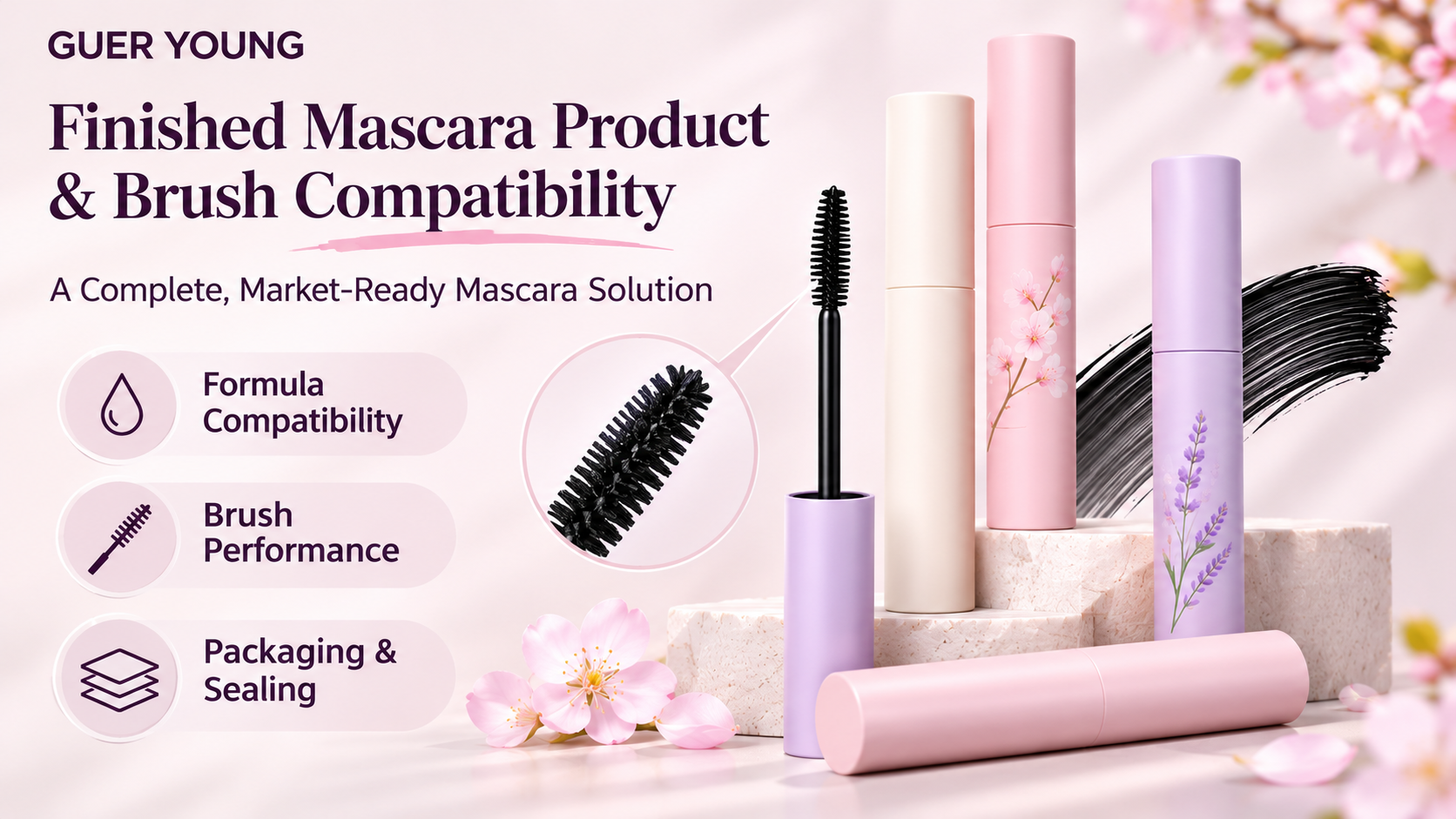
For example, the tube capacity needs to match the target product size, the brush should work with the formula, and the opening and sealing structure should support filling and product use.
During sampling, confirm:
Product capacity and packaging specifications
Brush shape, bristle arrangement, and application performance
Compatibility between the formula and brush
Packaging sealing and overall user experience
Consistency between the approved sample and final specifications
For finished mascara, packaging, formula, and brush design should not be evaluated separately. They need to be considered together to ensure the final product meets the brand's positioning and performance requirements.
5.2 MOQ, Production Planning, and Quality Requirements
Before confirming an order, brands should also discuss order quantity, production arrangements, and quality expectations with the supplier.
This is particularly important for seasonal products with specific launch dates. Sample approval, order confirmation, and production scheduling need to be coordinated in advance.
Key points to clarify include:
MOQ for standard and customized options
Production lead time for the first order
Whether confirmed product specifications can be used for repeat orders
Inspection requirements for appearance, filling, and packaging
Consistency controls across production batches
A reliable finished-product supplier should offer more than product options. Clear communication around specification approval, production coordination, and quality requirements is also important.
Having these details agreed upon helps brands plan launches more effectively and reduce uncertainty around future replenishment.
Conclusion: Choose Packaging That Fits Your Product Plan
Standard packaging is suitable for year-round products and ongoing replenishment. Seasonal custom packaging can help limited-edition collections establish a more distinctive theme, while a hybrid approach offers a balance between visual differentiation and development flexibility.
The right choice depends on product positioning, budget, order quantity, and launch timing. Brands should also consider formula selection, brush design, packaging compatibility, and production planning before finalizing a new mascara project.
As a finished eye makeup supplier, GUER YOUNG provides finished mascara products and OEM/ODM and Private Label cooperation for beauty brands. These options can be evaluated according to each brand's product positioning and development requirements.


andy.li@gueryoung.com

We have 10 years of experience, focusing on the development and sales of high quality eyelash growth serum, mascara, eyebrow gel, eyebrow color and other products. We also offer custom services, from tube
design to cosmetic fillings and packaging


Room 1, C3 Factory Building, No.8803 Zhuhai Avenue, Lianwan Industrial Zone, Pingsha Town, Gaolan Port Economic Zone, Zhuhai, Guangdong,China
QUICK LINKS
D Zone,5/F, NO.8 CuiZhu 5th Street,
Qianshan Xiangzhou District,Zhuhai,
Guangdong,China,519070

lynn.zhou@gueryoung.com
winnie.zhong@gueryoung.com
niki.xu@gueryoung.com