
Custom Liquid Eyeliner Packaging: How Beauty Brands Develop, Design, and Manufacture Their Own Eyeliner Products
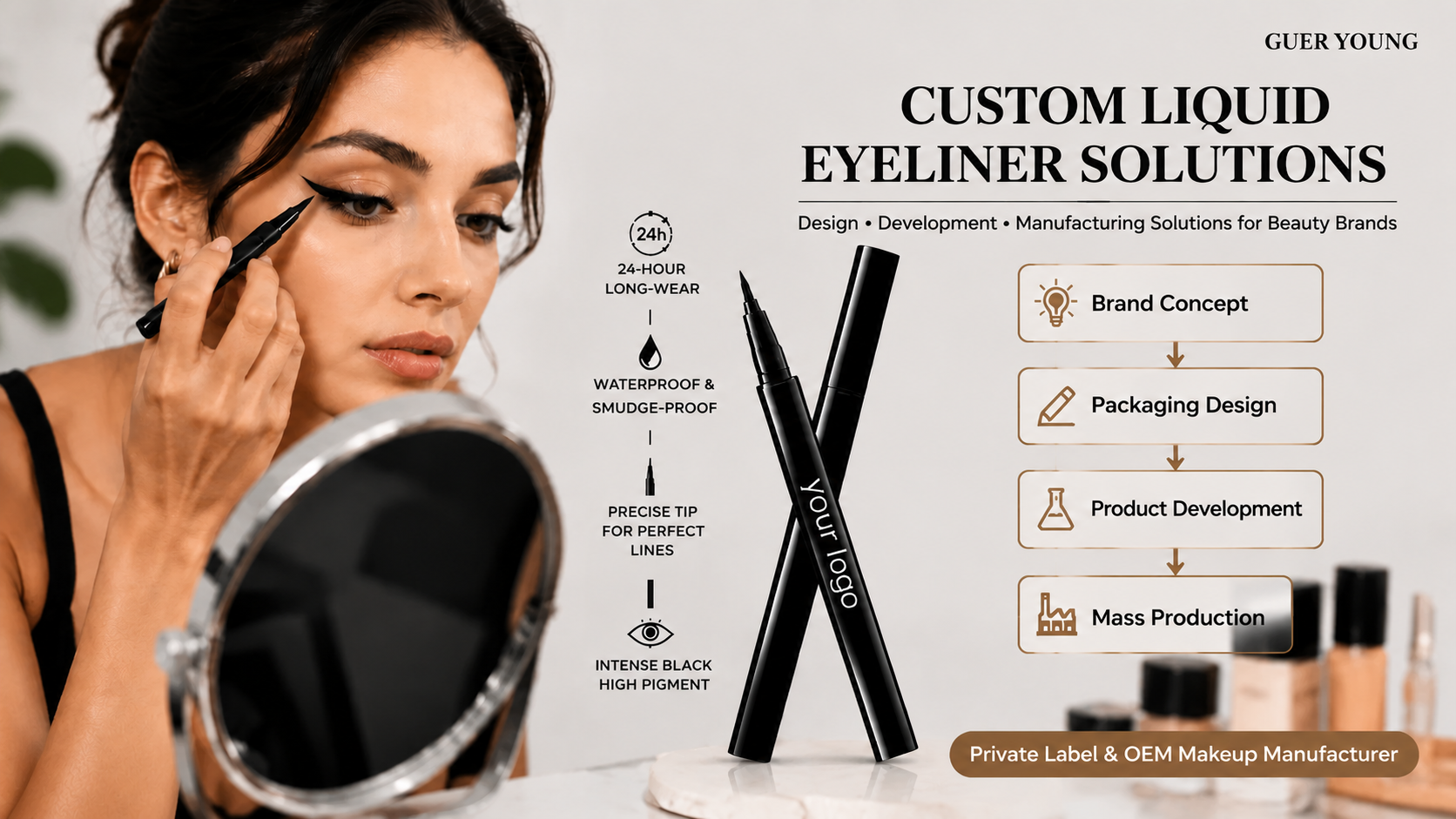
Read in English | Lire en Français | Leer en Español | Leggi in Italiano | Lesen auf Deutsch | Leia em Português
From Brand Concept to Finished Product: A Complete Guide for Beauty Startups and Private Label Brands
When launching a new beauty brand, many founders believe that having a great formula is enough to win customers.
However, after entering the market, they often discover a different challenge:
“Why does our eyeliner look similar to hundreds of other products?”
“Our product performs well, but customers do not remember our brand.”
“Will customized packaging require a huge investment? Will the MOQ be too high for a growing beauty business?”
These are common concerns among emerging beauty founders and private label brands.
Today’s beauty consumers are not only purchasing makeup products. They are buying a complete brand experience — from the first impression of the packaging to the product performance and overall brand identity.
For liquid eyeliner brands, packaging is more than just a container. It represents your brand positioning, product value, and market competitiveness.
A well-developed custom liquid eyeliner packaging solution can help beauty brands:
Build a unique visual identity;
Create stronger customer recognition;
Increase perceived product value;
Avoid direct price competition;
Reduce risks during product development.
This guide explains how beauty brands can develop, design, and manufacture their own liquid eyeliner products — from packaging strategy and product development to OEM supplier selection.
Why Is Liquid Eyeliner Packaging Important for Beauty Brands?
Packaging Creates the First Impression of Your Brand
In the beauty industry, consumers usually see the packaging before they experience the product.
Whether they are shopping through:
Brand websites;
Amazon and other e-commerce platforms;
Instagram and TikTok;
Retail stores;
customers quickly judge a product based on its appearance.
They ask themselves:
Does this brand look professional?
Does the product feel premium?
Does the packaging match the price point?
Is this a brand I can trust?
A basic eyeliner tube only tells customers:
“This is an eyeliner product.”
But a thoughtfully designed package communicates:
“This is a professional beauty brand with a clear identity.”
This is why professional eyeliner packaging design plays an important role in building brand recognition.
Packaging Helps Brands Stand Out in a Competitive Market
Many beauty startups face the same challenge:
Their products are good, but customers do not see enough difference between their brand and competitors.
When packaging looks generic, consumers often compare products mainly by price.
For example:
A standard black eyeliner tube with simple logo printing may look similar to hundreds of other products.
Customers may think:
“Why should I choose this brand instead?”
Customized packaging helps brands create stronger differentiation through:
Signature brand colors;
Unique packaging structures;
Premium surface finishes;
Customized logo placement;
Better user experience.
The purpose of packaging is not simply to increase production costs. It is to create additional brand value.
Why Private Label Brands Need Custom Packaging
For private label beauty brands, packaging is one of the fastest ways to establish brand ownership.
Instead of selling a generic product, brands can create their own market identity through:
Customized packaging styles;
Brand-specific colors;
Unique visual elements;
Personalized product presentation.
With private label eyeliner packaging, beauty brands can develop products that look original while benefiting from professional manufacturing support.
This allows startups to compete with established brands without building an entire production system from scratch.
How to Develop a Successful Liquid Eyeliner Product
Creating a successful liquid eyeliner requires more than choosing an attractive package.
A strong product needs the right combination of:
Formula performance;
Packaging design;
Production efficiency;
Market positioning.
The development process usually includes several important stages.
Step 1: Define Your Brand Position and Product Direction
Before designing packaging, brands should first clarify:
Who are the target customers?
What is the product price positioning?
Which sales channels will be used?
What brand image should the product communicate?
Different brand positions require different packaging strategies.
For Trend-Focused Beauty Brands
Suitable packaging features:
Bold colors;
Creative shapes;
Eye-catching designs;
Social media-friendly appearance.
These designs help products gain attention on platforms such as TikTok and Instagram.
For Premium Beauty Brands
Suitable packaging features:
Minimalist design;
Metallic finishes;
Premium materials;
Sophisticated details.
These elements help create a luxury product experience.
For Clean Beauty Brands
Suitable packaging features:
Sustainable materials;
Natural colors;
Simple visual identity.
Packaging should support the brand story and customer expectations.
Step 2: Develop the Liquid Eyeliner Formula and Packaging Together
Many brands focus only on packaging appearance and overlook product compatibility.
In reality, liquid eyeliner development requires both formula and packaging to work together.
Product Performance Considerations
Brands should evaluate:
Smooth application;
Fast-drying performance;
Waterproof ability;
Long-lasting wear;
Comfortable application experience.
Packaging Compatibility Testing
The packaging should also be tested for:
Leakage prevention;
Applicator compatibility;
Stable liquid flow;
Long-term storage performance.
A professional makeup manufacturer should understand both cosmetic formulation and packaging development to ensure the final product delivers a consistent user experience.
Step 3: Create the Right Eyeliner Packaging Design
A successful eyeliner packaging design should balance appearance, functionality, and manufacturing feasibility.
Choose the Right Packaging Structure
Common options include:
Slim Portable Design
Advantages:
Easy to carry;
Suitable for modern consumers;
Popular for online beauty brands.
Classic Cylindrical Design
Advantages:
Mature production process;
Easier cost control;
Suitable for fast market launch.
Premium Weighted Design
Advantages:
Better hand feel;
Higher perceived value;
Suitable for premium makeup collections.
Step 4: Select the Right Packaging Materials
Material selection directly affects brand perception.
Plastic Packaging
Suitable for:
Beauty startups;
Market testing products.
Advantages:
Cost-effective;
Lightweight;
Stable production process.
Aluminum Packaging
Suitable for:
Professional and premium makeup brands.
Advantages:
Premium appearance;
Better tactile experience;
Stronger brand impression.
Sustainable Packaging Materials
Suitable for:
Eco-conscious beauty brands.
Advantages:
Supports sustainability positioning;
Matches modern consumer expectations.
Working with an experienced cosmetic packaging supplier helps brands find the right balance between design, cost, and production requirements.
Step 5: Sample Approval and Mass Production
Before full production, packaging and products should go through sample testing.
Key evaluation points include:
Packaging appearance;
Logo printing quality;
Product compatibility;
User experience;
Sealing performance.
After approval, the product moves into mass production.
A professional manufacturing process usually includes:
Raw material preparation;
Packaging production;
Printing and surface finishing;
Product filling;
Assembly;
Quality inspection;
Final shipment.
A reliable production system helps brands reduce risks and launch products more efficiently.
Customer Case Study: How a Beauty Startup Created Its Own Liquid Eyeliner Brand
From Brand Idea to Market Launch Through Professional Product Development
A growing beauty startup planned to launch its first liquid eyeliner product for the European and North American markets.
The brand positioning:
Young female consumers;
Mid-to-premium beauty market;
Focus on waterproof and long-lasting performance.
However, the brand faced several challenges.
Challenge 1: The Packaging Looked Too Similar to Competitors
The original packaging concept included:
Standard black plastic tube;
Simple logo printing;
Generic appearance.
The founder worried:
“Will customers think this is just another private label product?”
Challenge 2: Lack of Product Development Experience
The brand was unsure about:
Which packaging structure to choose;
Whether new molds were necessary;
How to control MOQ;
How to balance quality and cost.
GUER YOUNG’s Solution
1. Optimizing the Packaging Strategy
Based on the brand positioning, GUER YOUNG helped redesign the packaging direction:
Keep a mature packaging structure to control costs;
Add signature brand colors;
Improve logo presentation;
Apply premium surface finishing.
The result was a more recognizable custom liquid eyeliner packaging solution without unnecessary development expenses.
2. Developing Product and Packaging Together
GUER YOUNG supported:
Formula optimization;
Waterproof performance testing;
Packaging compatibility testing;
Applicator matching.
This ensured the product was not only visually attractive but also reliable during daily use.
3. Reducing MOQ Pressure
To support the startup’s early growth stage, the project adopted:
Existing packaging structures;
Customized finishing options;
Flexible production planning.
This helped the brand:
Reduce initial investment;
Lower inventory risks;
Test the market faster.
Final Results
The brand successfully launched its first liquid eyeliner product with:
✔ A stronger visual identity;
✔ Differentiated packaging design;
✔ Better customer perception;
✔ Lower product development risks.
This case shows that premium packaging does not always require excessive investment. The key is choosing the right design strategy and manufacturing partner.
How to Choose the Right OEM Cosmetic Supplier?
Selecting the right OEM supplier is one of the most important decisions for a beauty brand.
A reliable supplier should be more than a factory. They should become a long-term product development partner.
1. Look for Complete Development Capability
A professional supplier should support:
Formula development;
Packaging customization;
Sample production;
Product testing;
Mass manufacturing.
This reduces communication costs and improves efficiency.
2. Choose a Supplier That Understands Startup Needs
Growing beauty brands often face:
Limited budgets;
MOQ concerns;
Market testing requirements;
Product expansion plans.
A good supplier should provide solutions that match different growth stages.
3. Evaluate Quality Management and Reliability
Before choosing a supplier, brands should consider:
Production standards;
Quality control systems;
Delivery capability;
Communication efficiency.
A stable supply chain protects brand reputation and long-term growth.
How GUER YOUNG Helps Beauty Brands Create Liquid Eyeliner Products
As a professional finished makeup manufacturer, GUER YOUNG provides complete solutions for global beauty brands, from product concept development to finished product delivery.
Our capabilities include:
Custom liquid eyeliner packaging solutions;
Private label eyeliner packaging development;
Eyeliner packaging design support;
OEM/ODM makeup manufacturing;
Formula development;
Packaging customization;
Flexible MOQ solutions.
From the first idea to the final product, GUER YOUNG helps beauty brands simplify development and bring market-ready products to life.
Conclusion: Great Packaging Is Where Brand Growth Begins
In today’s competitive beauty market, a successful liquid eyeliner product requires more than an excellent formula.
Strong brands are built through the combination of:
Product performance;
Packaging design;
Manufacturing expertise;
Clear market positioning.
Choosing the right cosmetic packaging supplier can help brands reduce development risks, improve product quality, and launch faster.
If you are planning to create your own liquid eyeliner brand or upgrade your existing makeup line, GUER YOUNG can help you develop a customized product solution based on your brand vision, target market, and business goals.
Contact GUER YOUNG today and turn your beauty product idea into a market-ready success.


andy.li@gueryoung.com

We have 10 years of experience, focusing on the development and sales of high quality eyelash growth serum, mascara, eyebrow gel, eyebrow color and other products. We also offer custom services, from tube
design to cosmetic fillings and packaging


Room 1, C3 Factory Building, No.8803 Zhuhai Avenue, Lianwan Industrial Zone, Pingsha Town, Gaolan Port Economic Zone, Zhuhai, Guangdong,China
QUICK LINKS
D Zone,5/F, NO.8 CuiZhu 5th Street,
Qianshan Xiangzhou District,Zhuhai,
Guangdong,China,519070

lynn.zhou@gueryoung.com
winnie.zhong@gueryoung.com
niki.xu@gueryoung.com