
Fiber vs. Non-Fiber Mascara: Which Type Should Your Brand Choose
Read in English | Lire en Français | Lesen auf Deutsch | Leer en Español
For beauty brands, choosing between fiber mascara and non-fiber mascara involves more than comparing formulas. The decision also affects lash appearance, application experience, and product line planning.
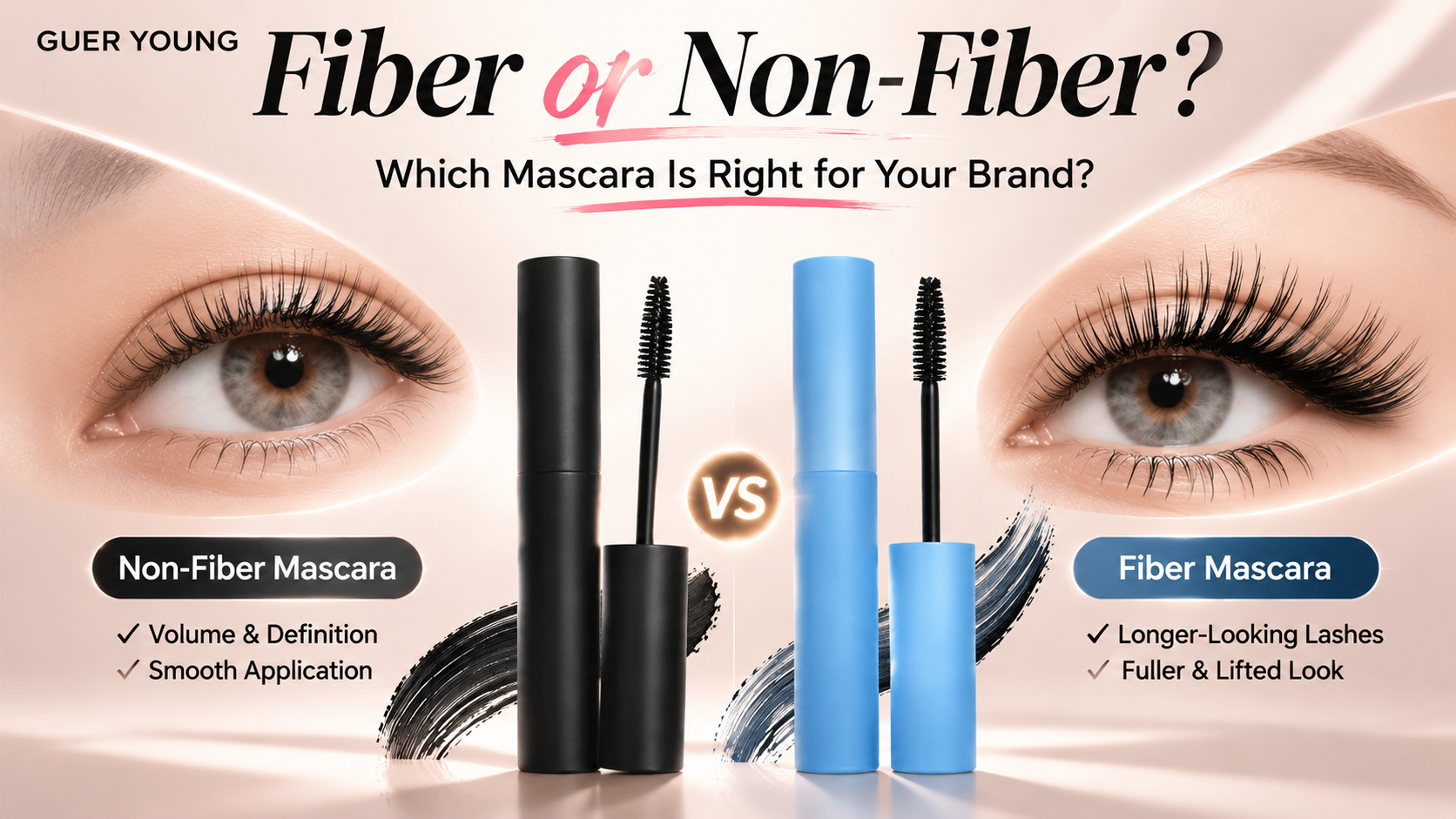
Fiber mascara contains added fibers that help create a more noticeable lengthening and fuller appearance. Non-fiber mascara relies on its formula to coat the lashes and deliver different effects, including volume, length, and curl.
Both types serve different product positioning needs. This guide compares their formulas, makeup performance, brush compatibility, and sourcing considerations to help brands choose suitable finished mascara products.
1. Formula Differences Between Fiber and Non-Fiber Mascara
The main difference between these two mascara types is whether added fiber particles are included in the formula. This can also affect formula texture, application, and the final lash look.
1.1 Fiber Mascara Formula Characteristics
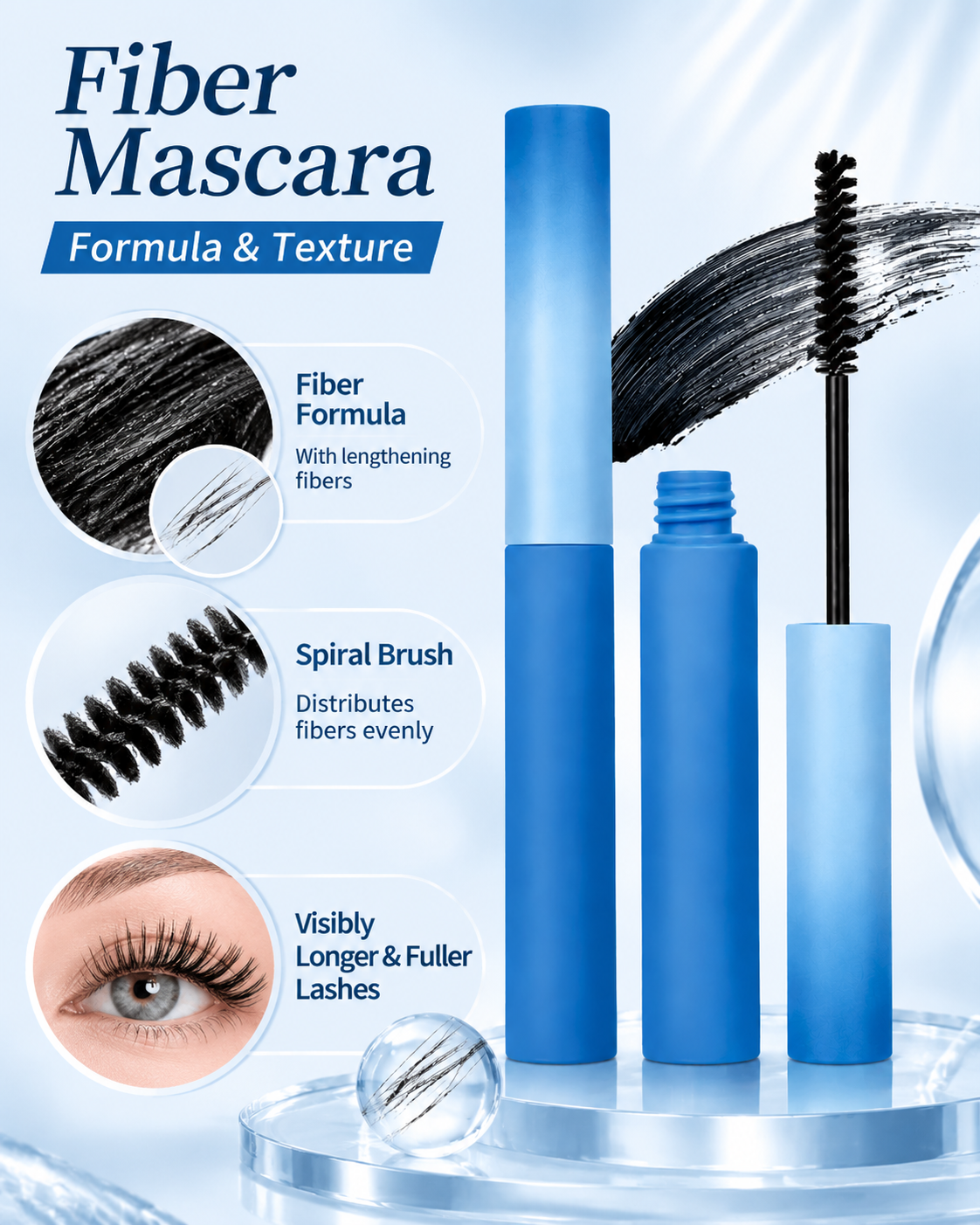
Fiber mascara contains small fiber particles suspended in a mascara base. These fibers adhere to natural lashes to help create additional visual length and fullness.
Several factors should be considered when evaluating a fiber mascara formula:
Fiber type: Fiber material, length, and shape can influence the lengthening effect and application experience.
Formula texture: The formula needs to hold and distribute fibers evenly to reduce clumping.
Fiber adhesion: Fibers should attach properly to the lashes and remain in place during wear.
Formula stability: Fiber distribution and formula condition should remain consistent during storage and regular use.
Depending on the fiber type and formula design, fiber mascaras can focus on lengthening or volumizing effects.
For example, JRA036460 is a fiber mascara in GUER YOUNG's finished mascara range. It is positioned around waterproof and curling performance. Brands can use it as a sample reference when evaluating fiber mascara options, particularly when comparing its actual fiber distribution and application results.
1.2 Non-Fiber Mascara Formula Characteristics
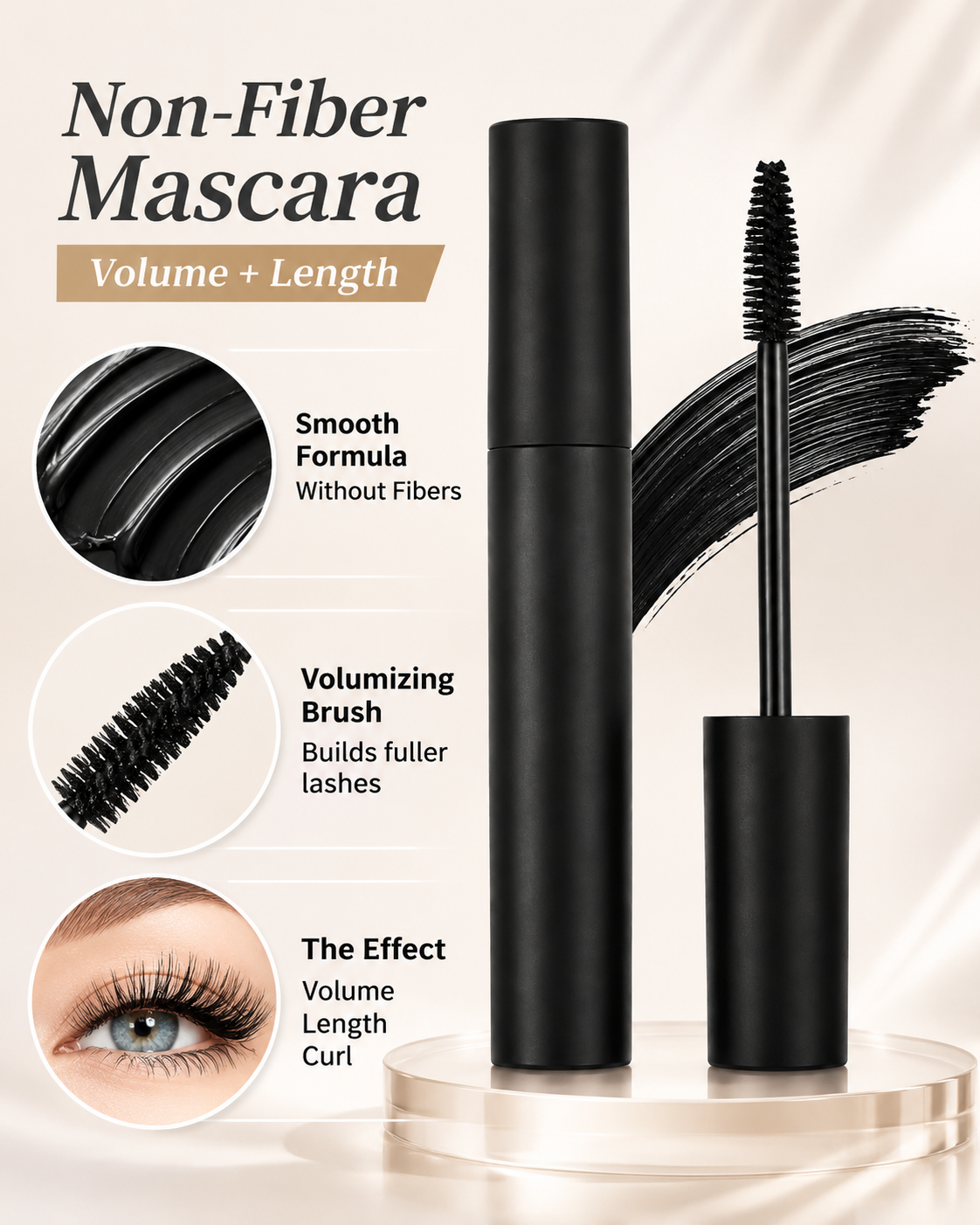
Non-fiber mascara does not contain added solid fiber particles. Instead, it uses ingredients such as waxes, pigments, and film-forming agents to coat the lashes and create different effects, including volume, length, and curl.
Key formula considerations include:
Formula consistency: The texture should remain stable and allow even application.
Application smoothness: The formula needs to work well with the brush to reduce clumping and uneven coating.
Lash appearance: Formula adjustments can create natural lengthening, added volume, or curling effects.
Color payoff: Pigment distribution affects the color and coverage of the mascara.
Unlike fiber mascara, non-fiber formulas do not require additional fiber dispersion and adhesion considerations. However, formula texture, brush compatibility, and actual application performance remain important.
CP0036 is a non-fiber Volume + Length Mascara from GUER YOUNG. Its product positioning combines volume and length with waterproof, curling, and quick-drying features, making it a reference option for brands evaluating non-fiber mascara.
2. Makeup Performance: Fiber vs. Non-Fiber Mascara
Formula type can influence the final lash appearance, but performance also depends on the formula design, brush shape, and application technique. Brands should evaluate actual samples rather than judge a product by its category name alone.
2.1 Lengthening, Volume, and Lash Separation
Fiber mascara uses added fibers to create more visible lash length. It can be suitable for brands focusing on a noticeable lengthening effect. Depending on the fiber and formula design, it can also create a fuller appearance.
Non-fiber mascara relies on the formula coating the lashes. With the right formula and brush combination, it can deliver volume, length, or a more natural finish.
Comparison | Fiber Mascara | Non-Fiber Mascara |
Lengthening | Uses added fibers to create visual length | Creates length through formula coating |
Volume | Fibers and formula design can add fullness | Formula texture and brush design create volume |
Lash separation | Fiber distribution needs to be controlled | Formula consistency and brush separation are important |
Product positioning | Can focus on noticeable lengthening or fullness | Can cover natural, volumizing, and lengthening effects |
For brands looking to emphasize lash length, fiber mascara may be worth evaluating first. For brands prioritizing everyday use and a wider range of makeup effects, non-fiber options may also be suitable.
2.2 Wear Performance, Smudge Resistance, and Flaking
Wear performance is another important factor when evaluating mascara products.
For fiber mascara, brands should check whether the fibers remain evenly attached and whether the product shows signs of fiber shedding, clumping, or flaking during wear.
For non-fiber mascara, attention should be given to film formation, drying time, and the possibility of smudging or flaking under different eye-area conditions.
These results cannot be determined by fiber content alone. A waterproof non-fiber mascara can also provide good wear performance, while the stability of a fiber mascara depends on its specific formula design.
During sample evaluation, brands should check:
Whether the mascara clumps or causes lashes to stick together.
Whether it smudges, flakes, or sheds after drying.
Whether the lash appearance remains consistent during normal daily activities.
Whether the product can be removed easily without noticeable residue.
3. Application Experience and Mascara Brush Compatibility
The brush is another important factor affecting mascara application. Even with the same formula type, different brush designs can create different results.
3.1 How Brush Design Affects Mascara Application
Common mascara brush types include:
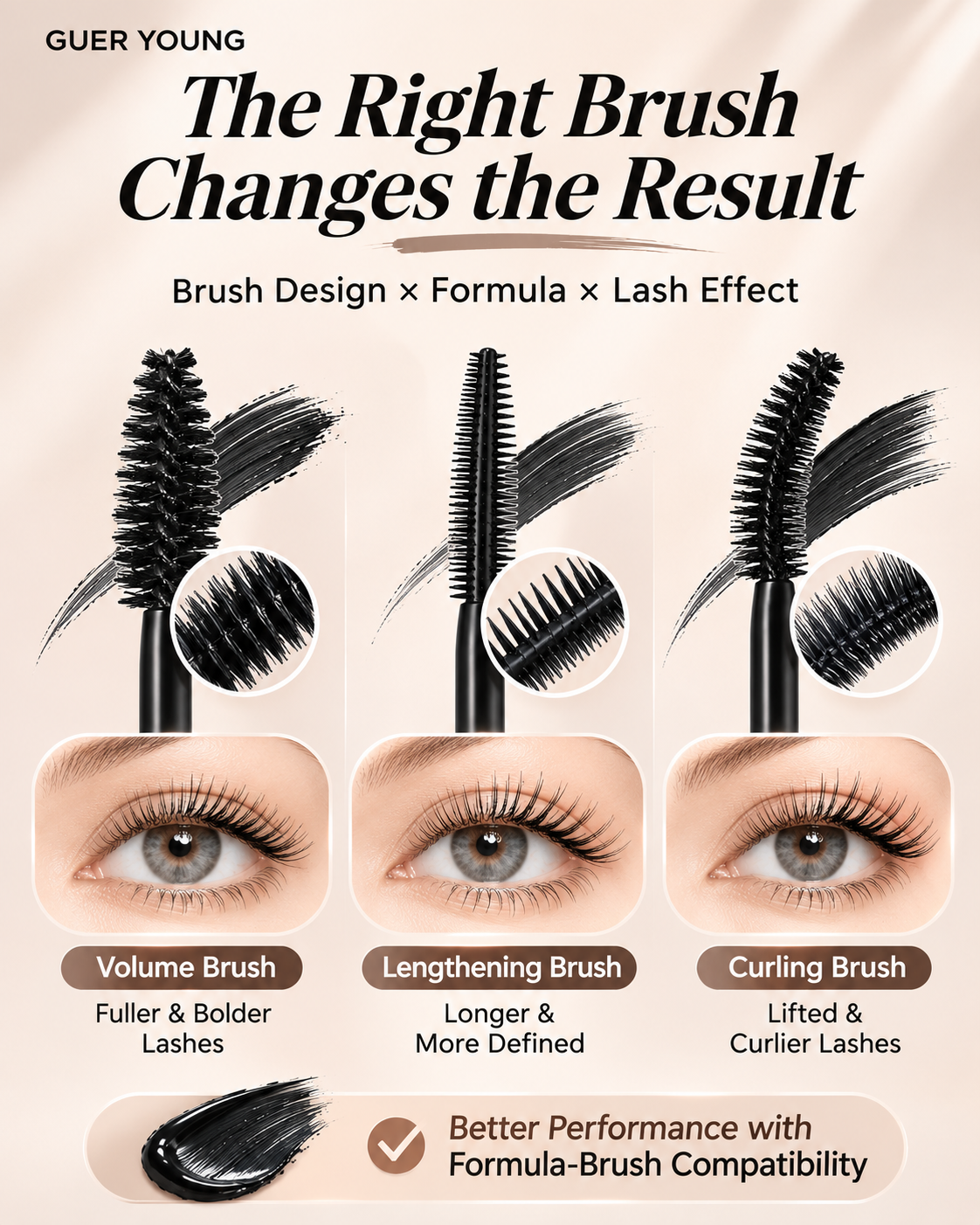
Spiral Brush: Its evenly distributed bristles help comb through lashes and are commonly used for lengthening and volumizing products.
Curved Brush: Its curved shape can follow the lash line and help users apply mascara from the roots upward.
Slim Brush: Its narrow design makes it easier to reach shorter lashes, inner corners, outer corners, and lower lashes.
Dense Brush: Its closely packed bristles can pick up more formula and help create a fuller lash appearance.
For fiber mascara, the brush should help distribute fibers evenly and reduce product buildup. For non-fiber mascara, the brush should match the desired effect and provide suitable formula control and lash separation.
3.2 How to Evaluate Brush and Formula Compatibility
When comparing mascara samples, brands should look beyond the brush's appearance and evaluate how it performs with the formula.
Key points to check include:
Formula pickup: Does the brush pick up an appropriate amount of mascara?
Application consistency: Can it distribute the formula evenly from the lash roots to the tips?
Lash separation: Does it help separate lashes, or does it cause sticking and clumping?
Reach: Can it reach inner and outer corner lashes as well as lower lashes?
For fiber mascara, brands should also check whether the brush helps distribute and attach the fibers evenly. For non-fiber mascara, the focus should be on formula control and whether the brush helps achieve the intended lash effect.
4. How to Choose the Right Mascara for Your Brand
After understanding the differences between the two types, brands need to consider their target consumers, market positioning, and existing product range.
4.1 Match Mascara Types with Your Brand Positioning
Different brands have different expectations for mascara performance and application experience. The following considerations can help guide product selection:
For noticeable lengthening effects: Consider fiber mascara and evaluate fiber adhesion, visible length, and clumping.
For natural everyday makeup: Consider a non-fiber formula with a suitable texture, focusing on smooth application and lash separation.
For volumizing effects: Both types can be considered. The final result depends on the formula, brush combination, and actual application performance.
For a wider product selection: Consider offering both fiber and non-fiber options to meet different lash makeup preferences.
There is no single mascara type that suits every brand. The more important question is whether the product matches the brand's price positioning, target market, and consumer preferences.
4.2 How to Build a Balanced Mascara Product Range
Brands developing a mascara collection do not necessarily need to launch many similar products at once. A practical approach is to start with a small number of products that serve clearly different needs.
For example, a brand could consider a fiber mascara focused on lengthening alongside a non-fiber mascara designed around volume and length. Additional options, such as waterproof formulas or different brush designs, can be considered based on market feedback.
JRA036460 and CP0036 provide two different formula types for comparison. Brands can evaluate their makeup effects, brush compatibility, and application experience before deciding whether both belong in the same product range.
5. How to Source and Evaluate Finished Mascara Products
Once the product type has been selected, the next step is to evaluate product quality and the supplier. Whether samples meet expectations and whether bulk orders can be supplied reliably can both affect a product launch plan.
5.1 What to Confirm When Choosing a Finished Mascara Supplier
Before selecting a supplier, brands should review several key points:
Product types: Can the supplier offer different finished mascara options, including fiber and non-fiber formulas?
Formula and effects: Are there suitable options for lengthening, volume, curl, or waterproof performance?
Brush selection: Can the supplier provide different brush options and match them to product requirements?
Packaging options: Are tube appearance, color, logo, and packaging customization available?
Samples and orders: Can samples be provided for evaluation? Are MOQ and lead times clearly explained?
Quality and compliance documents: Can the supplier provide relevant product quality documents and information required for the target market?
For example, the listed MOQ is 300 pieces for JRA036460 and 500 pieces for CP0036. JRA036460 has an estimated delivery time of around 20 days. These details can help brands make an initial assessment, although the final order terms should always be confirmed with the supplier.
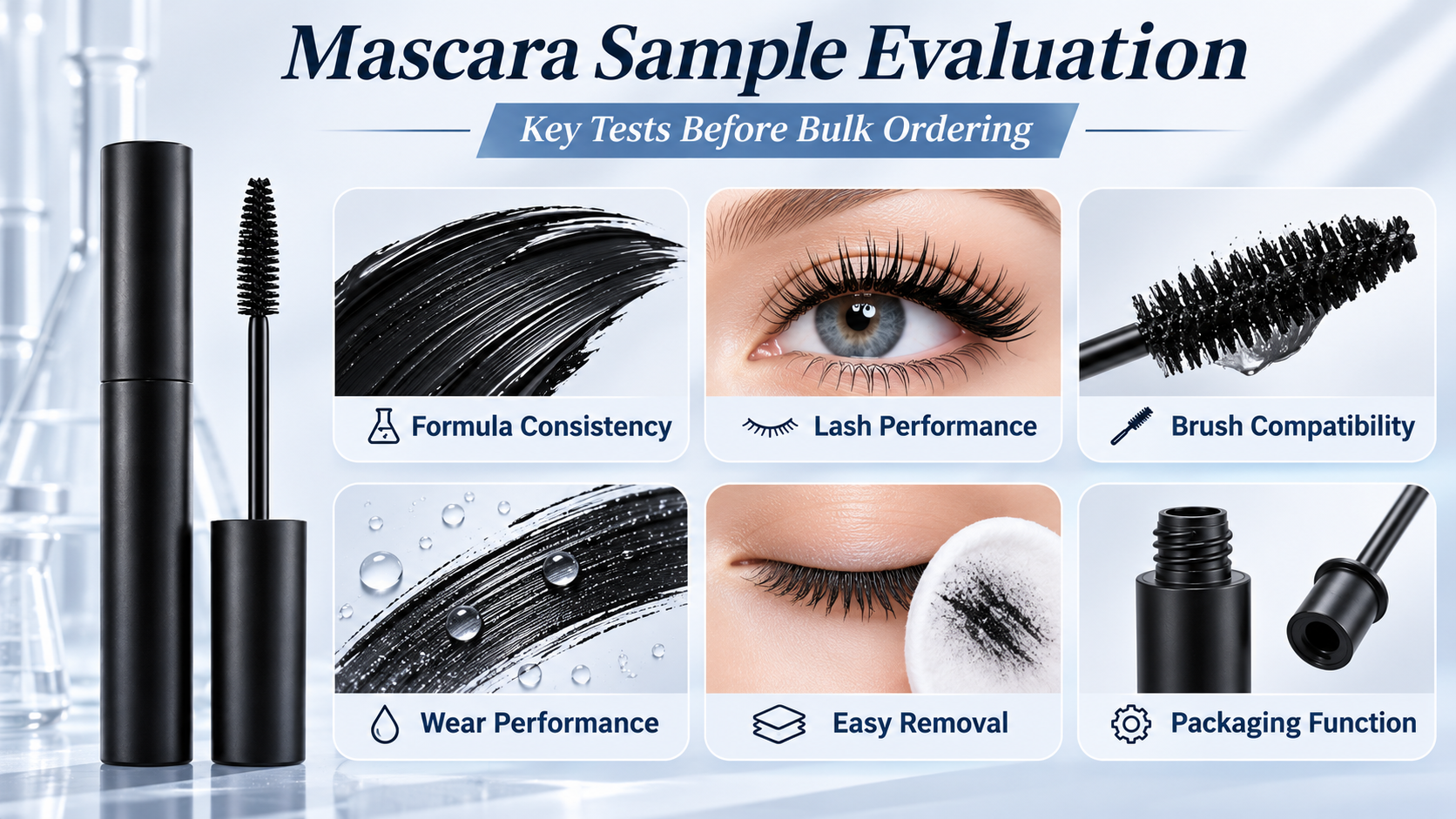
5.2 How to Evaluate Mascara Samples Before Bulk Ordering
Sample testing is an important step before placing a bulk order. Brands should establish evaluation criteria based on their product positioning instead of making a decision based only on the first application.
Test Item | What to Check |
Formula condition | Consistency, visible clumping, or unusual changes |
Makeup effect | Whether the product delivers the intended length, volume, or curl |
Brush compatibility | Formula pickup, application smoothness, and lash separation |
Wear performance | Whether the product smudges, flakes, or sheds |
Removal experience | Ease of removal and noticeable residue |
Packaging performance | Whether the tube, wand, and wiper work together properly |
For fiber mascara, pay particular attention to fiber distribution and adhesion. For non-fiber mascara, focus on formula consistency and application performance.
It is helpful to record the results of each sample and compare them under the same testing conditions. Once the formula, brush, and packaging meet the brand's requirements, the product can move toward bulk ordering.
Conclusion
Fiber and non-fiber mascaras serve different product positioning needs. Fiber mascara uses added fibers to create a more noticeable lengthening and fuller appearance, while non-fiber mascara relies on formula and brush design to achieve different lash effects.
For beauty brands, product selection should take into account target consumers, desired makeup results, brush compatibility, sample performance, and supplier support—not just the formula category.
GUER YOUNG offers both fiber and non-fiber finished mascaras, with Private Label and OEM/ODM customization options. Brands can start by evaluating actual samples and selecting a mascara solution that fits their product positioning.


andy.li@gueryoung.com

We have 10 years of experience, focusing on the development and sales of high quality eyelash growth serum, mascara, eyebrow gel, eyebrow color and other products. We also offer custom services, from tube
design to cosmetic fillings and packaging


Room 1, C3 Factory Building, No.8803 Zhuhai Avenue, Lianwan Industrial Zone, Pingsha Town, Gaolan Port Economic Zone, Zhuhai, Guangdong,China
QUICK LINKS
D Zone,5/F, NO.8 CuiZhu 5th Street,
Qianshan Xiangzhou District,Zhuhai,
Guangdong,China,519070

lynn.zhou@gueryoung.com
winnie.zhong@gueryoung.com
niki.xu@gueryoung.com