
How to Compare Mascara Samples Before Choosing a Supplier
Read in English | Lire en Français | Lesen auf Deutsch | Leer en Español | Leggi in Italiano
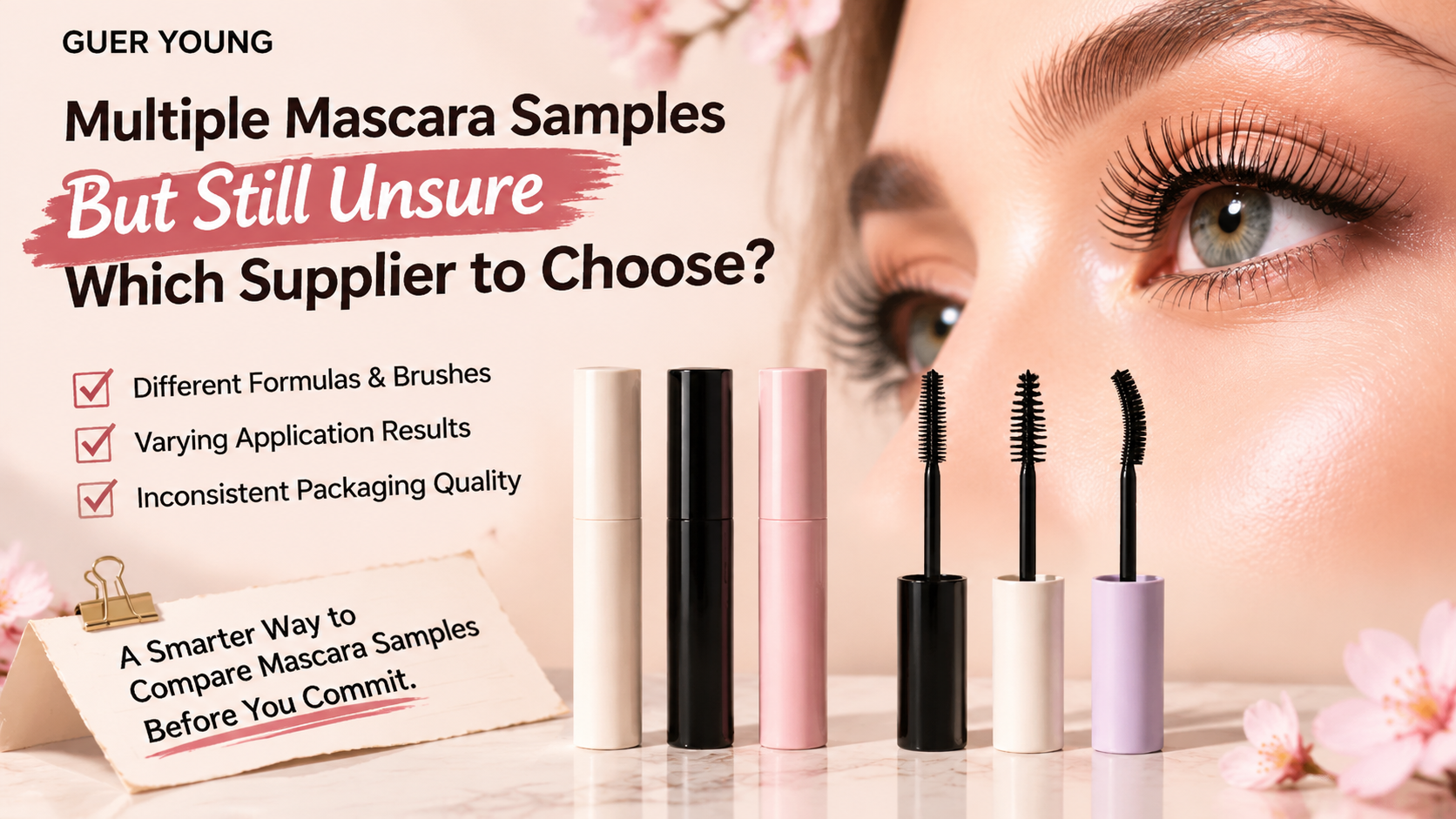
For beauty brands, choosing a suitable mascara involves more than reviewing product photos or specification sheets. Samples from different suppliers may vary in formula texture, brush design, application results, and packaging quality.
Before selecting a supplier, sourcing teams should evaluate samples under consistent conditions. This makes it easier to identify products that match the brand's positioning and reduces uncertainty during product sourcing.
Whether you are developing a spring launch or expanding an existing product range, the following points can help you compare mascara samples more effectively.
1. Compare Mascara Formula Texture and Consistency
The formula plays an important role in mascara application and final results. Start by checking whether each sample has a consistent texture and appearance.
1.1 Check Formula Texture and Uniformity
After opening each sample, observe whether the formula looks smooth and even. Look for visible clumps, separation, or unusual dryness.
Pay attention to:
Whether the formula is uniform and free from obvious clumps.
Whether the texture matches the intended product type.
Whether the brush picks up an appropriate amount of formula.
Whether the formula coats lashes evenly during application.
1.2 Check Whether the Formula Fits the Product Positioning
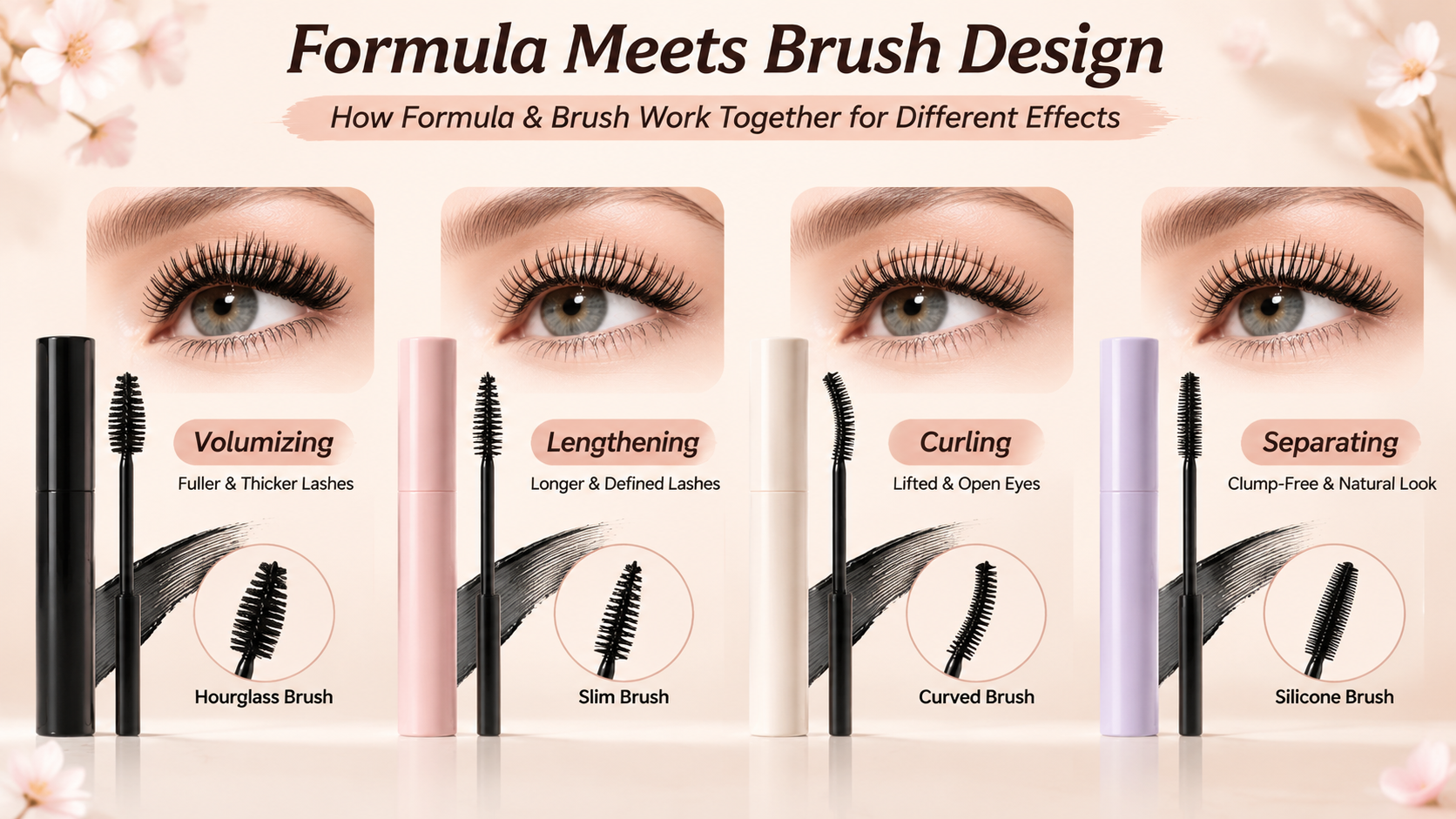
Different mascara types have different formula requirements. A volumizing mascara may need to provide fuller-looking coverage, while a lengthening formula should support an even application and visible lash definition.
Compare each sample against the product's intended selling points rather than assuming one formula texture will work for every mascara type.
2. Evaluate Mascara Brush Design and Application Control
The brush affects formula pickup, application control, and lash separation. Even when two samples have similar formulas, different brush designs can produce noticeably different results.
2.1 Compare Brush Shapes and Materials
Common mascara brush designs include spiral, tapered, curved, and hourglass shapes. Brushes may also use different materials, such as nylon bristles or silicone.
When comparing samples, check the brush size, bristle arrangement, flexibility, and overall finish. Consider whether the design suits the intended product positioning and target users.
2.2 Assess Product Pickup and Lash Separation
During application, observe how much formula the brush picks up and how easily it can be controlled.
Check whether:
The brush removes smoothly from the tube.
The amount of formula on the brush is appropriate.
It can reach inner corners and lower lashes.
It separates lashes without excessive buildup or clumping.
The combination of brush and formula matters. A brush should not be evaluated by appearance alone.
3. Compare Application Performance and Wear Results
After checking the formula and brush, test each sample on lashes. This is one of the most important steps in deciding whether a mascara meets your brand's requirements.
3.1 Evaluate On-Lash Results
Use consistent testing conditions for each sample. For example, keep the number of application strokes and application method similar to make the results easier to compare.
Focus on the following:
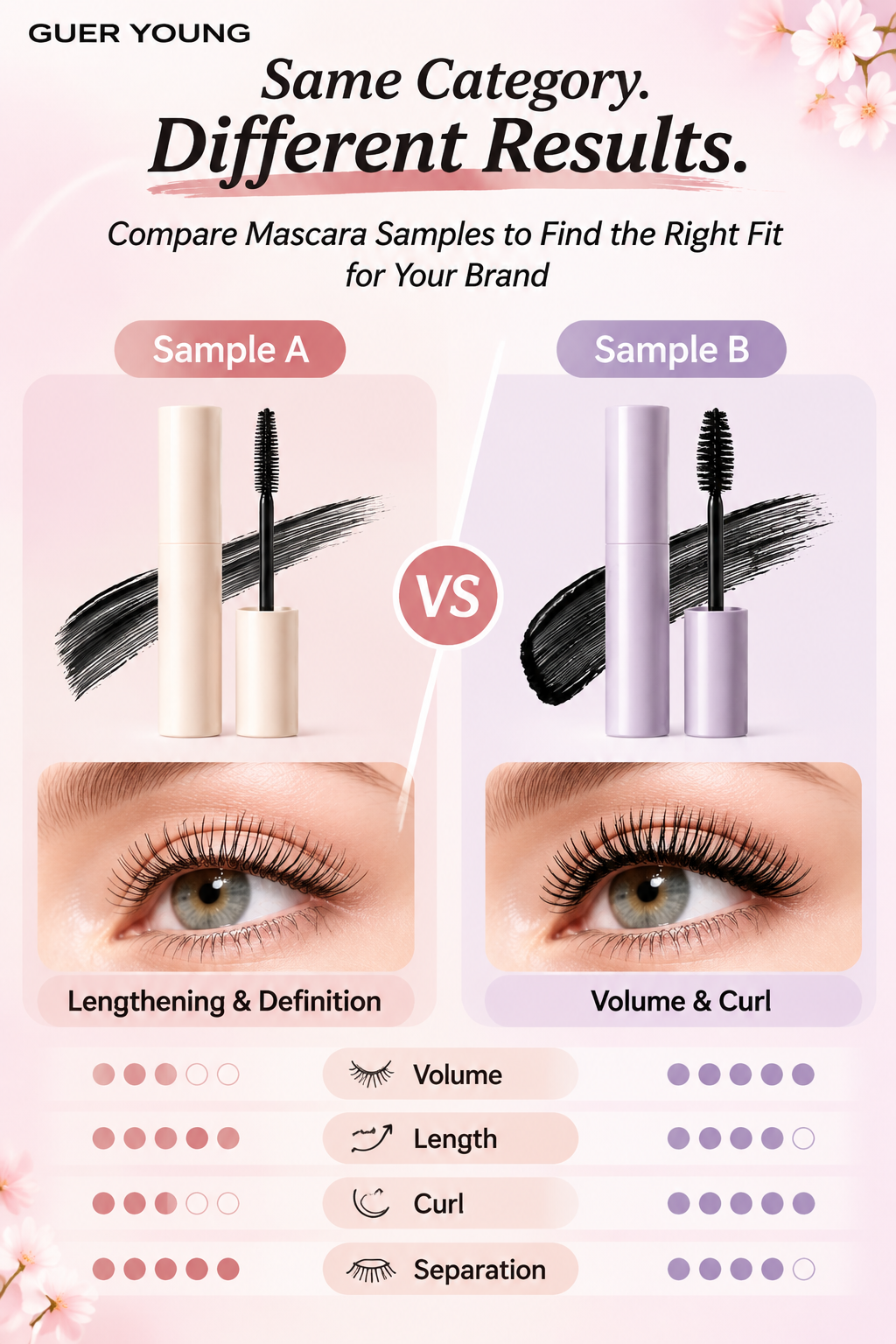
Volume: Does the mascara create fuller-looking lashes?
Length: Does it provide the desired lengthening effect?
Curl: Does it help achieve the intended curled appearance?
Separation: Are lashes clearly defined without excessive clumping?
Coverage: Is the formula distributed evenly across the lashes?
Not every sample needs to perform equally well in every category. The key is whether its results match the product benefits your brand wants to offer.
3.2 Compare Wear, Smudge Resistance, and Removal
Initial application results are only part of the evaluation. You should also observe how each sample performs over time.
Check for smudging, flaking, clumping, or a reduction in curl throughout the wear period. If the product is positioned as waterproof or sweat-resistant, include relevant tests based on its intended claims.
Also record how easily the mascara can be removed and whether repeated cleansing is needed.
These internal sample tests are useful for preliminary comparisons, but they do not replace formal safety, stability, or regulatory testing.
4. Assess Packaging Quality and Brand Compatibility
For brands developing their own mascara lines, packaging affects both product presentation and everyday usability.
4.1 Compare Packaging Appearance and Functionality
When reviewing sample packaging, check:
Tube material, surface finish, and overall workmanship.
The connection between the cap and tube.
Whether the wiper controls excess formula effectively.
Whether the packaging is properly sealed and free from leakage.
Whether opening and closing the tube feels smooth.
These details help determine whether the packaging meets your brand's expectations for product quality and user experience.
4.2 Review Packaging Customization Options
If you plan to add a logo or use a specific packaging design, confirm which customization methods are available. Options may include silk-screen printing, transfer stickers, labels, and other printing processes.
For example, brands exploring existing finished mascara options from GUER YOUNG can also review suitable logo and packaging customization choices. The final appearance should always be checked against an approved sample.
5. Review Sample Information and Compare Supplier Results
After testing the samples, avoid making a decision based on impressions alone. Recording product details and test results in one comparison sheet makes supplier evaluation more consistent.
5.1 Check Sample Specifications and Supporting Documents
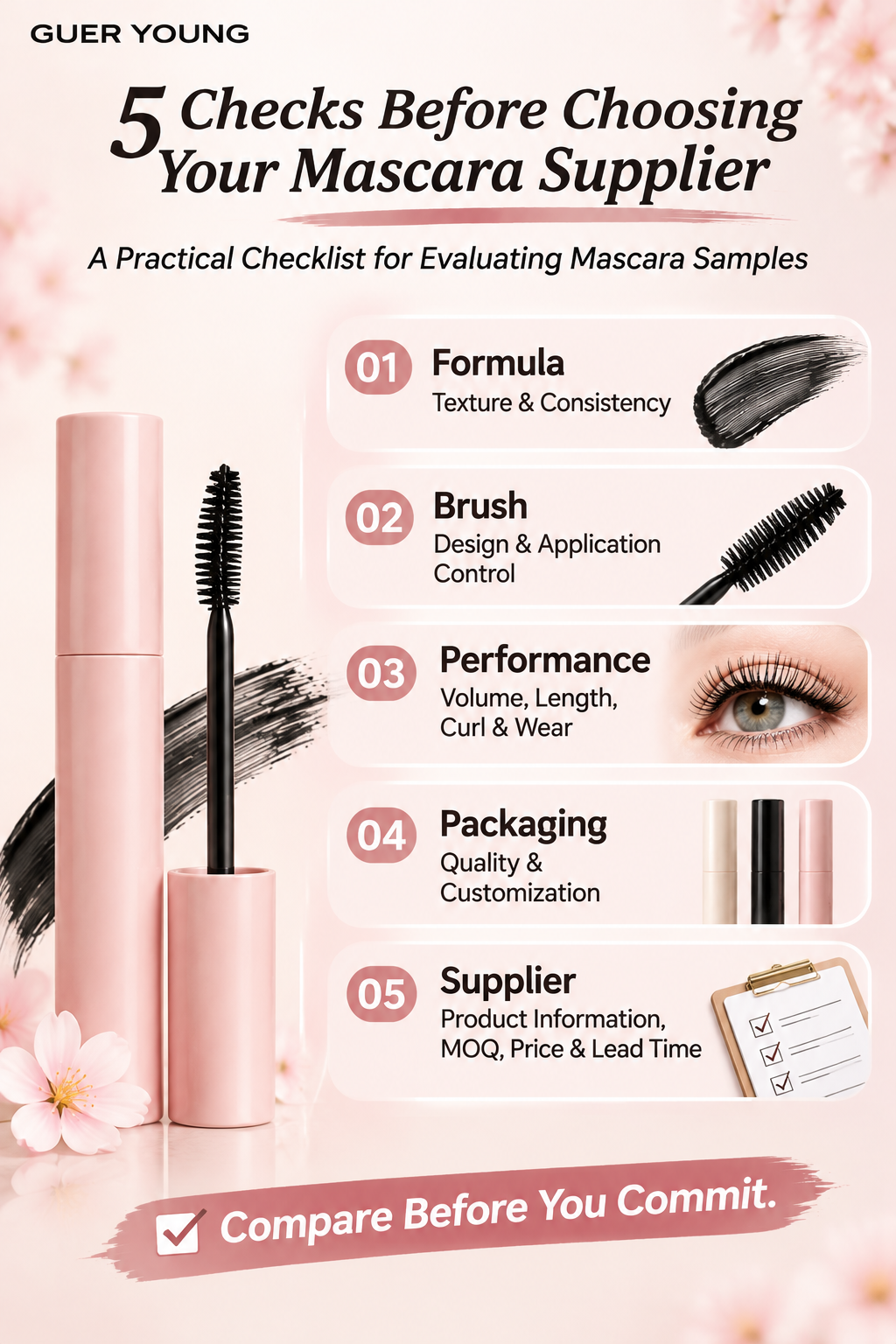
Keep a clear record for each sample, including:
Supplier name and sample reference number.
Product type, capacity, and main product claims.
Formula characteristics and brush design.
Packaging specifications and customization options.
Available product information and supporting documents.
MOQ, quotation, and estimated lead time.
If a supplier provides incomplete sample information, clarify the missing details before making a comparison. This helps prevent differences in specifications or missing information from affecting the sourcing decision.
5.2 Use a Consistent Scoring Method to Compare Samples
A simple scoring sheet can help your team compare different samples against the same criteria. The following is an example of how you might allocate weights:
| Evaluation Criteria | Suggested Weight |
Formula texture | 15% |
Brush performance | 20% |
Application results | 25% |
Wear performance | 20% |
Packaging quality | 10% |
Product information | 10% |
Total | 100% |
These weights are examples, not a universal industry standard. Adjust them according to your product positioning. For example, a waterproof mascara project may place more emphasis on wear and water resistance.
Ask team members to follow the same testing criteria and keep notes on their results. The final decision should consider product performance, brand requirements, purchasing conditions, and supplier communication rather than relying on one score alone.
Conclusion
Comparing mascara samples involves more than choosing the product with the best initial application results. Formula texture, brush design, wear performance, packaging, and product information all contribute to the final decision.
With consistent testing conditions and a clear scoring method, sourcing teams can identify the strengths and limitations of each sample and select a finished mascara that better matches their product positioning and purchasing plans.
If you are exploring finished mascara options for your next collection, visit GUER YOUNG's mascara product range to review available products and sourcing options.


andy.li@gueryoung.com

We have 10 years of experience, focusing on the development and sales of high quality eyelash growth serum, mascara, eyebrow gel, eyebrow color and other products. We also offer custom services, from tube
design to cosmetic fillings and packaging


Room 1, C3 Factory Building, No.8803 Zhuhai Avenue, Lianwan Industrial Zone, Pingsha Town, Gaolan Port Economic Zone, Zhuhai, Guangdong,China
QUICK LINKS
D Zone,5/F, NO.8 CuiZhu 5th Street,
Qianshan Xiangzhou District,Zhuhai,
Guangdong,China,519070

lynn.zhou@gueryoung.com
winnie.zhong@gueryoung.com
niki.xu@gueryoung.com