
Mascara Flaking: How to Test Samples Before Bulk Orders
Read in English | Lire en Français | Lesen auf Deutsch | Leer en Español
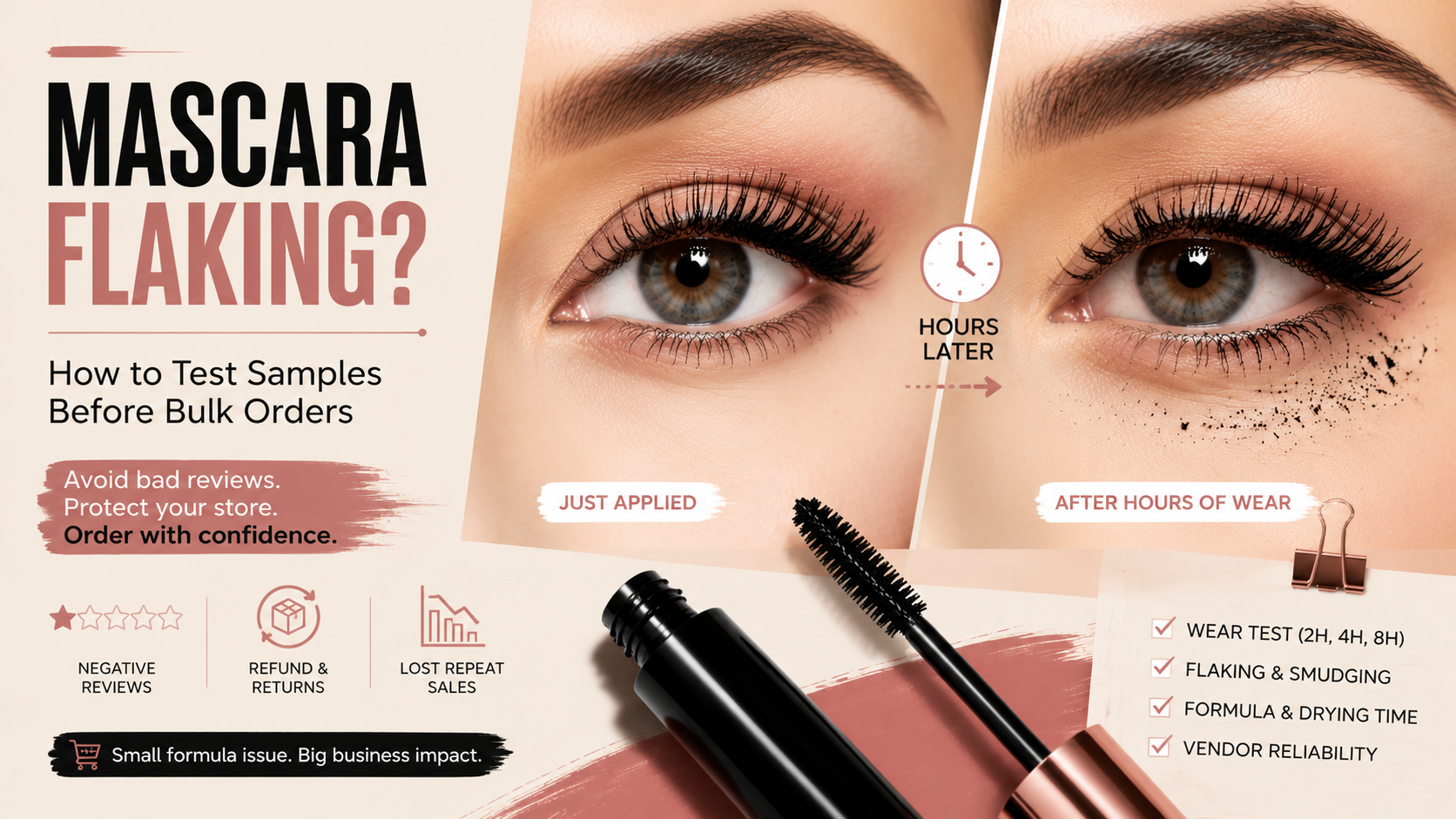
A mascara sample may look smooth on the first application, but that does not guarantee it will perform well throughout the day. If customers report flakes under their eyes, your online store may face negative reviews, refund requests, and lost repeat purchases.
For Amazon, Shopify, and TikTok Shop sellers, choosing mascara involves more than volume, length, and packaging. You also need to evaluate wear performance and confirm that bulk production matches the approved sample.
This guide explains how to test mascara samples, compare performance, and evaluate a finished cosmetics supplier before placing a bulk order.
1. Why Mascara Flaking Matters for Online Sellers
How Mascara Flaking Can Lead to Negative Reviews
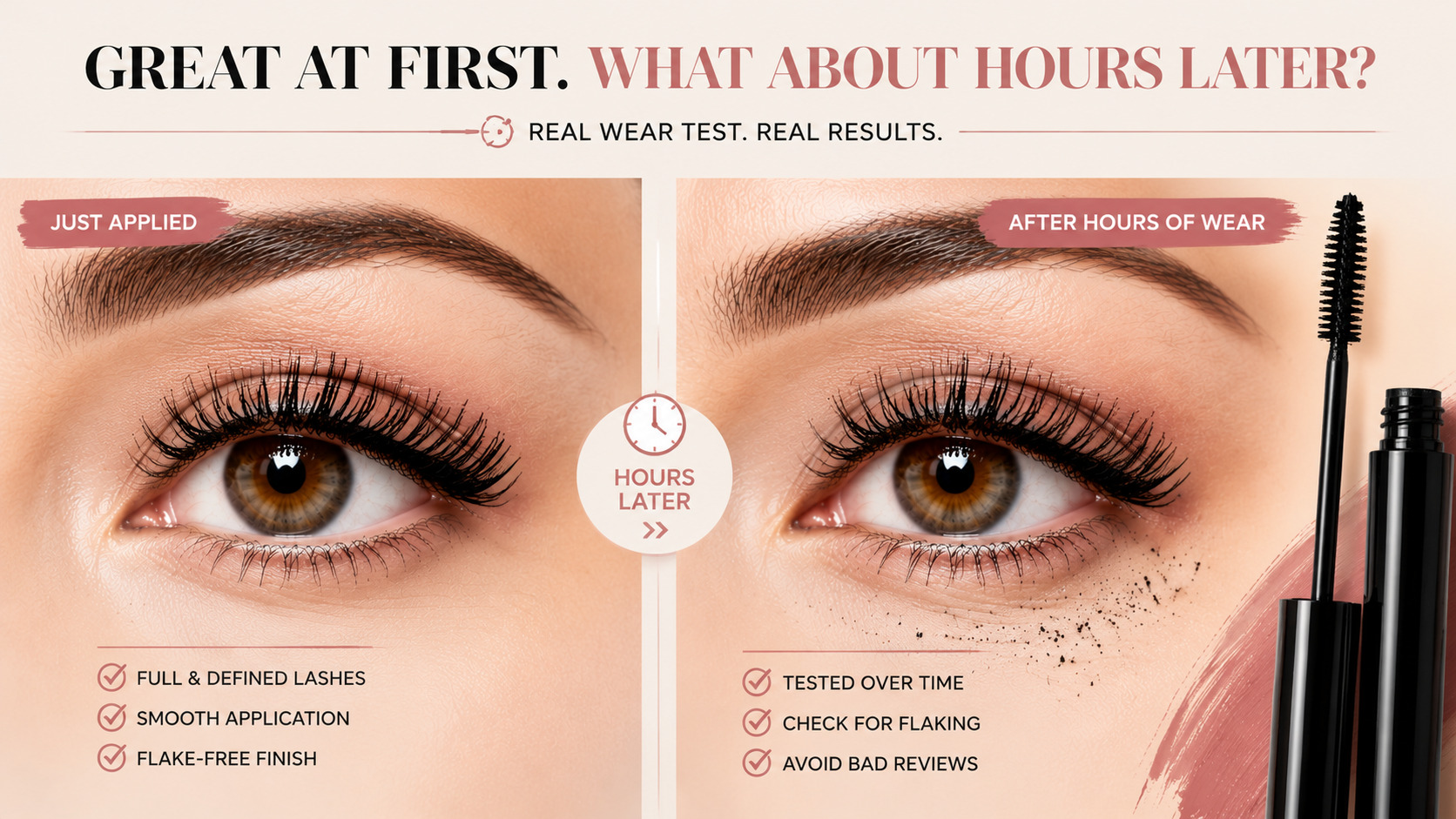
When mascara flakes onto the under-eye area, customers may describe the product as messy or unsuitable for all-day wear. Poor wear performance can affect customer satisfaction even when the initial application looks good.
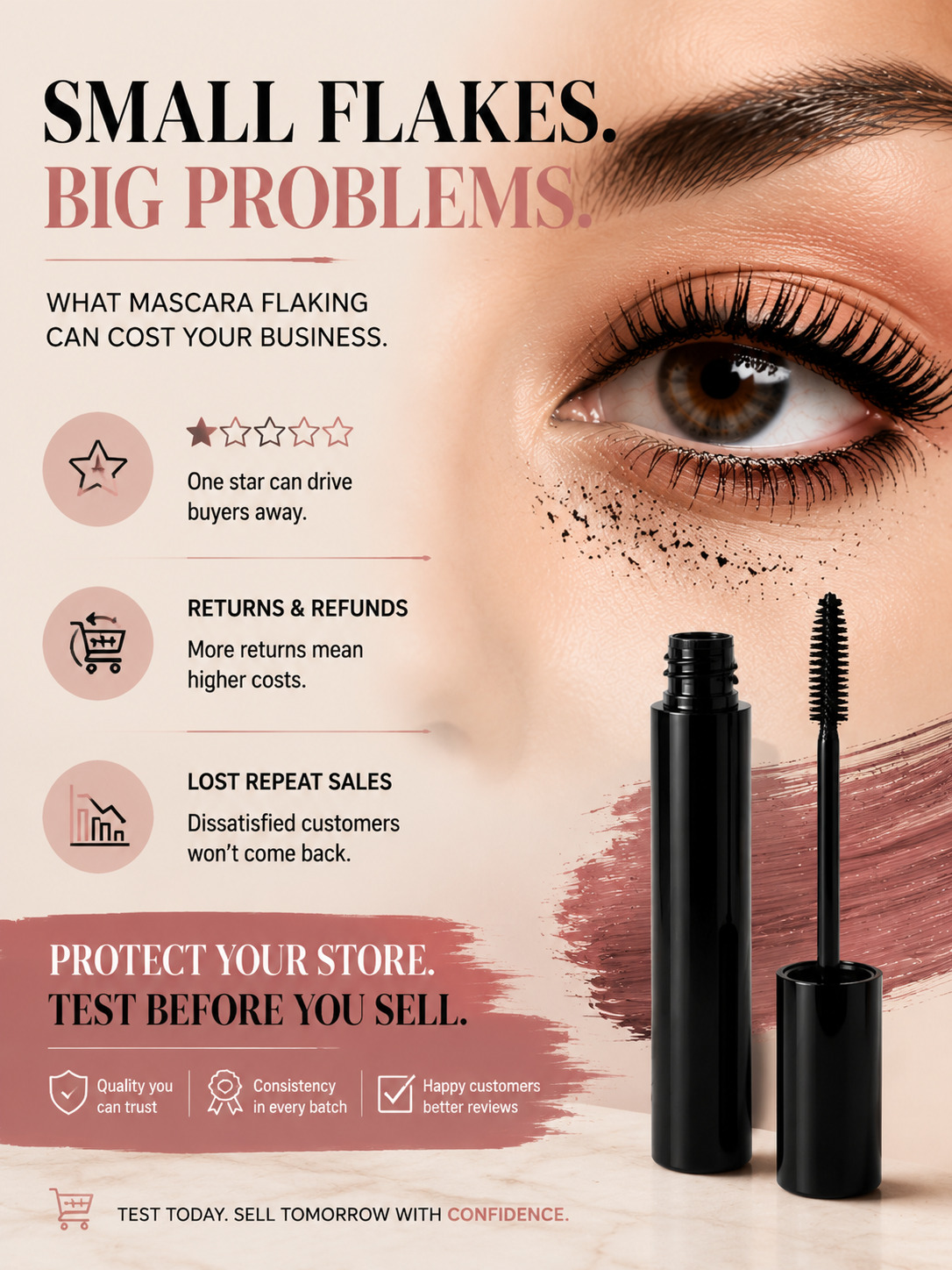
For online sellers, these complaints may lead to negative reviews, refund requests, additional customer service work, and fewer repeat purchases. Evaluating flaking before buying inventory helps you identify potential product issues earlier.
Why a Good First Application Is Not Enough
A mascara that applies smoothly may still develop flakes, smudges, or clumps later in the day. Initial appearance alone cannot predict long-term performance.
Before selecting a product, evaluate drying time, layering, visible fallout, transfer, and changes in appearance after several hours. These checks provide a more useful basis for comparison than the first application alone.
What Your Target Customers Expect from Mascara
Different customers look for different results. A product designed for dramatic volume may not suit consumers who prefer natural, separated lashes.
Before requesting samples, define your target market:
Natural makeup customers: Clean separation, lightweight application, and minimal clumping.
Volume-focused customers: Fuller-looking lashes without excessive buildup.
Long-wear customers: Consistent appearance with acceptable resistance to flaking and smudging.
Waterproof mascara buyers: Water resistance under the stated use conditions.
A clear product brief helps you compare samples and discuss suitable finished mascara options with suppliers.
2. What Causes Mascara Flaking—and What to Check
Formula Flexibility and Adhesion
Mascara forms a coating around the lashes. Its wear performance depends on the interaction between film-forming ingredients, waxes, pigments, and other formula components.
If the dried coating becomes brittle or adheres poorly to lashes, small particles may detach during wear. However, flaking cannot be attributed to one ingredient or formula type alone.
When evaluating samples, check whether the coating remains intact after drying and whether visible particles appear during wear. Compare products under similar conditions to identify meaningful differences.
Wand Design, Application, and Layering
The wand affects how much formula is picked up and distributed across the lashes. Excessive product pickup may cause clumping, uneven application, and buildup.
Application habits also matter. Thick layers, insufficient drying time between coats, and repeated brushing over partially dried mascara can affect the final result.
During sample evaluation, check whether the wand distributes the formula evenly, whether one coat achieves the intended effect, and whether a second coat builds volume or length without excessive clumping.
The best wand is the one that works well with the formula and your target customers' needs.
Wear Conditions and Customer Usage Habits
Environmental conditions and personal habits can influence mascara performance. Rubbing the eyes, applying too many coats, or using dried-out mascara may contribute to fallout.
Oily eyelids and moisture can also affect wear, depending on the formula. Flaking and smudging are different issues, so record them separately.
Keep application methods, coat counts, and test conditions consistent when comparing samples. This makes the results more useful for purchasing decisions.
3. How to Test Mascara Samples Before Bulk Ordering
Check Formula Texture and First-Coat Performance
Start with a basic inspection. Look for unusual texture changes, visible separation, damaged packaging, or a wand that does not fit securely.
Apply one coat according to the product instructions. Record whether the formula spreads evenly, whether lashes remain separated, and whether the result matches your product positioning.
Use this checklist:
Formula appearance and consistency
Wand fit and product pickup
Ease of application
Drying time under the test conditions
Clumping, transfer, and visible fallout
These checks help screen samples, but they do not replace appropriate safety, stability, or performance testing.
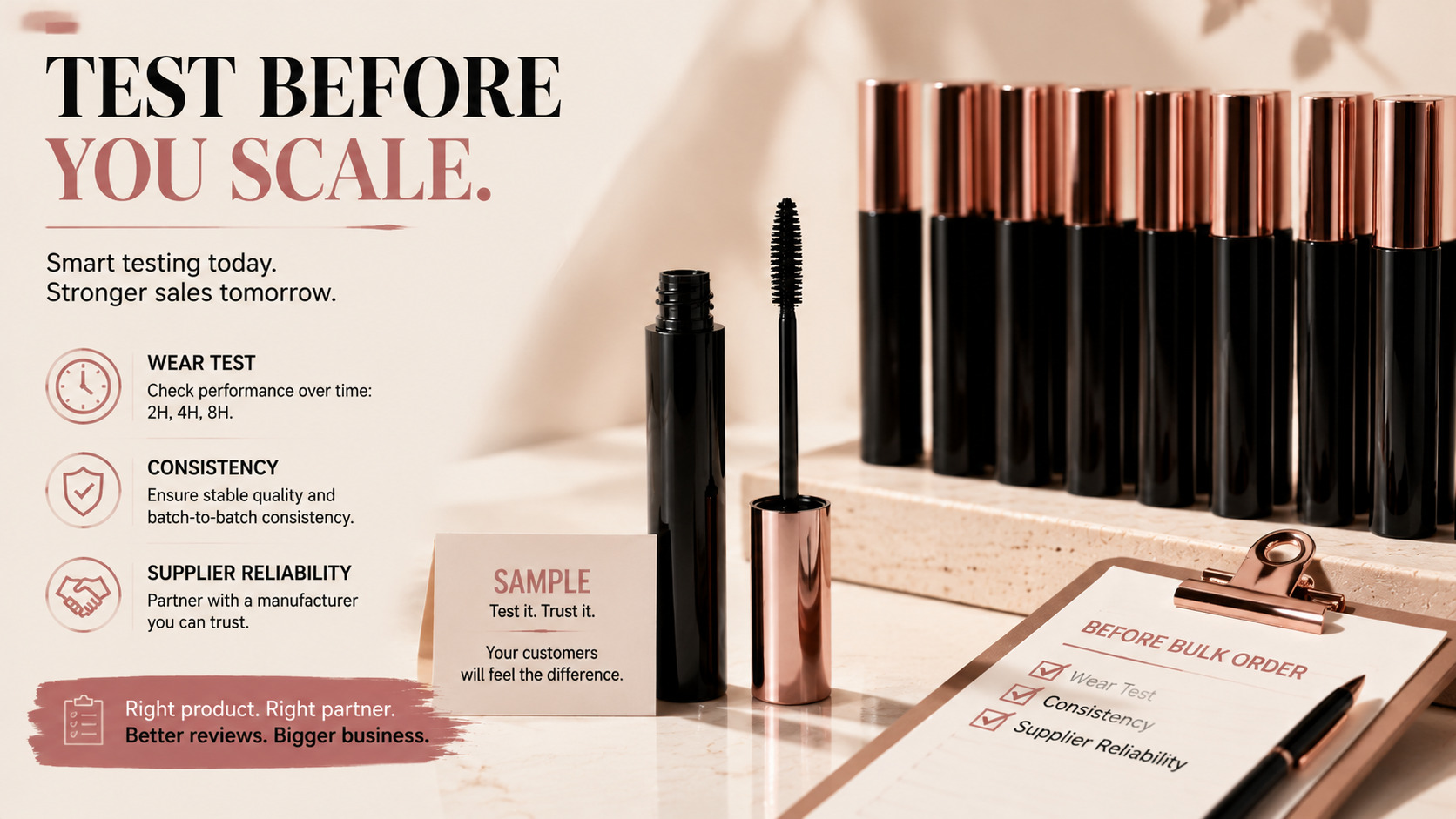
Compare Flaking at 2, 4, and 8 Hours
A structured wear test provides more information than a quick first impression. Where practical, assess samples at several points during the day.
Apply the same number of coats using a consistent method.
Allow the product to dry according to its instructions.
Check the lashes at 2, 4, and 8 hours.
Photograph visible fallout, smudging, or changes in appearance.
Record the environment and any unusual activity.
For a more reliable comparison, test multiple samples under similar conditions and repeat the assessment where possible.
There is no universal rule that every mascara must show zero flakes at a particular hour. Set acceptance criteria according to the intended use and product requirements. Specific wear or waterproof claims should be supported by appropriate testing.
Record Results with a Sample Evaluation Checklist
A sample evaluation sheet helps you compare products objectively and communicate expectations to suppliers.
| Evaluation Item | What to Record |
Formula and wand | Texture, pickup, and application |
Initial result | Volume, length, and finish |
Wear performance | Flaking, smudging, and transfer |
Layering | Buildup after additional coats |
Test conditions | Coat count, time, and environment |
Overall result | Pass, review, or reject against your criteria |
Do not choose a product based on one isolated result. Compare overall performance with your target customers' needs and keep records for future orders.
4. How to Check Supplier Quality Before a Bulk Order
Confirm What Was Tested in the Approved Sample
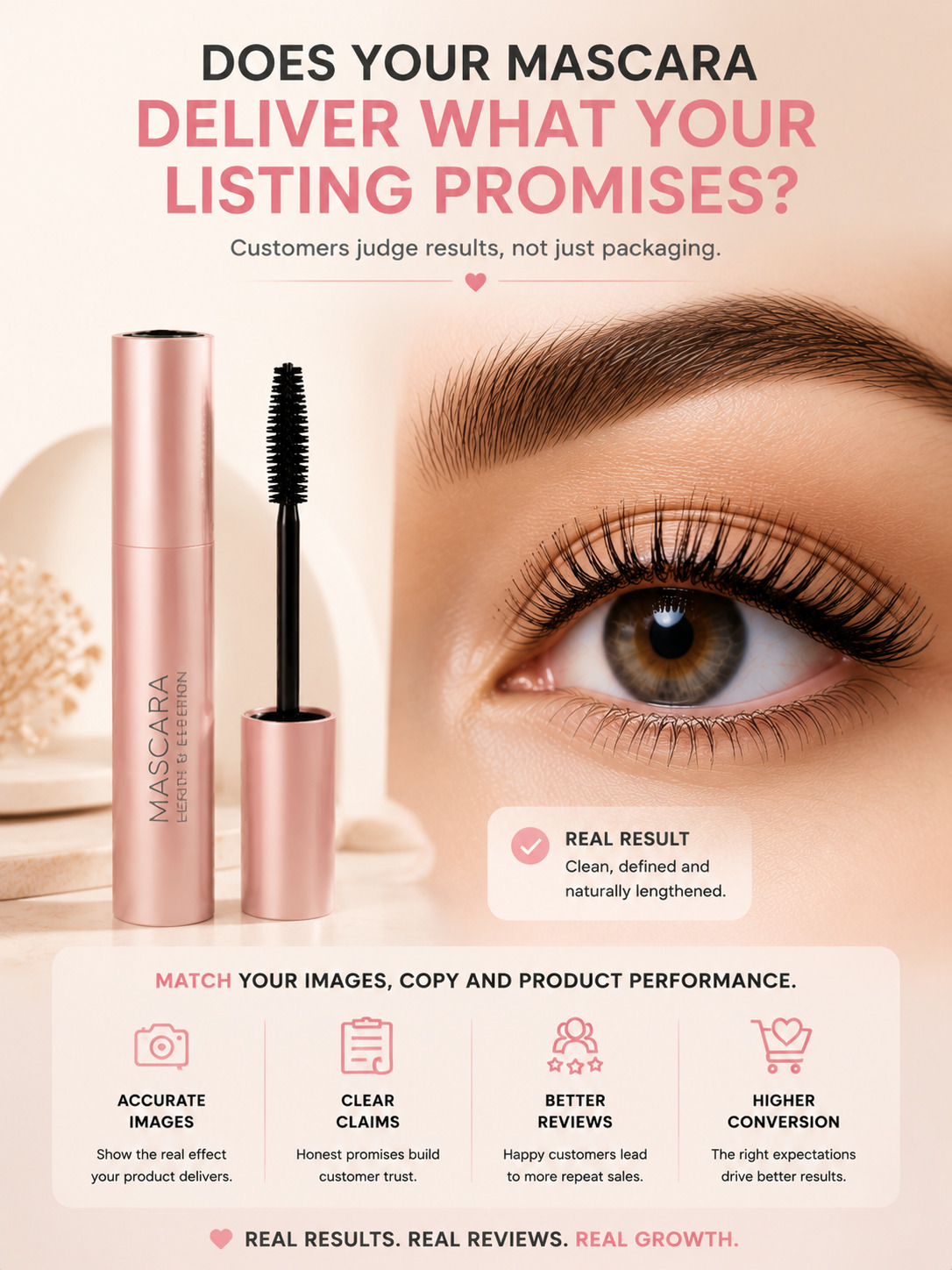
A sample should represent a specific product, not just a mascara category. The formula, wand, specifications, and intended performance all matter.
Before approval, record the product version and agreed specifications. Ask whether the approved sample represents the product intended for mass production and how any subsequent changes will be communicated.
This helps reduce confusion when discussing product revisions or repeat orders.
Check Batch Consistency and Quality Records
A good sample is only one part of the purchasing decision. You also need confidence that production stock will match the agreed specifications.
Ask the supplier what quality checks are performed and which records are available for your product. Depending on the product and quality system, relevant information may include:
Product specifications and batch identification
Applicable inspection or test records
Relevant product documentation
Procedures for handling nonconforming products
Sample retention or batch comparison practices, if offered
Not every supplier provides the same documents or testing services. Confirm what is actually available rather than relying on general quality claims.
Agree on Product Specifications and Acceptance Criteria
Before production, document the requirements that matter to your business, such as formula version, wand type, fill quantity, packaging, and agreed quality checks.
For larger orders, discuss sample approval, finished-product inspection, and what happens if delivered goods do not meet the agreed requirements.
Where appropriate, establish written specifications, sample approval records, inspection methods, acceptance criteria, and a process for resolving quality issues.
Clear expectations help both sides identify problems earlier and reduce misunderstandings during production and delivery.
5. Choosing the Right Finished Mascara for Your Brand
Match the Formula to Your Target Market
The right mascara should fit your customers' preferences and your product positioning. A dramatic volumizing formula may not suit a natural makeup line, while a waterproof product may not match every customer's removal preferences.
Before comparing suppliers, define your priorities:
Desired effect: Lengthening, volumizing, curling, or defining
Preferred wand shape: Application experience and ease of use
Expected wear performance: Flaking, smudging, and transfer resistance
Target selling price: Budget and market positioning
Relevant product documentation: Applicable requirements and substantiated claims
A clear brief helps you compare products based on what matters most to your business.
Compare Product Performance, MOQ, and Supply Terms
Unit price matters, but it should not be the only purchasing factor. A low-priced product may become more costly if it generates complaints, requires extra quality checks, or fails to meet customer expectations.
When comparing finished mascara suppliers, consider sample performance, product consistency, minimum order quantity (MOQ), available documentation, production lead time, reorder arrangements, private label options, and communication.
If you are launching a new product, ask about sample availability and the applicable MOQ before committing to large inventory quantities. Confirm the actual terms for the specific product.
What to Discuss with Your Finished Cosmetics Supplier
GUER YOUNG supplies finished eye makeup products for beauty brands and e-commerce sellers. When evaluating mascara, consider more than its initial appearance. Formula performance, wand design, product specifications, and batch consistency all matter.
We discuss product evaluation and OEM/ODM and private label options based on customer requirements. Before placing a bulk order, you can discuss your target market, desired lash effect, sample requirements, MOQ, and applicable quality documentation with our team.
Our goal is to help you choose finished mascara that fits your customers and business—not simply the product with the lowest unit price.
Looking for Mascara for Your Online Store?
Explore our Eye Makeup Collection or contact GUER YOUNG to discuss finished mascara options, sample evaluation, and private label requirements.
Evaluating products carefully before your first bulk order can help you make better-informed purchasing decisions and build a stronger foundation for your product line.


andy.li@gueryoung.com

We have 10 years of experience, focusing on the development and sales of high quality eyelash growth serum, mascara, eyebrow gel, eyebrow color and other products. We also offer custom services, from tube
design to cosmetic fillings and packaging


Room 1, C3 Factory Building, No.8803 Zhuhai Avenue, Lianwan Industrial Zone, Pingsha Town, Gaolan Port Economic Zone, Zhuhai, Guangdong,China
QUICK LINKS
D Zone,5/F, NO.8 CuiZhu 5th Street,
Qianshan Xiangzhou District,Zhuhai,
Guangdong,China,519070

lynn.zhou@gueryoung.com
winnie.zhong@gueryoung.com
niki.xu@gueryoung.com