
How to Choose Mascara SKUs for Holiday Sales
Read in English | Lire en Français | Lesen auf Deutsch | Leer en Español
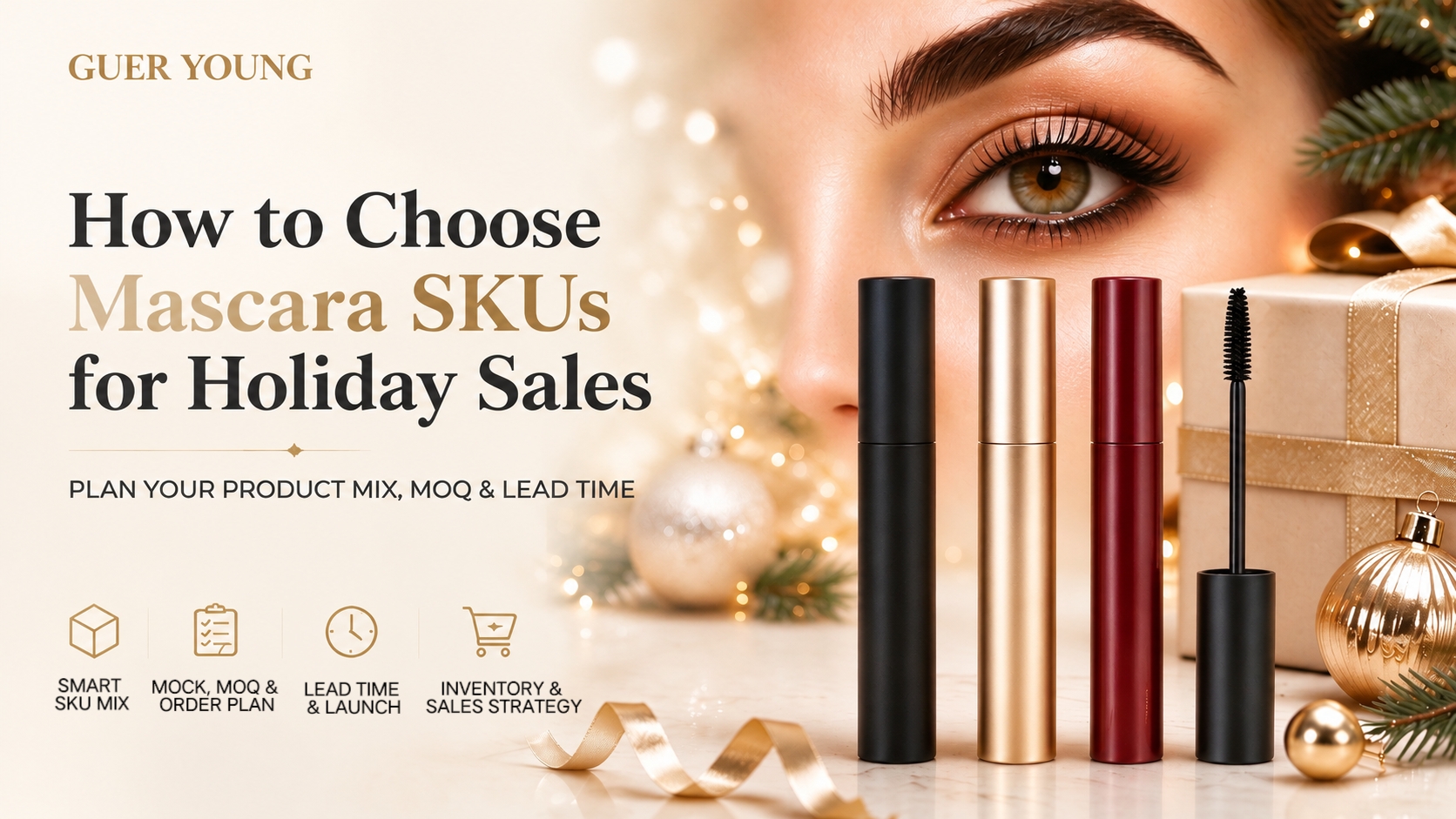
The Christmas shopping season gives beauty e-commerce sellers an opportunity to introduce seasonal products, create product bundles, and test new items. However, choosing holiday mascara is about more than selecting a product with festive packaging. Product positioning, SKU count, purchasing budget, minimum order quantity (MOQ), and lead time can all affect whether a collection is ready to launch as planned.
For Amazon, Shopify, and other online sellers, a more practical approach is to define the purpose of the holiday collection first, then decide which mascara products deserve a place in the assortment and how to organize procurement.
This guide explains how beauty brands and e-commerce sellers can plan a Christmas mascara assortment and connect product selection with purchasing decisions.
1. Why Does Christmas Mascara Selection Require Early Planning?
1.1 Define the Commercial Role of Each Product
Holiday products can serve different purposes. Some are designed to attract new customers, others extend an existing makeup range, and some work well as part of a product bundle.
For this reason, sellers should not choose a mascara simply because its packaging looks festive. They should first decide what role it will play in the collection.
A brand targeting everyday makeup users may prioritize products that fit naturally into daily routines. A brand focused on a particular lash effect may build its collection around volumizing, lengthening, or curling positioning.
A clear product role also makes it easier to maintain consistent messaging across product pages, advertising materials, and holiday promotions.
1.2 Adapt the Assortment to the Sales Channel
Different e-commerce channels may require different assortment strategies.
For Amazon sellers, product positioning, listing information, review performance, and inventory planning deserve attention before launch. Shopify sellers have more flexibility to present related products through holiday landing pages, email campaigns, and bundle recommendations.
If a brand already sells eyeliner, eyebrow pencils, or brow gel, mascara can complement the existing eye makeup range instead of becoming a completely separate seasonal collection.
Before adding new SKUs, review the main sales channel, target customers, and current product range. This helps determine whether a new holiday assortment is necessary or whether existing products can support the campaign.
2. How to Build a Christmas Mascara Product Mix
2.1 Choose Core SKUs Based on Product Positioning
A Christmas collection does not need to include every mascara type. For brands with limited resources, starting with one core SKU may be easier to manage than launching several products with similar positioning.
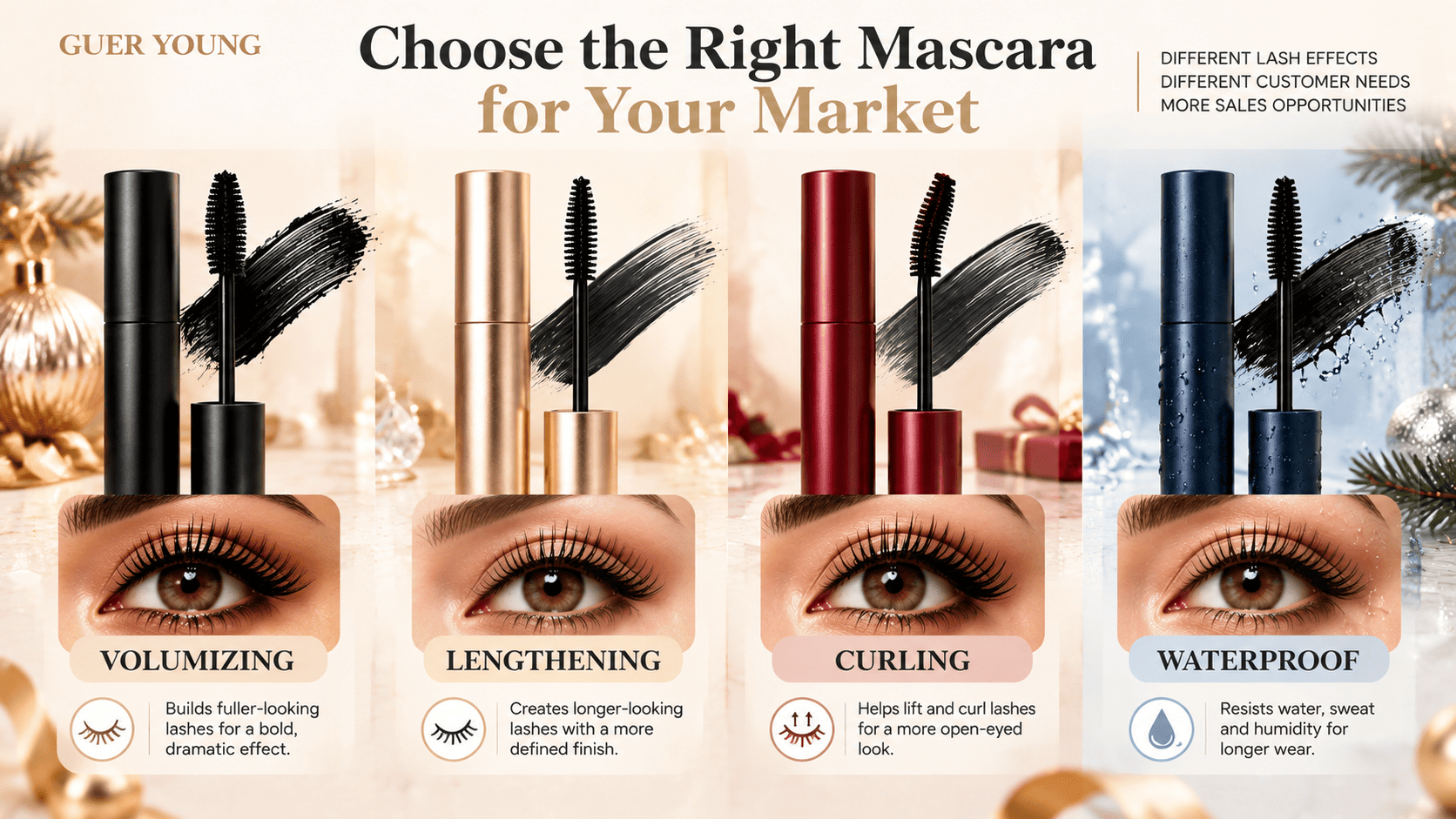
Different mascara types can serve different roles in an assortment:
Volumizing mascara: Suitable for brands that want to emphasize fuller-looking lashes.
Lengthening mascara: A potential choice for product lines focused on longer-looking, more defined lashes.
Curling mascara: Suitable for positioning centered on lash lift and curl.
Waterproof mascara: An option for customers who prioritize wear performance, although actual results should be evaluated through product testing.
These categories are options, not a checklist of products that every seller must purchase. The right selection depends on the target audience, existing range, and sales channel.
For example, a brand building its first eye makeup collection may focus on one core lash effect. A brand with an established customer base may consider adding a complementary product to serve another customer need.
2.2 Make Each SKU Serve a Distinct Purpose
A useful product assortment is not simply a larger collection. Each SKU should have a clear reason to exist.
For example, a brand could build a basic range around volumizing and lengthening mascaras, with each product addressing a different customer preference. If the existing range includes eyeliner or brow gel, those products could also be included in holiday bundle recommendations.
Sellers looking to control their initial investment can begin with a core product and consider expanding the assortment after reviewing sample performance and sales feedback.
Before confirming the SKUs, ask:
Does each product address a clear customer need?
Is there too much overlap between product positioning?
Is there a reason for existing customers to purchase a second product?
Will the additional SKU create unnecessary inventory complexity?
If two products target nearly the same audience with almost identical selling points, adding the second one may not provide enough value to justify the extra purchasing and management work.
3. Should You Launch One Hero SKU or a Multi-SKU Holiday Range?
3.1 One Hero SKU: Focus Resources on Market Testing
For new beauty brands, small e-commerce businesses, or sellers testing a seasonal collection for the first time, a single hero SKU can simplify purchasing and operations.
The team can focus on one product listing, prepare product images, create promotional content, and collect feedback on product positioning and performance.
This approach can be useful when the brand has not yet established which mascara type best fits its target market. Evaluating samples before confirming the order quantity can also reduce the complexity of managing several new products at once.
However, a single SKU offers fewer choices. If existing customers have clearly different preferences for lash effects, one product may not meet every need.
3.2 Multiple SKUs: Extend an Established Product Range
A multi-SKU assortment may be more suitable for brands with an established eye makeup range or a stable customer base.
For example, volumizing mascara could serve as the core product, while lengthening mascara provides an alternative. Eyeliner or brow gel could complement the range through holiday bundle recommendations. This creates more choice while giving each product a clear role.
However, multiple SKUs also require more coordination across purchasing, inventory allocation, product listings, and promotional content.
When deciding how many products to launch, consider not only how complete the collection looks but also whether the team can support each SKU with its own content, stock plan, and sales strategy.
For products with untested demand, a smaller assortment can provide a more manageable starting point before further expansion.
4. How to Match Your Product Mix with MOQ, Order Quantity, and Sourcing Options
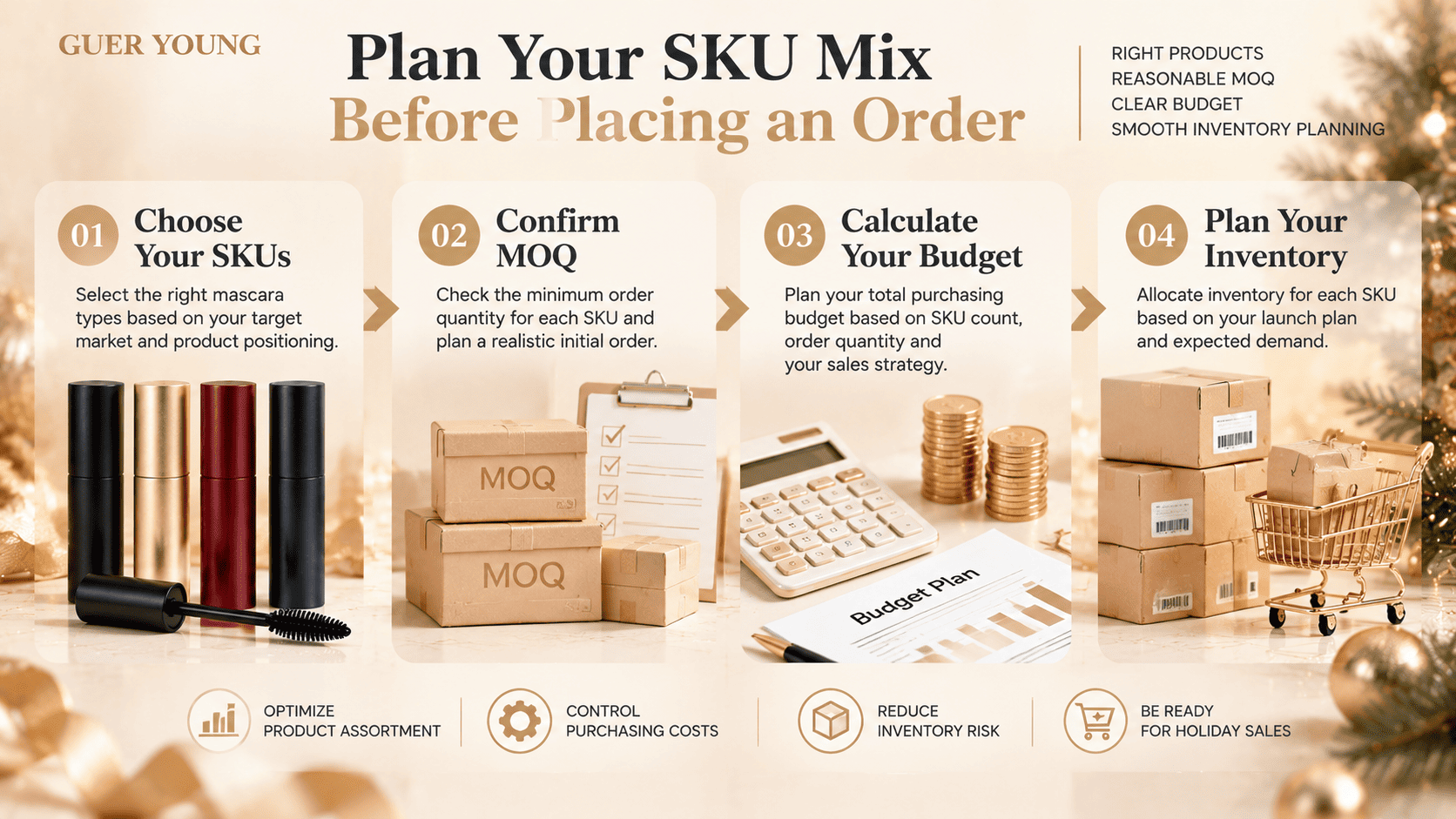
4.1 Build a Purchasing Plan Around the Number of SKUs
Once the assortment is defined, the next step is to evaluate whether the planned purchases are practical.
Suppose a brand plans to launch two mascara products, each with its own MOQ. If each product requires a separate order, the brand needs to calculate the purchasing quantity, budget, and expected demand for each SKU rather than considering only the total order volume for the collection.
For a first order, it may be more practical to assess demand for the core SKU before allocating additional budget to complementary products.
When speaking with a supplier, confirm:
Whether each product has the same MOQ.
Whether different products can be combined in one order.
Whether logo application or customization affects the MOQ.
Which approval steps are required before production begins.
These details help determine whether the planned assortment fits the current budget and sales forecast.
4.2 Choose a Sourcing Approach That Fits the Launch Schedule
Finished-product sourcing and private label purchasing can serve different project requirements.
If a brand wants to use an existing finished mascara design, it can ask about available products, specifications, branding options, and the actual lead time. If the brand wants to develop its own product range, it can discuss private label or OEM/ODM options, including formula choices, product specifications, packaging, and branding requirements.
It is important to remember that a finished product is not necessarily in stock or ready for immediate shipment. Sample approval, branding, order scheduling, production, and shipping can all affect the launch date.
Sellers should therefore confirm actual stock status and estimated lead time with the supplier for the specific product instead of assuming that a catalog listing guarantees availability before Christmas.
5. What Should You Prepare Before the Holiday Launch?
5.1 Evaluate Samples Before Confirming the Bulk Order
Holiday products often have a concentrated launch window, leaving sellers limited time to revise product listings or promotional plans. Sample evaluation should therefore be a core part of the purchasing process, not a step added after an order has been placed.
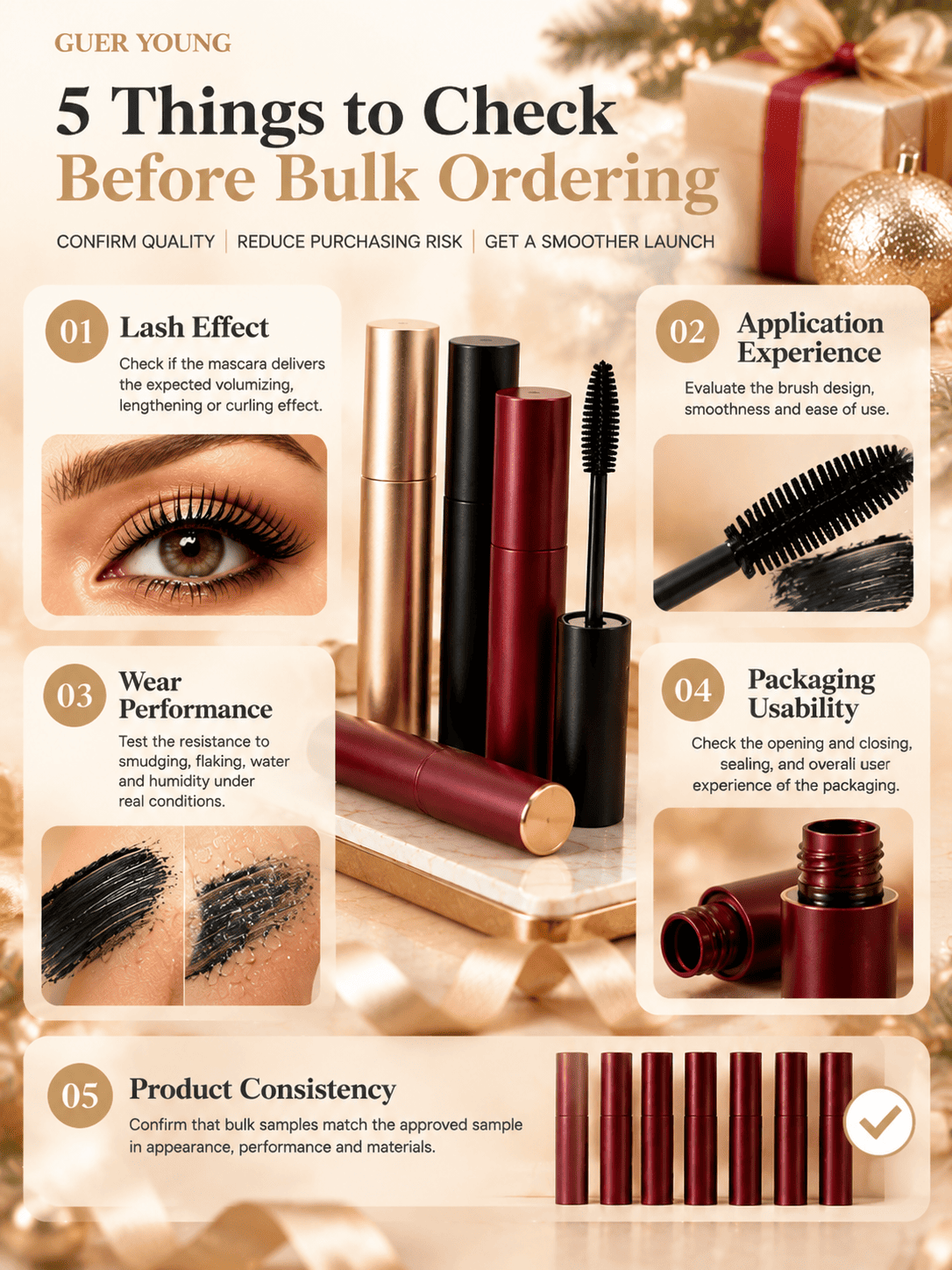
Testing should reflect the brand's actual requirements. Relevant considerations may include the intended lash effect, application experience, wear performance, packaging usability, and product consistency.
If the product is positioned around waterproof or smudge-resistant performance, use testing methods suited to the target market and intended use. A single trial is not enough to establish that a product is suitable for bulk purchasing.
After sample approval, confirm that the bulk order will follow the approved product specifications, packaging, and branding requirements. Any proposed formula or packaging changes should be discussed with the supplier in advance.
5.2 Allow Time for Inventory and the Selling Period
The Christmas selling season has a defined time window. Even a well-positioned product may miss its intended promotional period if it arrives too late.
Work backward from the planned launch date and allow time for sample approval, branding confirmation, production scheduling, shipping, and product listing preparation.
The initial order quantity should reflect historical sales, current inventory, expected promotional reach, and the feasibility of replenishment. For new products without sales data, avoid increasing the order solely because seasonal demand is expected to be high.
It is also worth considering what happens after the holiday season. Can the mascara continue to sell as an everyday product? Can it be bundled with existing eye makeup items? Could leftover stock affect the next purchasing cycle?
Thinking through these questions before ordering helps connect holiday sales planning with longer-term inventory management.
6. How to Choose a Mascara Supplier for Your Holiday Collection
6.1 Confirm That the Supplier Can Meet Your Purchasing Requirements
A suitable supplier should do more than provide a product catalog. It should be able to explain product specifications, MOQ, sample arrangements, branding options, and order timelines clearly.
When comparing suppliers, consider whether they can provide:
Finished mascara products that fit the brand's positioning.
Private label or OEM/ODM options that match the project requirements.
Relevant product information and applicable compliance documentation.
A clear process for sample approval and order communication.
Realistic lead-time information and a defined bulk-order process.
Brands selling in different countries or regions should also confirm whether the relevant regulatory, labeling, and documentation requirements apply to their target markets.
Rather than comparing unit prices alone, evaluate product fit, purchasing conditions, quality control, and communication efficiency together.
6.2 Prepare Clear Requirements Before Contacting a Supplier
To make product selection and quotation discussions more efficient, prepare basic information about the target market, sales channel, desired lash effect, estimated order quantity, packaging requirements, and planned launch date.
If the final SKU selection is not yet confirmed, explain the type of product range you want to build and whether you are primarily considering finished products or private label cooperation.
GUER YOUNG supplies finished eye makeup products and supports OEM/ODM and private label cooperation. Beauty brands and e-commerce sellers can discuss mascara options, sample evaluation, and purchasing arrangements according to their target markets, sales channels, and assortment needs.
For a more manageable Christmas mascara launch, define each product's role and confirm the purchasing conditions before deciding how many SKUs to order.


andy.li@gueryoung.com

We have 10 years of experience, focusing on the development and sales of high quality eyelash growth serum, mascara, eyebrow gel, eyebrow color and other products. We also offer custom services, from tube
design to cosmetic fillings and packaging


Room 1, C3 Factory Building, No.8803 Zhuhai Avenue, Lianwan Industrial Zone, Pingsha Town, Gaolan Port Economic Zone, Zhuhai, Guangdong,China
QUICK LINKS
D Zone,5/F, NO.8 CuiZhu 5th Street,
Qianshan Xiangzhou District,Zhuhai,
Guangdong,China,519070

lynn.zhou@gueryoung.com
winnie.zhong@gueryoung.com
niki.xu@gueryoung.com