
How to Check Mascara Batch Quality Before Reordering
Read in English | Lire en Français | Lesen auf Deutsch | Leer en Español
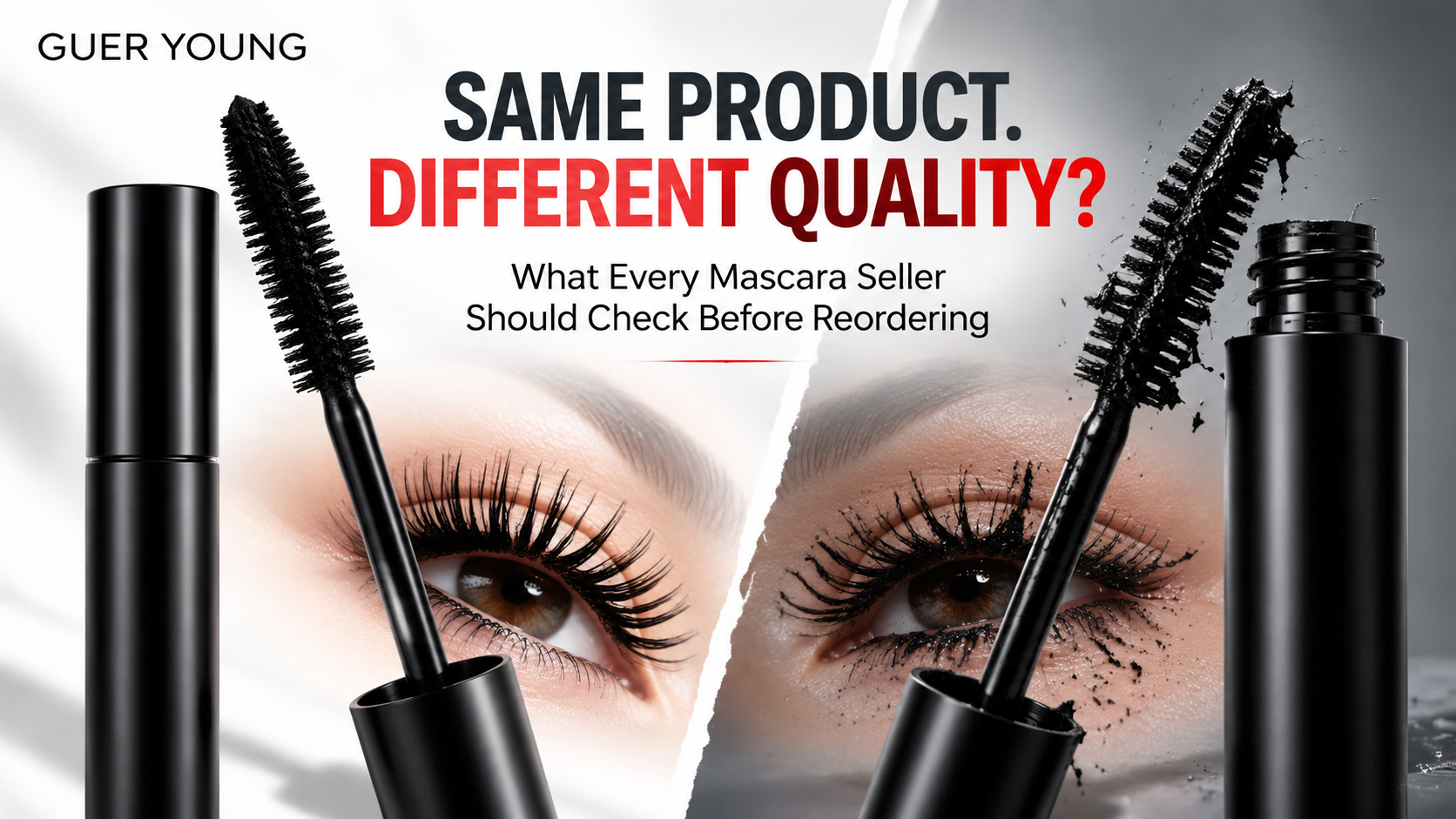
A successful first mascara order does not guarantee that every subsequent batch will meet the same quality standards. For beauty brands, Amazon sellers, and independent e-commerce businesses that regularly replenish inventory, quality differences between batches can affect customer experience, product reviews, and inventory management.
For example, a new batch may show changes in formula appearance, product pickup, or packaging assembly. Customers may then feel that the product is different from the one they purchased previously, even when the product name and design remain unchanged.
Before reordering, buyers should compare the new batch with the approved reference sample, current product specifications, and records from the previous accepted batch. Clear inspection items and acceptance criteria help identify issues that require investigation and allow buyers to agree on corrective actions with their suppliers before products are released.
1. Why Does Mascara Batch Quality Matter for Repeat Orders?
For e-commerce sellers who continuously sell the same mascara product, batch quality affects more than manufacturing. It can also influence product reviews, returns, and supply chain reliability.

1. Maintain a Consistent Customer Experience
Customers who reorder the same mascara generally expect a similar experience. Noticeable differences in formula condition, brush performance, or packaging can affect their confidence in the brand, even when the product name and shade remain unchanged.
2. Reduce the Risk of Complaints and Negative Reviews
If a new batch has unusual formula characteristics, brush-related problems, or packaging defects, sellers may need to deal with complaints, returns, and negative reviews. These issues deserve particular attention for e-commerce businesses that rely on marketplace ratings and customer feedback to attract buyers.
3. Avoid Additional Costs After Replenishment
Quality problems discovered after products have been shipped are more complicated to manage. Sellers may need to reinspect inventory, pause shipments, contact customers, or coordinate replacements. Inspecting products before release helps identify issues that require further review at an earlier stage.
4. Build More Reliable Supplier Relationships
Long-term replenishment requires both parties to understand the product specifications, acceptance criteria, quality records, and change notification requirements. Agreeing on these points in advance reduces repeated discussions and makes the reorder process more predictable.
Not every difference between batches indicates a defect. The key is whether the difference falls outside the current specifications, applicable requirements, or mutually agreed acceptance criteria.
2. How to Establish a Reliable Quality Baseline Before Reordering
Before inspecting a new batch, buyers need to establish what they will compare it against. Relying on memory or comparing the new batch only with the previous shipment is not enough to support a reliable acceptance decision.
1. Confirm the Approved Reference Sample
An approved reference sample provides a physical basis for comparison. For mascara, buyers should pay attention to:
Formula color, uniformity, and visible condition.
Brush shape, dimensions, and bristle arrangement.
Product pickup characteristics.
The appearance of the tube, cap, and other packaging components.
Labels, printing, shade identification, and product markings.
The reference sample should have a clear approval record, including its identification number, version, approval date, and corresponding product specifications where appropriate.
However, a reference sample cannot replace all written requirements. Fill quantity, microbiological criteria, and other parameters requiring specific testing methods must still be assessed against the relevant specifications and inspection results.
2. Check the Current Product Specifications
Product specifications are the primary basis for determining whether a new batch meets the agreed requirements. Depending on the product and agreement, the relevant information may include:
Formula or applicable formula-version records.
Color, appearance, and relevant technical parameters.
Net content or fill quantity requirements.
Brush, wiper, and tube dimensions or compatibility requirements.
Packaging materials, labels, and printing requirements.
Applicable safety, regulatory, and quality requirements.
Agreed sampling, inspection, and acceptance procedures.
Use the current approved specifications rather than outdated documents. If the product specifications have changed, confirm which version applies and whether the relevant change has been approved.
3. Review Records from the Previous Accepted Batch
Historical batch records can help buyers identify changes over time, such as variations in formula appearance, recurring packaging issues, or technical parameters approaching specified limits.
However, the previous batch is a supporting reference, not a replacement for current specifications. If the earlier batch had a deviation, its condition should not automatically become the new quality standard.
A more reliable approach is to use current specifications and agreed acceptance criteria as the decision-making basis, the approved sample as a physical reference, and historical batch records to identify possible trends.
3. How to Inspect a New Mascara Batch
Once the quality baseline is established, buyers can evaluate the new batch using a consistent inspection checklist. Inspection conditions and methods should be kept as consistent as reasonably possible. Sample sizes should be determined according to product risk, order circumstances, and the agreement between the buyer and supplier.
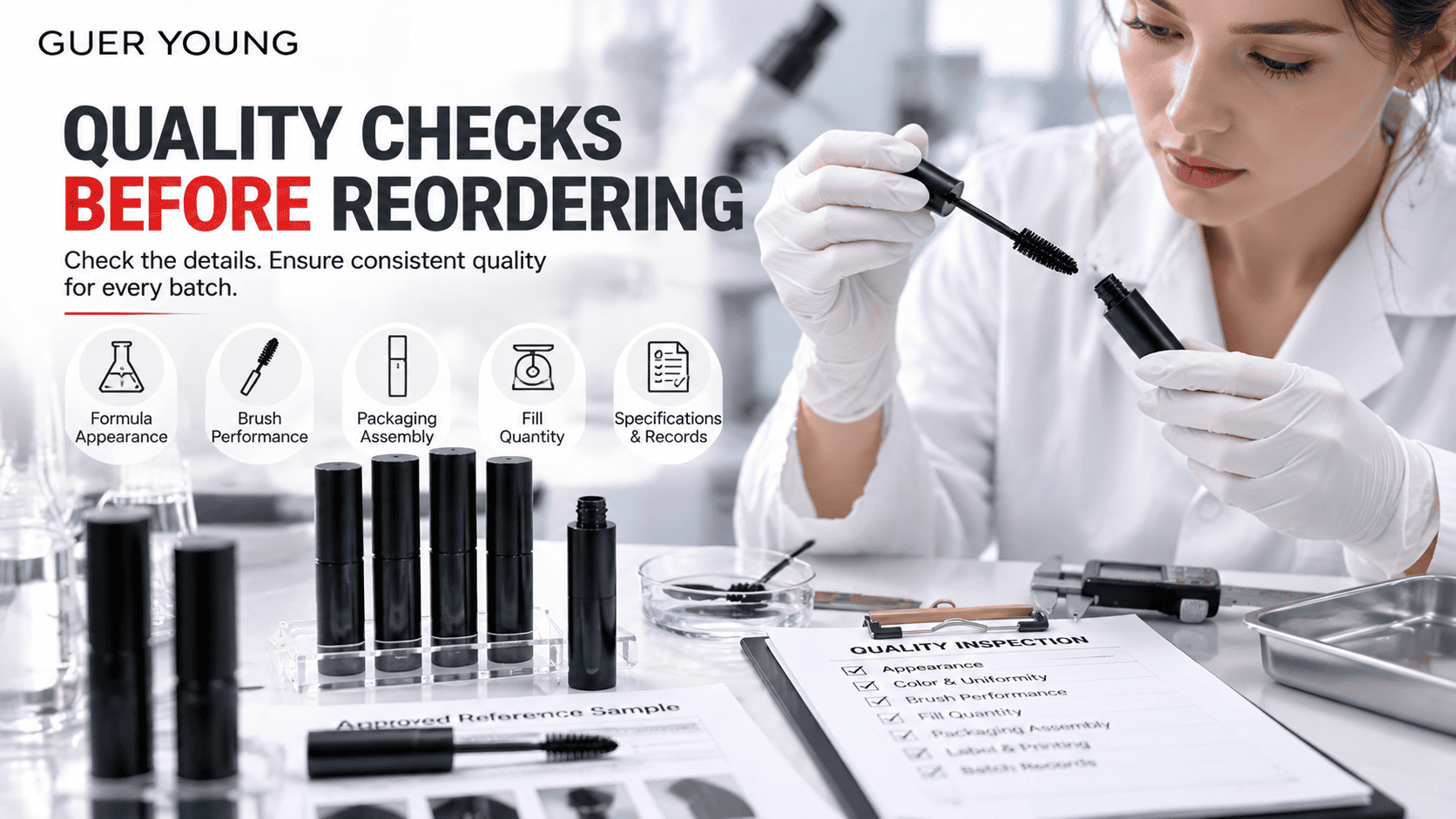
Inspection item | What to check | Key concerns |
Formula appearance | Color, uniformity, visible condition | Unusual changes, visible separation, or foreign matter |
Technical parameters | Applicable viscosity, density, or other agreed parameters | Whether methods and results meet specifications |
Fill quantity | Net content or agreed filling requirements | Whether results meet applicable requirements and acceptance criteria |
Brush and wiper | Dimensions, fit, and product pickup | Sticking, unusual pickup, leakage, or assembly issues |
Packaging assembly | Tube, cap, threads, and sealing structure | Looseness, damage, leakage, or assembly defects |
Labels and printing | Product name, shade, batch code, and relevant markings | Incorrect, missing, or inconsistent information |
Batch documentation | Batch details, production and inspection records | Completeness, traceability, and consistency with the actual product |
1. Check Formula Appearance and Relevant Technical Parameters
Compare the new batch with the approved sample under reasonably consistent observation conditions. Look for noticeable changes in color, uniformity, and visible condition.
If the product specifications define viscosity or other technical parameters, measure them using the agreed method. Visual inspection, touch, or a single application experience cannot establish whether all technical requirements have been met.
Record any differences and compare the findings with the specifications to determine whether further testing is needed.
2. Verify Fill Quantity and Product Specifications
A similar external appearance does not guarantee that the actual net content meets requirements. Buyers should check the declared net content, filling requirements, and applicable regulations, then verify the results using the agreed inspection method.
Where precise measurement is required, use appropriate equipment and methods rather than inferring net content from the overall product weight or packaging appearance alone.
3. Check Brush-Wiper Compatibility
The brush and wiper affect product pickup and application. Even when the formula remains unchanged, differences in brush dimensions, wiper openings, or assembly can change the customer experience.
Check whether:
The brush can be removed and reinserted normally.
The brush passes through the opening without noticeable sticking.
Product pickup differs unexpectedly from the approved sample.
Bristle arrangement and related components meet the approved specifications.
There is unusual leakage, loose assembly, or component damage.
If a problem is found, investigate whether it may be related to formula parameters, brush design, wiper compatibility, or manufacturing assembly. Do not assume a single cause without supporting evidence.
4. Inspect Packaging, Labels, and Printing
Packaging inspection affects not only product appearance but also transportation integrity, product identification, and customer confidence.
Check the tube, cap, assembly structure, labels, and printed information against the approved version. Batch codes, ingredient information, and other relevant markings should be reviewed against applicable requirements.
If the packaging design or materials have changed, confirm that the change has received the necessary evaluation and approval.
Specific performance concerns, such as clumping, flaking, or smudging, may require targeted sample testing based on product risk. There is no need to repeat every possible test indiscriminately for every reorder. However, changes to the formula, brush, packaging, or manufacturing process—or existing complaints that require investigation—may justify additional verification.
4. How to Handle Mascara Batch Deviations
When a difference is identified, buyers should neither assume that the entire batch is defective nor release the products without evaluation. The appropriate response is a documented and traceable process based on the nature and potential impact of the issue.
1. Record the Difference and Inspection Results
Document the product model, batch number, inspection date, sampling details, inspection items, and actual results, together with the relevant specification.
For visual or packaging concerns, retain photographs where appropriate. For technical parameters, preserve the test method and measurement records.
2. Compare the Results with the Acceptance Criteria
Compare the findings with current specifications, applicable requirements, and mutually agreed acceptance criteria.
If the difference remains within the permitted range, a minor variation from the previous batch should not automatically be classified as a defect. If the result exceeds a specified limit or involves a potential safety, regulatory, or significant quality risk, further investigation and appropriate action are required.
3. Hold Affected Products When Necessary
If the issue has not been resolved, consider temporarily holding the affected batch or portion of the order, depending on the severity and scope of the concern. This helps prevent products with unresolved quality issues from entering the sales process.
Safety- and regulation-related concerns must be handled in accordance with applicable requirements and established procedures.
4. Investigate the Cause with the Supplier
Review the relevant production records, inspection results, raw materials, packaging components, and change records with the supplier.
For example, if product pickup has changed, investigate whether the cause may involve formula parameters, brush dimensions, wiper compatibility, or assembly conditions. The investigation should rely on verifiable evidence rather than assumptions.
5. Document the Final Decision
Depending on the findings and the agreement between both parties, possible actions may include reinspection, rework, replacement, or other appropriate corrective measures. Where permitted by applicable requirements, a specific deviation may also be formally assessed and approved before a disposition decision is made.
The records should include the reason for the issue, the actions taken, the parties responsible, and the final acceptance decision. Safety and regulatory requirements must not be waived through informal agreement.
5. How to Evaluate a Mascara Supplier's Batch Quality Management
For brands that need regular replenishment, a supplier's ability to follow a clear quality management process is an important purchasing consideration.
1. Are Batch Records Complete and Traceable?
Buyers can confirm whether the supplier can provide agreed batch information, production records, inspection results, and applicable release documents. When a problem occurs, can the supplier identify the affected batch and trace the relevant production and inspection information?
2. Are Inspection Items and Acceptance Criteria Clearly Defined?
Understand how the supplier checks formula appearance, fill quantity, packaging assembly, and other key items, as well as how deviations are documented and handled.
Rather than asking only whether the supplier has quality control, ask about the actual inspection items, acceptance criteria, recordkeeping, and deviation-handling procedures.
3. Are Product or Manufacturing Changes Communicated in Advance?
Changes to the formula, raw materials, brush, packaging components, or manufacturing process may affect product performance. Buyers should agree in advance on which changes require notification, evaluation, or renewed approval, and when a new sample should be reviewed.
For brand owners, a clear change communication process helps reduce uncertainty during repeat orders.
6. Build a Repeatable Mascara Reorder Inspection Process
Deciding what to inspect from scratch with every order makes it easier to miss important steps. A reusable checklist helps purchasing teams follow a consistent acceptance process.
Mascara Reorder Inspection Checklist
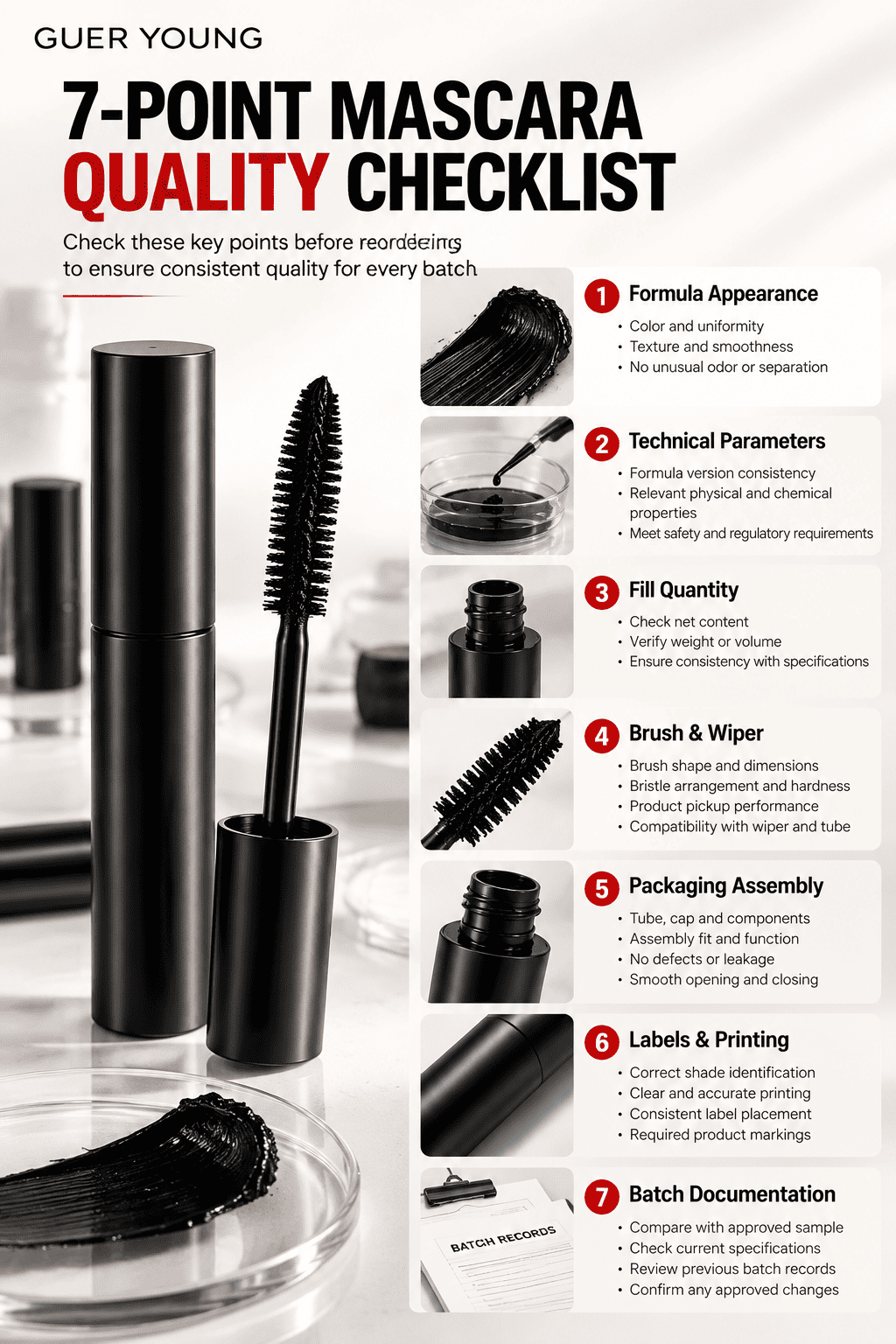
Confirm the current product specifications and approved reference sample.
Verify the order model, product version, and batch information.
Inspect formula appearance and relevant technical parameters using agreed methods.
Verify fill quantity or net content requirements.
Check brush, wiper, and tube compatibility.
Inspect packaging assembly, labels, and printing.
Review batch records, inspection results, and relevant quality documents.
Make an acceptance decision based on agreed criteria.
Record deviations and complete any necessary investigation and corrective action.
Release products into the sales process only after completing the required acceptance and release procedures.
Adapt this checklist to the product type, order risk, and quality agreement. Products with a history of complaints or identified quality risks may require additional targeted checks rather than the same procedure for every order.
Conclusion: Make Every Mascara Reorder Easier to Verify
Mascara batch quality management does not mean that every detail must be identical across all batches. It means ensuring that each batch continues to meet the approved specifications, applicable requirements, and mutually agreed acceptance criteria.
For e-commerce sellers and private-label buyers, a clear system of reference samples, product specifications, batch records, and deviation handling can help identify issues earlier, reduce uncertainty during replenishment, and create a clearer foundation for long-term supplier relationships.
If you are sourcing finished mascara or planning a private-label mascara launch, GUER YOUNG can discuss product specifications, sample approval, batch acceptance requirements, and OEM/ODM options to help clarify quality expectations before an order is placed.


andy.li@gueryoung.com

We have 10 years of experience, focusing on the development and sales of high quality eyelash growth serum, mascara, eyebrow gel, eyebrow color and other products. We also offer custom services, from tube
design to cosmetic fillings and packaging


Room 1, C3 Factory Building, No.8803 Zhuhai Avenue, Lianwan Industrial Zone, Pingsha Town, Gaolan Port Economic Zone, Zhuhai, Guangdong,China
QUICK LINKS
D Zone,5/F, NO.8 CuiZhu 5th Street,
Qianshan Xiangzhou District,Zhuhai,
Guangdong,China,519070

lynn.zhou@gueryoung.com
winnie.zhong@gueryoung.com
niki.xu@gueryoung.com