
How to Choose the Right Mascara Wand for Your Brand
Read in English | Lire en Français | Lesen auf Deutsch | Leer en Español
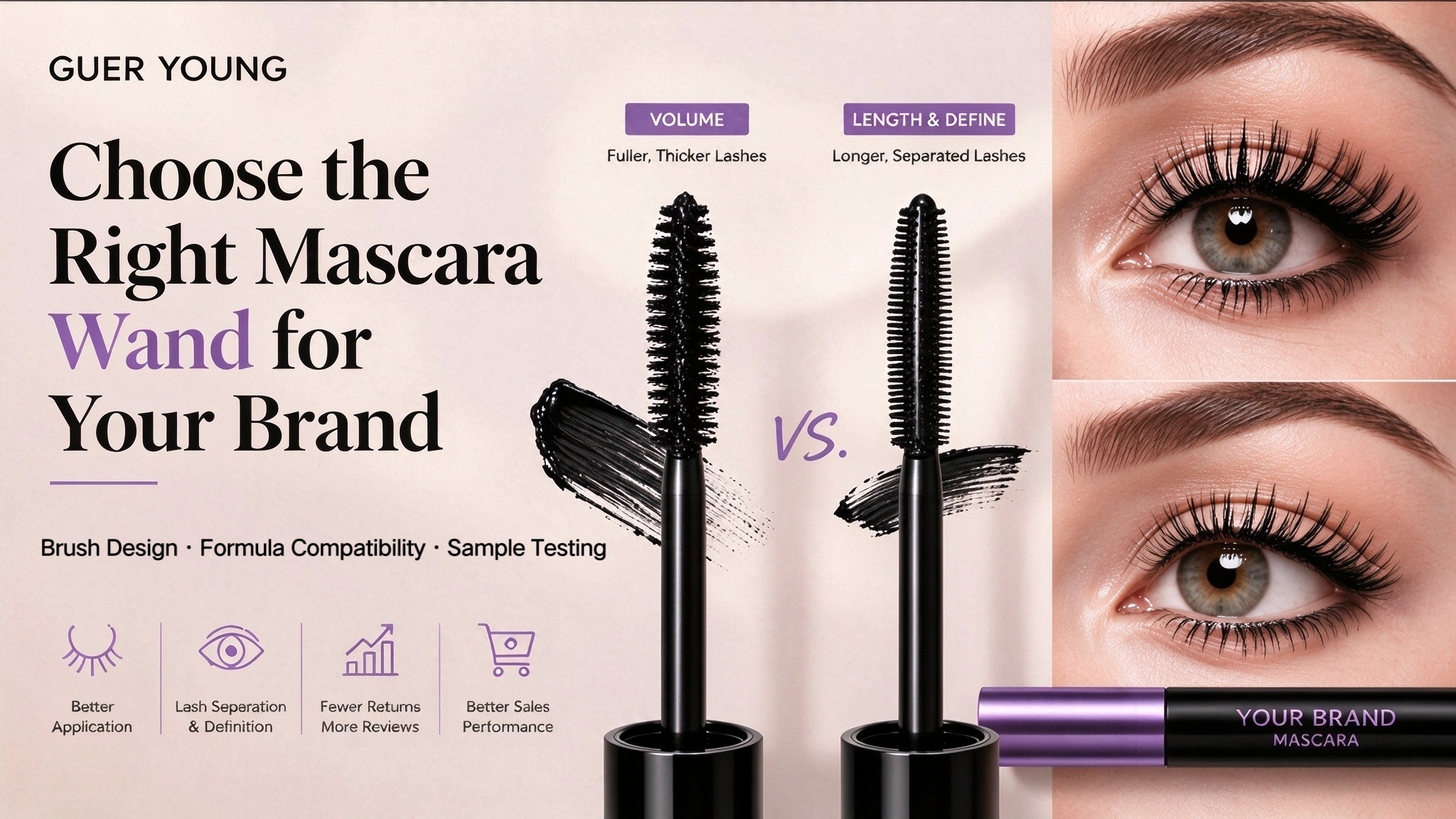
Choosing a mascara for your online store involves more than evaluating the formula, color, or packaging. The wand design also affects application, lash separation, and the final look customers experience.
For beauty brand owners, Amazon sellers, Shopify store operators, and other online retailers, the wrong wand can create a gap between product claims and actual performance. A mascara marketed for volume may clump if the wand deposits too much product, while a lengthening mascara may disappoint customers if the wand struggles to separate lashes.
Before placing a bulk order, evaluate wand shape, bristle material, formula compatibility, and finished-product samples. This guide explains how to compare these factors when sourcing finished mascara for an e-commerce business.
1. How Mascara Wand Design Affects Product Performance
A mascara wand is not just an accessory. Its design influences product pickup, application, lash separation, and the overall result.
Product Pickup and Volume
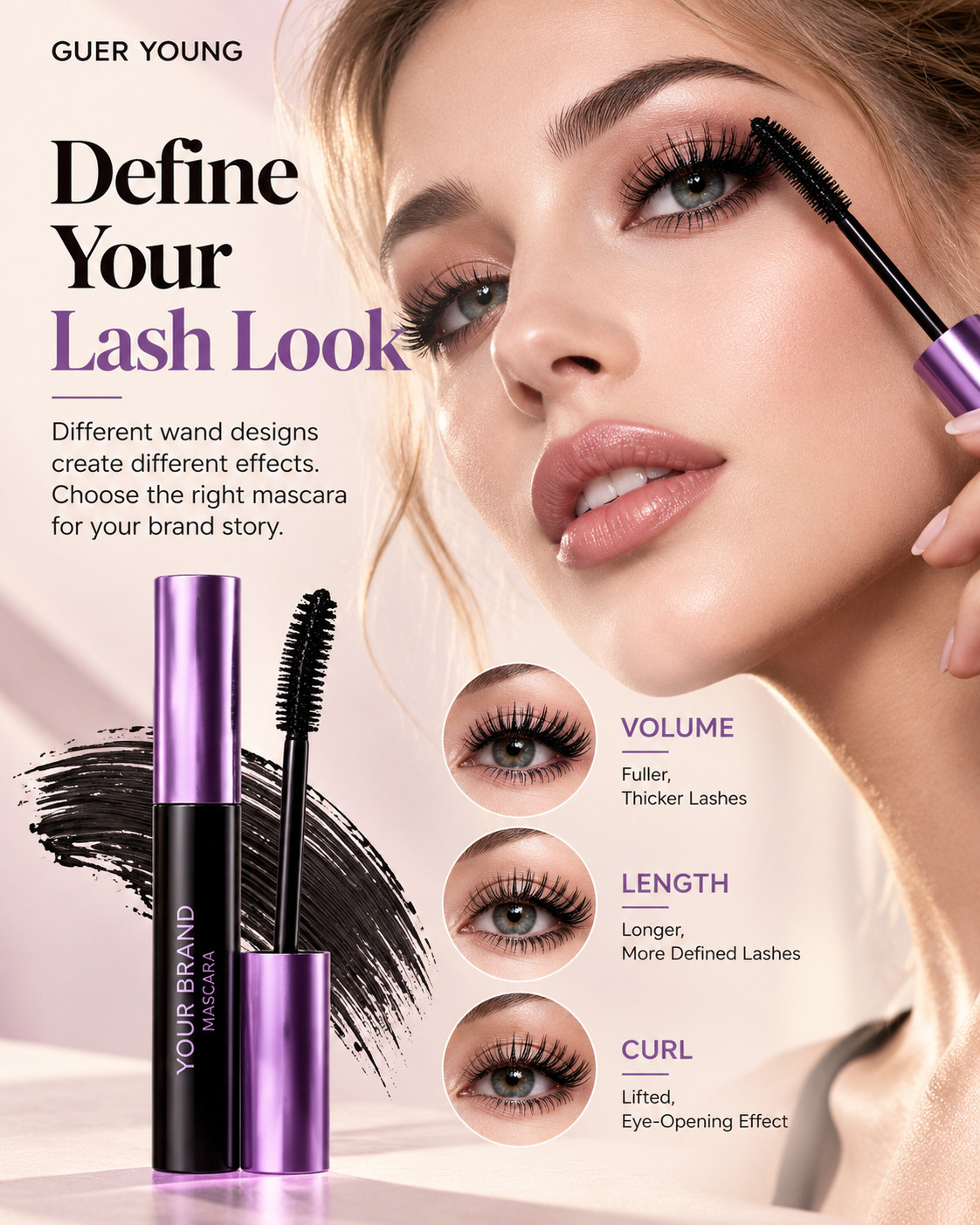
Wand diameter, bristle density, and bristle arrangement affect how much formula the wand carries. Denser bristles may deposit more product, making them worth testing for volumizing mascaras. More widely spaced or precisely arranged bristles may be better suited to lighter application and lash separation.
However, the wand alone does not determine volume. Formula viscosity, film-forming properties, and the interaction between the wand and the tube's wiper also influence the result.
Lash Separation and Clumping
Bristle spacing and wand shape affect how evenly mascara distributes across the lashes. If the wand carries too much formula or fails to separate lashes effectively, the product may create clumps, stick lashes together, or apply unevenly.
For e-commerce sellers focused on customer satisfaction and repeat purchases, testing repeated application is important. A wand that looks good during the first stroke may perform differently after several coats.
Product Positioning and Customer Expectations
Different wand designs can support different product positions. Larger brushes are often associated with volume-focused mascaras, slim wands can support precise application, and curved designs are commonly used for products positioned around curl or root access.
For online sellers, the key is consistency between the wand's actual performance and the product title, images, videos, and claims. If the application result does not match the product page, customer dissatisfaction and return risk may increase.
2. Compare Mascara Wand Shapes and Their Uses
Start by defining the main result your product needs to deliver. Then compare wand designs against that positioning.
Wand Type | Main Design Feature | Potential Product Positioning | What to Evaluate |
Straight wand | Conventional, straightforward shape | Everyday or all-around mascara | Even product distribution |
Tapered wand | Narrower tip for reaching smaller areas | Lengthening or precision application | Tip control and access |
Curved wand | Arc-shaped profile | Curl-focused or root-hugging application | Whether the curve suits the target application |
Hourglass wand | Narrower center with fuller ends | Volume with separation | Balance between different lash areas |
Ball or micro wand | Small, compact brush head | Lower lashes, corners, and detail work | Control and product pickup |
Comb-style wand | Defined teeth with visible spacing | Lash separation and reduced sticking | Separation and formula residue |
These are common design directions, not guaranteed performance outcomes. The final result depends on wand dimensions, bristle construction, formula properties, and the overall packaging design.
Choose One Primary Product Benefit
For a volume-focused mascara, evaluate product pickup and the risk of clumping after repeated strokes. For a lengthening or separating mascara, focus on bristle spacing, tip control, and whether lashes remain distinct.
For a new mascara line, building the product around one clear primary benefit may be more practical than trying to emphasize volume, length, curl, and waterproof wear equally in a single SKU.
Consider the Sales Channel
On marketplaces such as Amazon, customers often make quick decisions based on product images, short videos, reviews, and listing claims. The wand's real performance should therefore be easy to demonstrate and consistent with the listing.
For Shopify stores and social-commerce brands, short videos can show wand details and application results. Make sure the footage accurately represents the finished product customers will receive.
3. Silicone vs. Fiber Mascara Wands
Silicone and traditional fiber wands are two common designs to compare when sourcing mascara. They may differ in tooth structure, feel, product pickup, and application behavior.
Silicone Mascara Wands
Silicone wands typically feature defined teeth or comb-like structures. Tooth shape and spacing can be designed around different application needs.
They may be suitable for products emphasizing lash separation, precision, or lighter application. However, performance depends on tooth size, spacing, and formula characteristics. Check whether the teeth remain consistent, resist deformation, and pick up an appropriate amount of formula during use.
Fiber Mascara Wands
Fiber wands use bristles whose length, density, softness, and arrangement influence product pickup and application.
They can be used in a wide range of mascara designs, including volumizing and all-around products. However, fiber wands vary significantly in construction, so the material category alone does not predict the final effect.
Evaluate the Complete Design, Not Just the Material
Silicone wands are not automatically better for separation, and fiber wands are not automatically better for volume. Shape, bristle structure, formula, and tube wiper design need to be evaluated together.
During sample testing, compare application results, comfort, product pickup, ease of cleaning, and consistency. Choose the design that best supports your intended product positioning rather than relying on material labels alone.
4. How to Match a Mascara Wand to the Formula
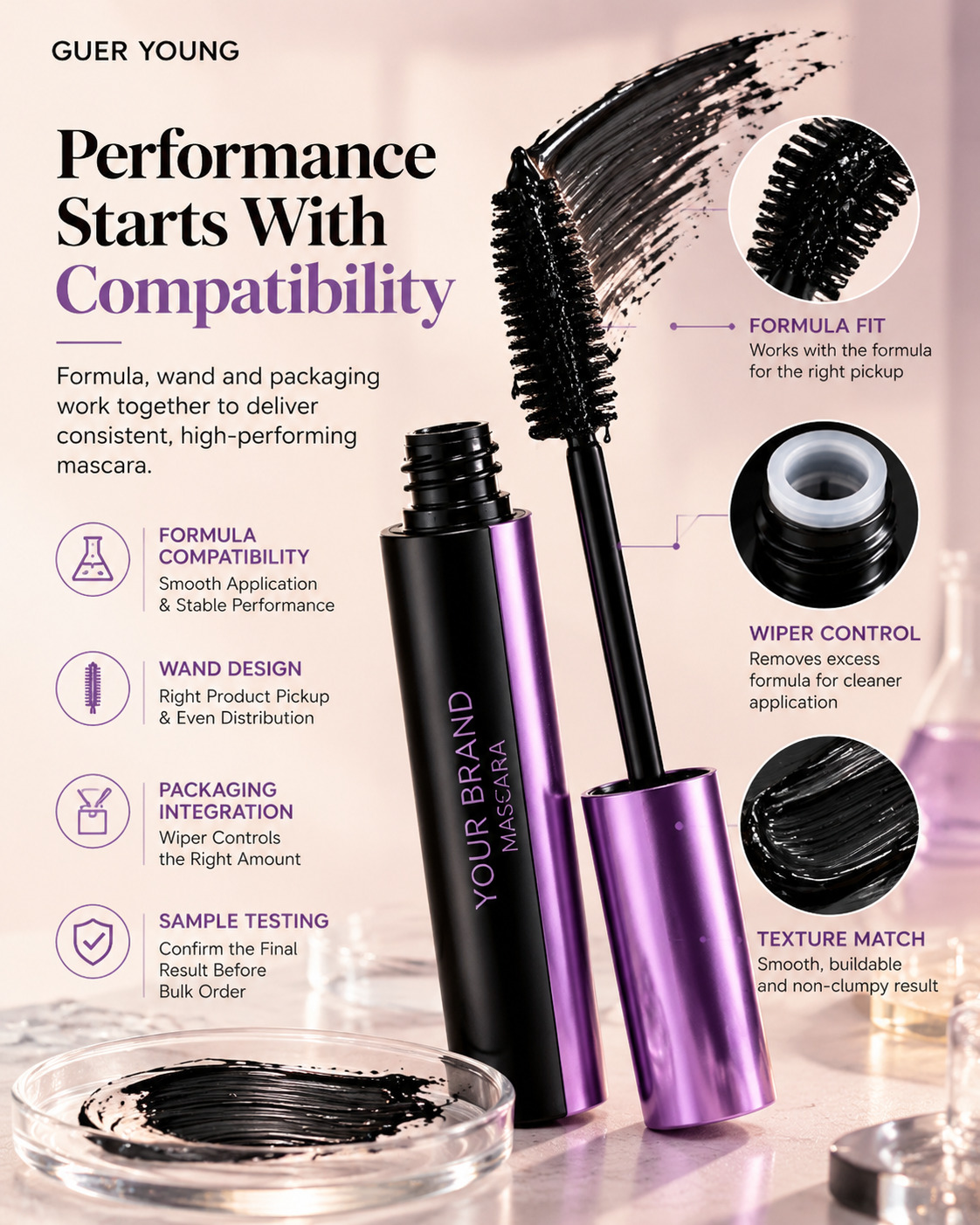
Wand-formula compatibility can matter more than selecting a particular wand style. The same wand may perform differently with different formulas.
Evaluate Product Pickup Against Formula Properties
Formula viscosity, spreadability, and film-forming behavior influence how much product a wand carries and how evenly it applies.
Too much product pickup may contribute to clumping. Too little pickup or uneven distribution may force users to apply multiple coats to achieve the expected result.
Test the wand with the final intended formula rather than judging it as an empty component or using a sample formula that differs from the planned product.
Check the Wand and Tube Wiper Together
The wand needs to pass through the tube opening smoothly while retaining an appropriate amount of formula. If the wiper does not suit the wand diameter or bristle design, the wand may emerge with too much or too little product, or may be difficult to remove.
During sample evaluation, check insertion and removal, formula residue around the wiper, and whether product pickup changes noticeably after repeated use.
Test Application Before Approving the Product
One application is not enough to establish compatibility. Test multiple strokes and evaluate separation, clumping, lengthening, volume, and the overall finish.
If the product is positioned as waterproof, long-wearing, or easy to remove, test those claims according to the intended product requirements. A wand alone cannot establish these performance properties; claims should be supported by finished-product testing.
5. Mascara Wand Specifications and Sample Testing
Wands that look similar may differ in dimensions, bristle arrangement, and product pickup. A documented sample evaluation process helps reduce the risk of differences between approved samples and bulk production.
Wand Specifications to Confirm
When discussing options with a supplier, confirm the following details:
Wand shape and dimensions: Overall length, maximum diameter, tip dimensions, and curvature.
Bristle or tooth construction: Material, length, density, spacing, and arrangement.
Product pickup and wiping: Compatibility between the wand and tube wiper.
Packaging compatibility: Whether the wand, stem, tube opening, and container work together correctly.
Batch consistency: Approved sample standards, recorded specifications, and bulk inspection criteria.
Exact specifications depend on the selected design. There is no single dimension standard that applies to every mascara wand.
Pre-Order Sample Approval Checklist
Use a checklist like this before approving a bulk order:
Wand shape, dimensions, and bristle arrangement match the approved sample.
The wand can be inserted and removed smoothly.
Product pickup suits the intended application result.
Lash separation and application uniformity meet expectations.
Repeated application does not create unacceptable clumping or sticking.
The wand, stem, wiper, and tube work together properly.
Sample performance supports the product's main listing claims.
Approved samples and bulk inspection criteria are documented.
After approval, retain the reference sample, product specifications, and test records. These provide a basis for checking consistency during production and quality inspection.
6. How to Choose a Finished Mascara Supplier
For e-commerce sellers, a suitable supplier should offer more than a selection of wand designs. They should also be able to help evaluate the relationship between the wand, formula, packaging, and intended product positioning.
Evaluate Finished-Product Development Capabilities
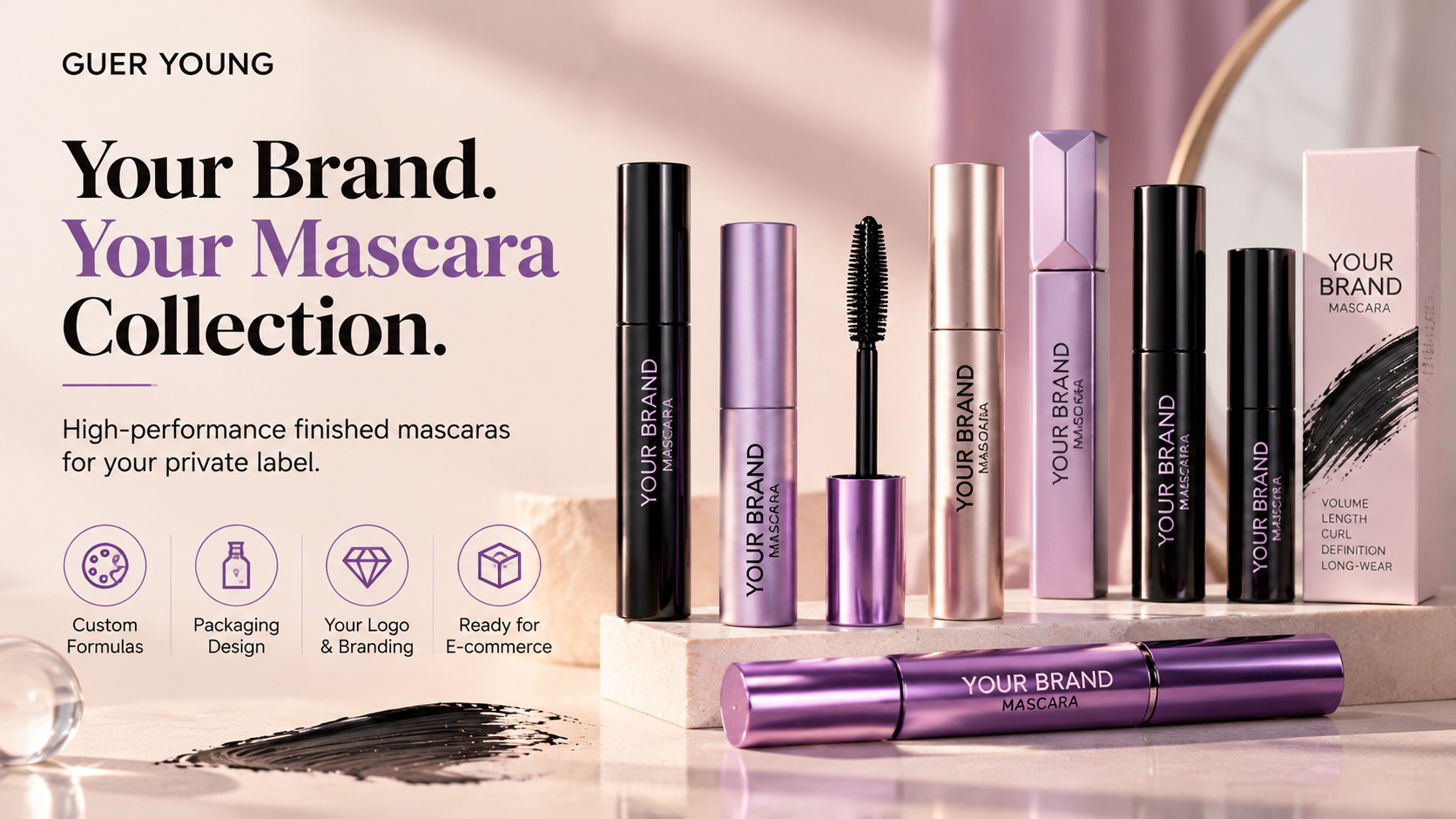
Look for a supplier that can provide a complete finished mascara solution and discuss wand selection, formula compatibility, sample testing, and packaging fit.
If you are developing a private-label product, ask whether OEM/ODM services are available and what customization options can support your target market and product concept.
Confirm Samples, MOQ, and Production Requirements
Before placing an order, confirm the sampling timeline, minimum order quantity, available wand and packaging options, customization scope, production lead time, and quality acceptance process. These details can vary by SKU and project, so rely on the supplier's confirmed quotation and specifications.
If you plan to sell in multiple countries or regions, confirm the applicable product requirements and supporting documentation for each target market. General supplier claims alone are not enough to establish compliance.
Choose a Partner That Can Support Consistent Supply
For an online beauty brand, repeatable quality and documented production standards matter as much as a successful first sample. Before starting a long-term partnership, ask how the supplier manages approved samples, records product specifications, performs quality checks, and handles batch variations.
At GUER YOUNG, finished mascara development should consider wand design alongside formula performance, packaging compatibility, and product positioning. A clear sample evaluation process helps beauty brands and online sellers make more informed sourcing decisions and reduce the risk of differences between samples and bulk production.
Developing your own mascara line? Contact GUER YOUNG to discuss finished mascara supply, OEM/ODM services, and private-label options.


andy.li@gueryoung.com

We have 10 years of experience, focusing on the development and sales of high quality eyelash growth serum, mascara, eyebrow gel, eyebrow color and other products. We also offer custom services, from tube
design to cosmetic fillings and packaging


Room 1, C3 Factory Building, No.8803 Zhuhai Avenue, Lianwan Industrial Zone, Pingsha Town, Gaolan Port Economic Zone, Zhuhai, Guangdong,China
QUICK LINKS
D Zone,5/F, NO.8 CuiZhu 5th Street,
Qianshan Xiangzhou District,Zhuhai,
Guangdong,China,519070

lynn.zhou@gueryoung.com
winnie.zhong@gueryoung.com
niki.xu@gueryoung.com