
How Beauty Brands Can Turn EU Sustainable Packaging Compliance Into a Competitive Advantage
Read in English | Lire en Français | Lesen auf Deutsch | Leer en Español | Leggi in Italiano | Lees in het Nederlands
The global beauty industry is entering a major transformation in 2026.
The European Union’s Packaging and Packaging Waste Regulation (PPWR, Regulation (EU) 2025/40) entered into force on February 11, 2025, and will become broadly applicable from August 12, 2026. The regulation introduces stricter requirements for packaging recyclability, material usage, packaging reduction, and producer responsibility.
At the same time, more countries and regions are strengthening regulations around plastic usage, packaging waste, and supply chain transparency. For beauty brands, sustainable packaging is no longer simply a brand advantage. It is becoming a key factor that influences product launches, retail partnerships, and consumer purchasing decisions.
In the past, many beauty brands achieved rapid growth through unique formulas, attractive designs, and social media marketing.
But today, a new challenge is emerging:
Consumers may love your products, but why should they choose your brand over others?
Especially during new product launches, consumers are increasingly looking beyond product performance. They want to understand the values behind the brands they support.
They are asking:
“What makes your products different from other brands?”
“Beyond looking good and working well, what does your brand stand for?”
At the same time, beauty marketing leaders are facing growing pressure:
Environmental regulations such as the EU PPWR are increasing packaging requirements and creating additional operational costs;
Retail channels are paying more attention to sustainable supply chains;
Younger consumers are actively seeking eco friendly makeup products that align with their personal values;
Traditional plastic packaging can no longer fully represent a modern, premium, and responsible beauty brand.
On the surface, this may appear to be a packaging upgrade.
But from a strategic brand perspective, the real challenge is:
How can beauty brands transform sustainability investment from a regulatory cost into a competitive advantage that consumers are willing to choose?
GUER YOUNG believes that the future competition in beauty will not only be about product performance, but also about how effectively brands connect their values with consumer expectations.
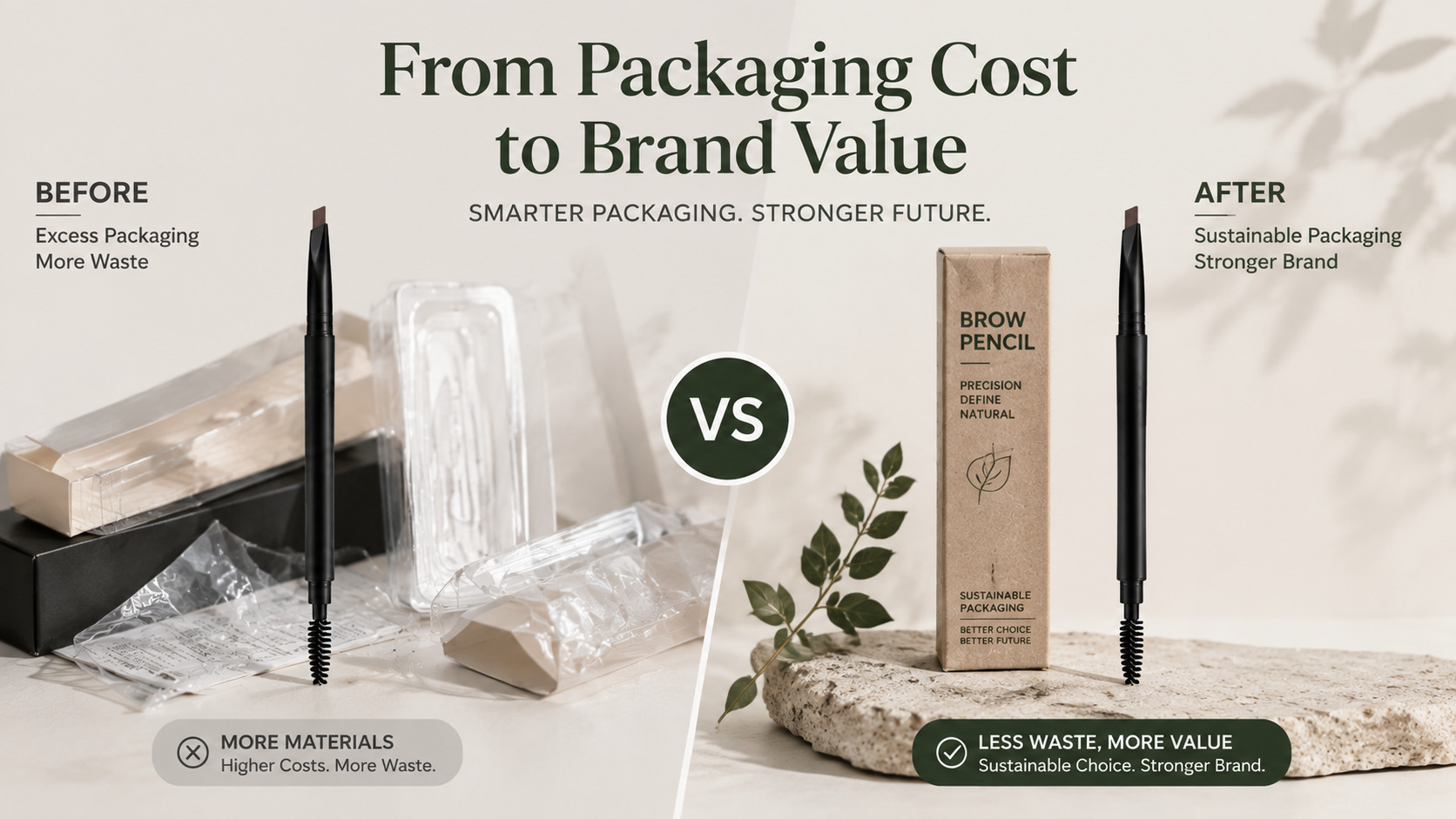
From Regulatory Pressure to Brand Marketing Opportunity
In recent years, global sustainability standards for packaging have continued to evolve. Regulations such as the EU PPWR are encouraging brands to reduce unnecessary packaging, improve recyclability, and take greater responsibility throughout the packaging lifecycle.
For beauty companies, this means they need to rethink:
Packaging materials;
Packaging structure and design;
Supply chain management;
Consumer communication strategies.
Many brands initially view these changes as increased costs.
However, behind these regulatory requirements lies a significant market opportunity.
When consumers see a brand actively reducing waste, improving packaging design, and adopting more sustainable solutions, they do not simply notice a packaging change. They recognize a brand that demonstrates responsibility and long-term commitment.
Therefore, beauty marketing leaders need to redefine the role of sustainable packaging.
Instead of simply telling consumers:
“Our packaging meets environmental standards.”
Brands should communicate:
“Why did we choose this packaging solution?”
“What environmental challenges does this change help address?”
“How can consumers participate in a more sustainable lifestyle through their purchase decisions?”
When sustainability efforts become part of a meaningful brand story, sustainable packaging is no longer just a production expense. It becomes a powerful tool for building consumer trust.
Building Consumer Trust Through Transparent Communication
Today’s beauty consumers are paying closer attention to sustainability claims.
They do not only want brands to talk about environmental responsibility. They want to see real actions behind those messages.
When promoting clean beauty packaging, brands can strengthen consumer confidence through several approaches.
Explain the Packaging Material Journey
Consumers want to understand the decisions behind packaging choices.
Brands can share:
Why was this material selected?
How does it reduce unnecessary waste?
How does it improve recycling potential?
Providing clear explanations helps consumers recognize that sustainability is not just a marketing message, but a long-term commitment.
Share Sustainability Actions With Transparency
Brands can use websites, social media channels, and product pages to communicate their packaging improvements.
Transparent storytelling allows consumers to understand the real effort behind sustainable changes.
The goal is not only to say that packaging is environmentally friendly, but to show the process and purpose behind every decision.
Connect Sustainability With Product Experience
Effective sustainable packaging must achieve more than environmental goals.
It must also maintain the quality experience consumers expect from beauty products.
Brands should consider:
Is the packaging convenient to use?
Does it protect the product effectively?
Does it match the brand’s visual identity?
GUER YOUNG has found through working with beauty brands that successful sustainable packaging strategies must balance three essential elements:
Brand positioning, consumer experience, and sustainability communication.
Only when these elements work together can packaging become a true brand asset.
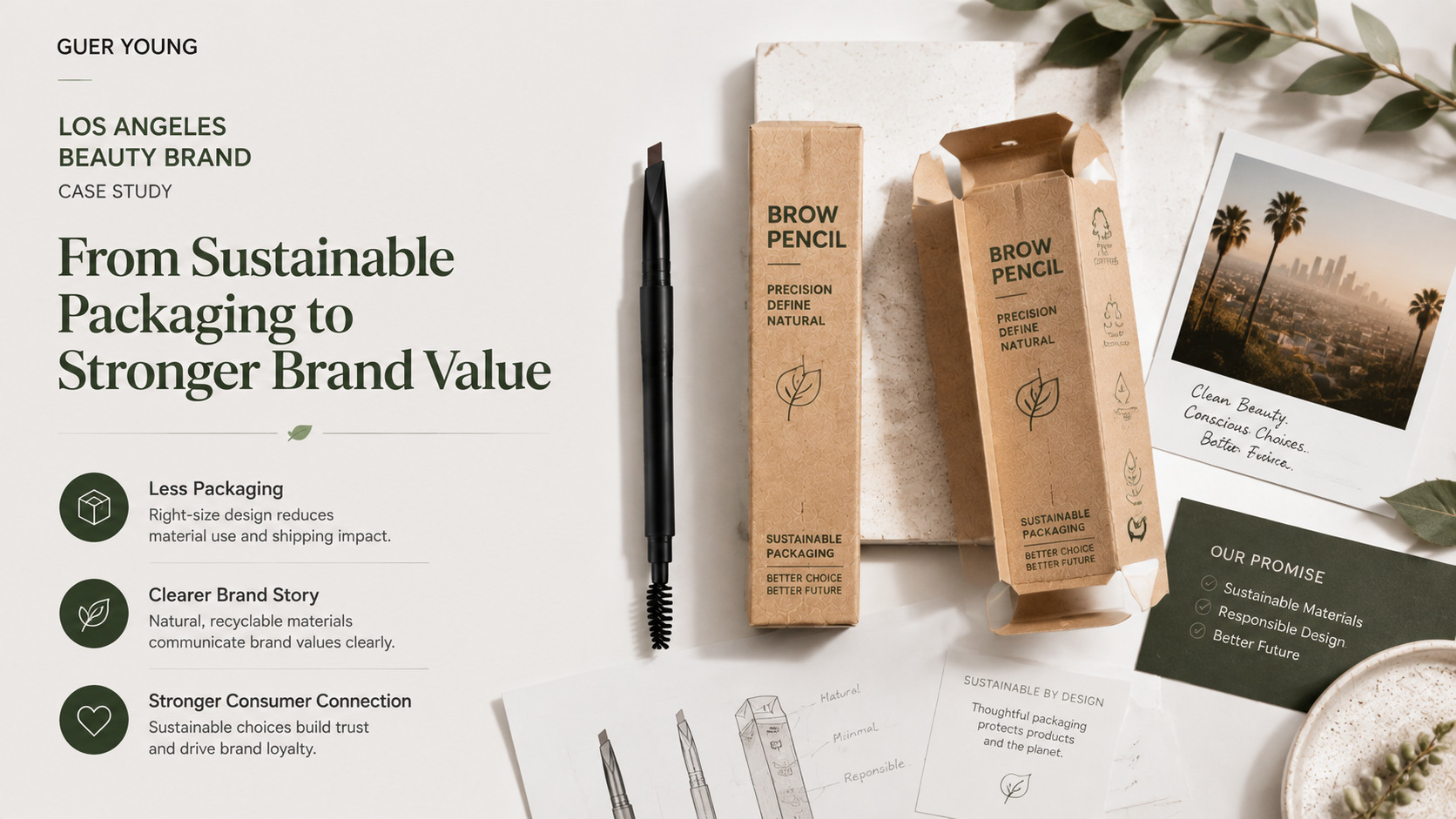
Client Case Study: How a Los Angeles Independent Beauty Brand Turned Sustainable Packaging Into a Marketing Advantage
A rising independent beauty brand based in Los Angeles had experienced rapid growth over several years through unique formulas and strong social media marketing. The company offered a diverse product range, including lipsticks, eyeshadow palettes, and complexion products.
However, as competition in the beauty market increased, the brand discovered a new challenge:
Consumers liked the products, but they struggled to remember what made the brand meaningful.
During new product launches, customers often asked:
“The products look great, but why should I choose your brand?”
This revealed that the company needed more than attractive products. It needed a stronger brand story that could create emotional connections with consumers.
Meanwhile, the brand was facing new market pressures:
Environmental consumers wanted brands to reduce excessive packaging;
Retail partners were paying closer attention to supply chain sustainability;
Traditional plastic packaging, while cost-effective, no longer represented the brand’s youthful, premium, and responsible positioning.
Therefore, the project was not simply about replacing packaging. It was about rebuilding how consumers understood the brand.
At the beginning of the project, we did not immediately recommend a specific sustainable material. Instead, we first analyzed the brand’s existing packaging system and communication strategy.
We identified three major challenges.
Excessive Packaging Layers Created a Poor Consumer Experience
The original packaging contained unnecessary layers, which caused some consumers to feel that the product experience involved avoidable waste.
For modern beauty consumers, packaging is not only about protection. It is also part of how they experience and evaluate a brand.
Sustainability Information Was Not Clear Enough
Consumers were unable to understand what environmental actions the brand had taken or why the packaging improvements mattered.
The brand was making changes, but those efforts were not being effectively communicated.
Sustainability Was Not Integrated Into Marketing
Previously, packaging was treated only as a visual product element.
It was not being used as a powerful part of the brand story.
To address these challenges, we developed a new sustainable packaging strategy.
During the design stage, we optimized the packaging structure based on the brand’s youthful, natural, and premium positioning.
By reducing unnecessary packaging layers, the brand lowered material waste while maintaining the premium unboxing experience expected from beauty products.
During the material selection process, we introduced packaging solutions aligned with current market trends while improving product protection, portability, and visual appeal.
More importantly, we helped the brand transform how it communicated sustainability.
Instead of simply saying:
“Our packaging is more environmentally friendly.”
The brand began sharing a deeper story:
Why did we choose this material?
How are we reducing resource waste?
How can consumers participate in a more sustainable lifestyle through their choices?
After the product launch, consumer feedback changed significantly.
Previously, customers mainly focused on:
“Does the color look good?”
“Is the price reasonable?”
After the packaging transformation, more consumers began asking:
“Does this brand represent my values?”
Customers started sharing on social media that they loved the brand not only because of product quality, but also because the company was actively making positive changes.
Ultimately, the packaging transformation improved brand perception and became an important advantage when expanding into additional retail opportunities.
The client later shared:
“We used to think sustainable packaging was only an additional cost. Now we understand it can become a reason consumers choose us.”
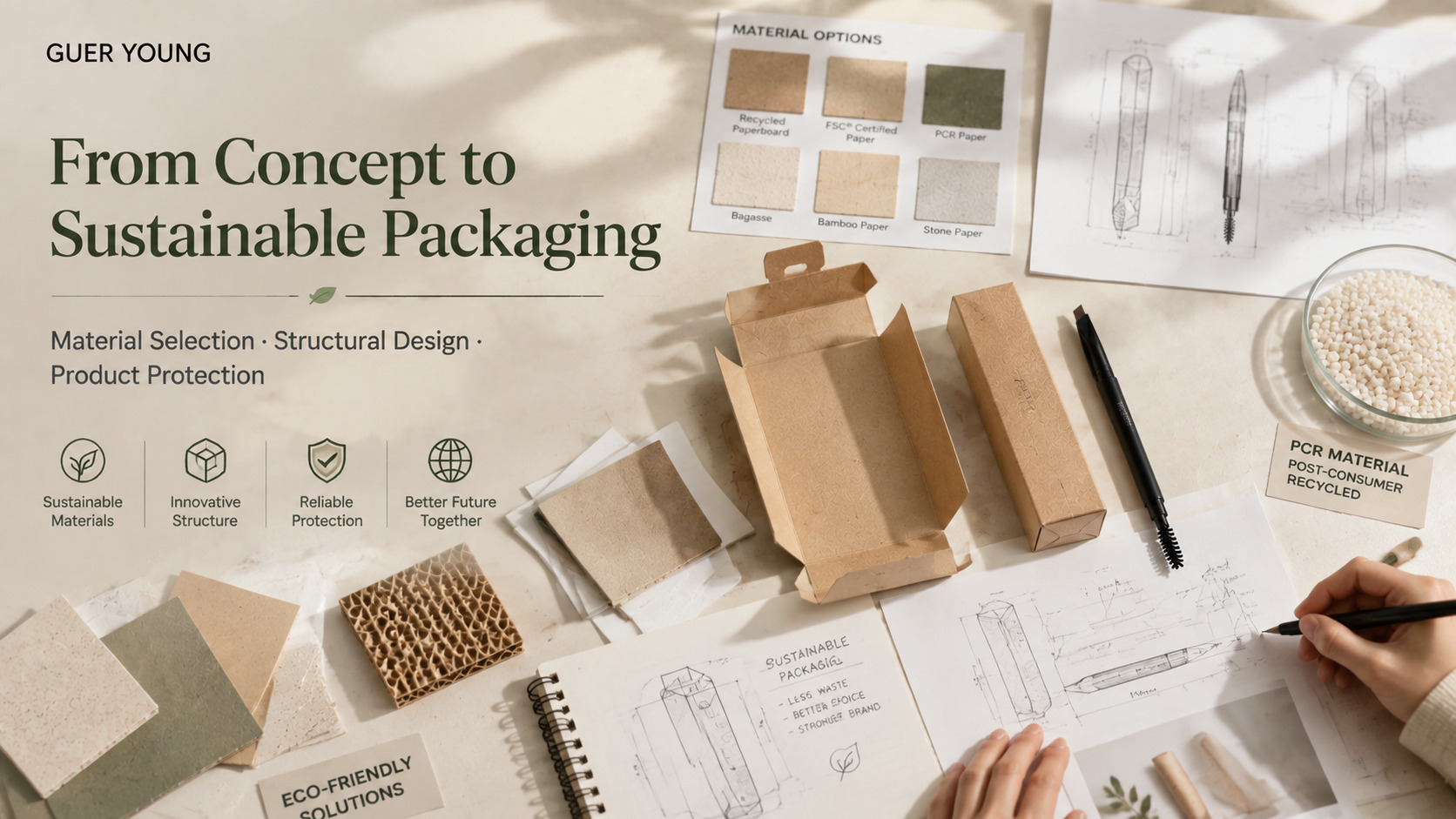
Integrating Sustainability Into Custom Beauty Brand Development
For beauty companies expanding their market presence, custom makeup products and private label cosmetics are no longer focused only on product development.
Packaging value is becoming equally important.
Consumers are not only buying makeup products. They are choosing the ideas, values, and stories behind the brands.
Future beauty brands need to combine:
Product innovation,
Packaging design,
Sustainability values,
Marketing communication
into one complete brand strategy.
Conclusion: Make Sustainable Packaging a Growth Tool for Your Beauty Brand
In 2026, as regulations such as the EU PPWR continue to shape the beauty industry, sustainable packaging is moving from a trend choice to a competitive necessity.
If your beauty brand still views sustainable packaging only as a cost, you may be missing an opportunity to build stronger consumer trust and increase brand value.
Leading brands will transform regulatory requirements into:
Stronger brand stories;
Clearer market positioning;
Higher consumer loyalty;
Greater retail opportunities.
GUER YOUNG helps beauty brands develop packaging solutions that combine sustainability, visual appeal, and commercial performance.
If your brand is planning to:
Upgrade existing cosmetic packaging;
Develop new eco friendly makeup products;
Create differentiated private label cosmetics;
Work with a packaging partner who understands your brand strategy;
Now is the right time to plan your next stage of growth.
Contact GUER YOUNG today and discover how sustainable packaging can become more than a requirement — it can become your brand’s competitive advantage.
Make your packaging not only seen by consumers,
but remembered as the reason they choose your brand.


andy.li@gueryoung.com

We have 10 years of experience, focusing on the development and sales of high quality eyelash growth serum, mascara, eyebrow gel, eyebrow color and other products. We also offer custom services, from tube
design to cosmetic fillings and packaging


Room 1, C3 Factory Building, No.8803 Zhuhai Avenue, Lianwan Industrial Zone, Pingsha Town, Gaolan Port Economic Zone, Zhuhai, Guangdong,China
QUICK LINKS
D Zone,5/F, NO.8 CuiZhu 5th Street,
Qianshan Xiangzhou District,Zhuhai,
Guangdong,China,519070

lynn.zhou@gueryoung.com
winnie.zhong@gueryoung.com
niki.xu@gueryoung.com