
How to Expand Your Mascara Range Without Losing Existing Sales
Read in English | Lire en Français | Lesen auf Deutsch | Leer en Español | Leggi in inglese
Expanding a mascara range can create new sales opportunities, but adding more SKUs does not automatically increase revenue. If a new product is too similar to an existing one, customers may simply switch between products instead of making additional purchases.
For beauty brands, the goal is to introduce products that meet new customer needs while maintaining the value of existing SKUs.
This guide explains how to review your current range, develop differentiated products, plan a launch, and measure the results of product line expansion.
1. Review Your Existing Mascara Range Before Expansion
Before developing a new mascara, understand the role of every existing SKU. Without this step, new products may overlap with products already in your range.
1.1 Assess Your Current SKU Positioning
Start by reviewing the key information for each product:
Main benefit: What customer need does it address?
Target customer: Who is most likely to buy it?
Product positioning: What role does it play in your range?
Sales performance: Which products consistently attract orders?
This review helps identify overlapping products and prevents unnecessary SKU expansion.
1.2 Identify Unmet Needs Among Existing Customers
Sales figures are useful, but customer feedback can reveal opportunities that numbers alone may not show.
Review product feedback, customer inquiries, social media comments, and requests for options that your current range does not offer.
For example, if customers frequently ask for more choices for different makeup styles, this may indicate an opportunity to introduce a new product with a distinct positioning.
2. Develop New Mascara Products With Clear Differentiation
Once you understand your existing range, define what additional value a new product can offer. It does not always need a completely different formula, but customers should understand why it is different.
2.1 Define a Distinct Target Customer and Product Benefit
Give each new SKU a clear target audience, customer need, and purchasing reason.
For example, a brand might consider:
A product positioned for everyday makeup users.
An option designed for customers seeking a different makeup effect.
A colored mascara for consumers who enjoy creative looks.
The objective is not simply to add another product type. It is to offer a meaningful choice that serves a different customer need.
2.2 Validate Your New Product Concept Before Launch
Before committing to large production quantities or marketing expenses, evaluate whether the concept appeals to its intended audience.
A practical process includes:
Present the product concept and key benefits to target customers.
Collect feedback on positioning, appearance, and expected use.
Use small-scale promotion or sample testing to gauge interest.
Refine the concept before moving forward with a full launch.
Brands working with OEM/ODM or private label suppliers can also discuss product concepts, sample development, and customization requirements early in the process.
3. Plan a Launch Strategy That Reaches New Customers
Product differentiation alone is not enough. If a new mascara uses the same marketing message as existing products, customers may struggle to understand why they should choose it.
3.1 Segment Audiences Based on Their Needs
Group potential customers by their purchasing motivations rather than relying only on product names.
For example, your audience may include everyday makeup users, consumers looking for specific makeup effects, and customers interested in creative colors.
Each group may respond to different product benefits, so your launch communication should reflect those differences.
3.2 Create Marketing Messages for Different Product Benefits
Give each new SKU a clear reason to buy.
Use product pages, social media content, and advertising materials to communicate its target audience, intended use, and main benefits.
Avoid using nearly identical promotional messages across your entire mascara range. Clear positioning makes it easier for customers to understand the differences between products.
4. Organize Your Expanded Mascara Range for Better Shopping Experiences
As your product range grows, customers may find it harder to choose. Your website categories and product displays should make the selection process easier.
4.1 Organize Products by Benefits and Usage Needs
Consider organizing your mascara collection into clear categories, such as:
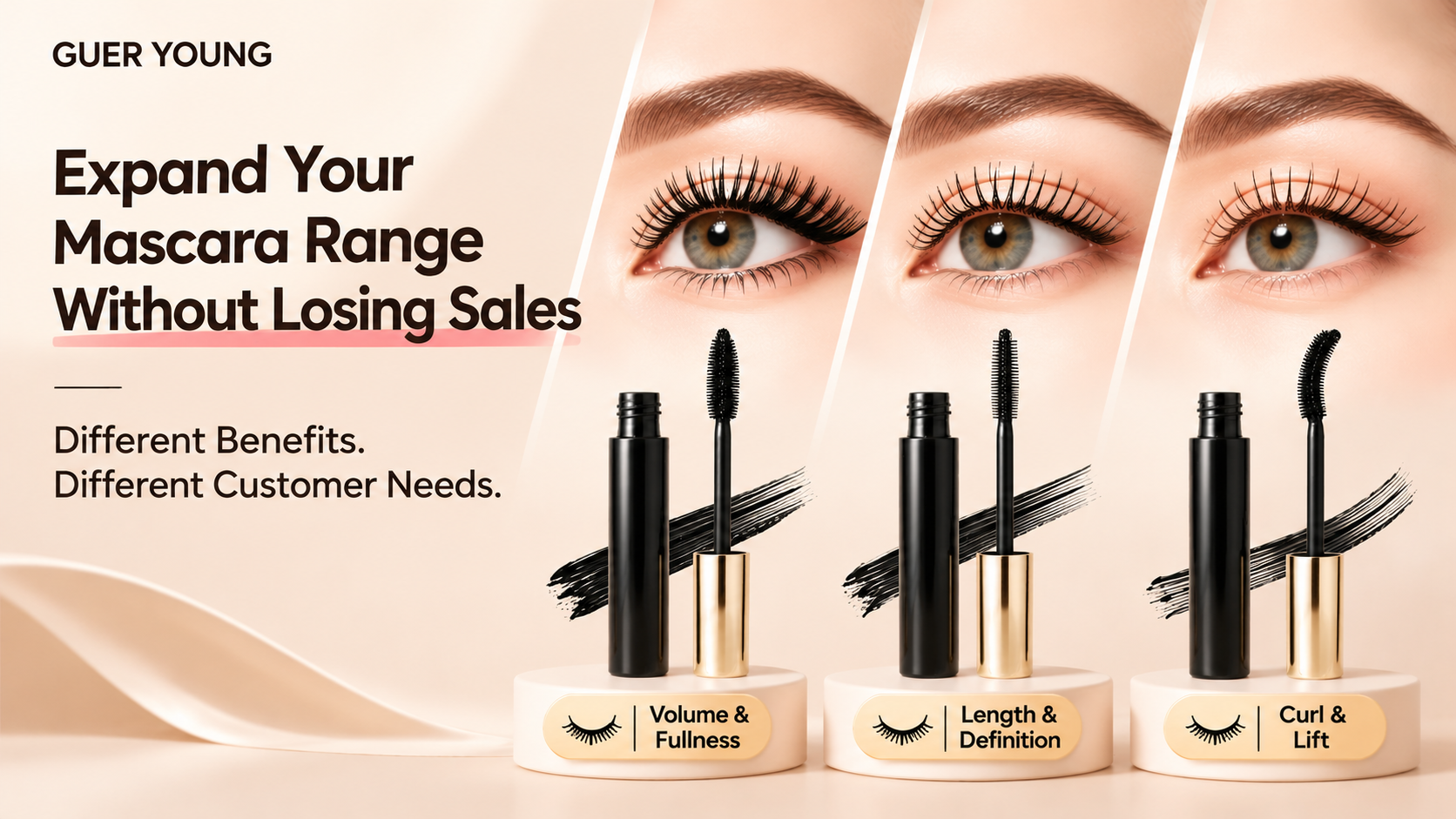
Volume & Fullness
Length & Definition
Curl & Lift
Smudge-Proof & Long-Wear
Color & Creative Looks
Make sure each category accurately reflects the products included. Avoid placing products into too many overlapping categories.
4.2 Use Product Comparisons and Complementary Recommendations
Product comparisons help customers understand the differences between SKUs without having to review every product individually.
Consider displaying each product's main benefits, intended use, key differences, and relevant complementary products.
For example, customers browsing an everyday mascara could also be shown alternatives for different makeup preferences. This creates useful choices instead of repeatedly presenting similar products.
5. Measure the Results of Your Mascara Range Expansion
After launch, do not evaluate success based only on new SKU sales. You also need to understand whether the expansion has created additional value for the overall product range.
5.1 Monitor New SKU Sales and Existing Product Performance
Track several indicators:
New SKU Sales: Is the new product generating consistent orders?
Category Revenue: Is total mascara category revenue increasing?
Existing SKU Performance: Are sales of existing products changing?
Customer Purchase Behavior: Are customers purchasing a wider selection?
Return Rate: Are there unusual returns or signs of customer dissatisfaction?
If a new SKU sells well but total category revenue remains unchanged, examine whether it is taking orders away from existing products.
5.2 Adjust Your Product Range Based on Sales Results
Product line expansion is an ongoing process rather than a one-time decision.
Use actual performance to adjust promotional priorities, product page presentation, and future development plans. If a new product attracts a distinct customer group, you can consider developing more options around that demand.
Once a product concept has been validated, the next step is finding a finished cosmetics supplier that can support sample development, product customization, and consistent production. Confirming product requirements, sample expectations, and quality standards early can help reduce communication gaps during development.
Choose a Finished Cosmetics Supplier That Supports Product Expansion
Expanding a mascara range requires both clear product positioning and reliable finished-product supply.
GUER YOUNG specializes in finished eye makeup and cosmetics supply for overseas beauty brands. We offer finished mascara, OEM/ODM, and private label services. Brands can discuss product concepts and customization requirements covering formulas, colors, wands, and product appearance, with sample development and production arrangements based on project needs.
With flexible MOQ options, sample support, and production quality control, GUER YOUNG helps beauty brands develop and expand their finished cosmetics ranges with greater confidence.


andy.li@gueryoung.com

We have 10 years of experience, focusing on the development and sales of high quality eyelash growth serum, mascara, eyebrow gel, eyebrow color and other products. We also offer custom services, from tube
design to cosmetic fillings and packaging


Room 1, C3 Factory Building, No.8803 Zhuhai Avenue, Lianwan Industrial Zone, Pingsha Town, Gaolan Port Economic Zone, Zhuhai, Guangdong,China
QUICK LINKS
D Zone,5/F, NO.8 CuiZhu 5th Street,
Qianshan Xiangzhou District,Zhuhai,
Guangdong,China,519070

lynn.zhou@gueryoung.com
winnie.zhong@gueryoung.com
niki.xu@gueryoung.com