
How to Prepare for Spring Mascara Product Development: From Samples to Production
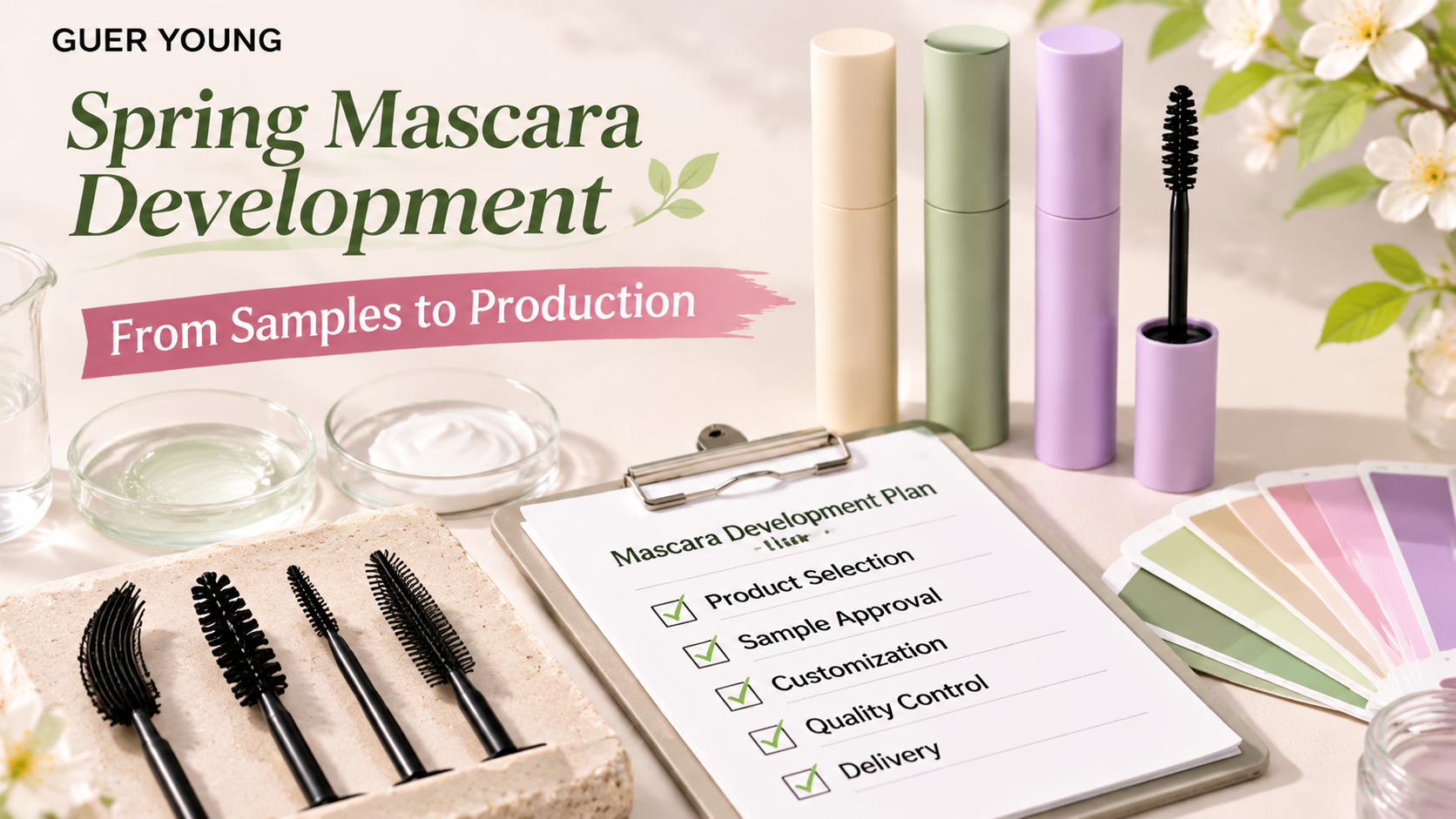
Spring is an important season for beauty brands to launch new products and refresh existing collections. For brands planning a spring mascara collection, development involves more than choosing a product. It also requires sample approval, packaging customization, bulk production, and delivery planning.
Unclear requirements can lead to repeated sample revisions, delayed packaging approvals, and production schedule changes. Brands should communicate their needs to suppliers early and understand what must be confirmed at each stage.
For a finished mascara supplier, a spring project often starts with selecting existing products, followed by evaluating possible formula, brush, and packaging adjustments based on brand requirements. This guide covers five key stages to help beauty brands organize their sourcing process.
1. Pre-Development: Define Your Spring Mascara Product Direction
Before contacting suppliers, clarify the positioning and basic requirements of your spring collection. A clear product plan helps narrow down suitable options and reduces unnecessary changes.
1.1 Define Your Product Positioning and SKU Requirements
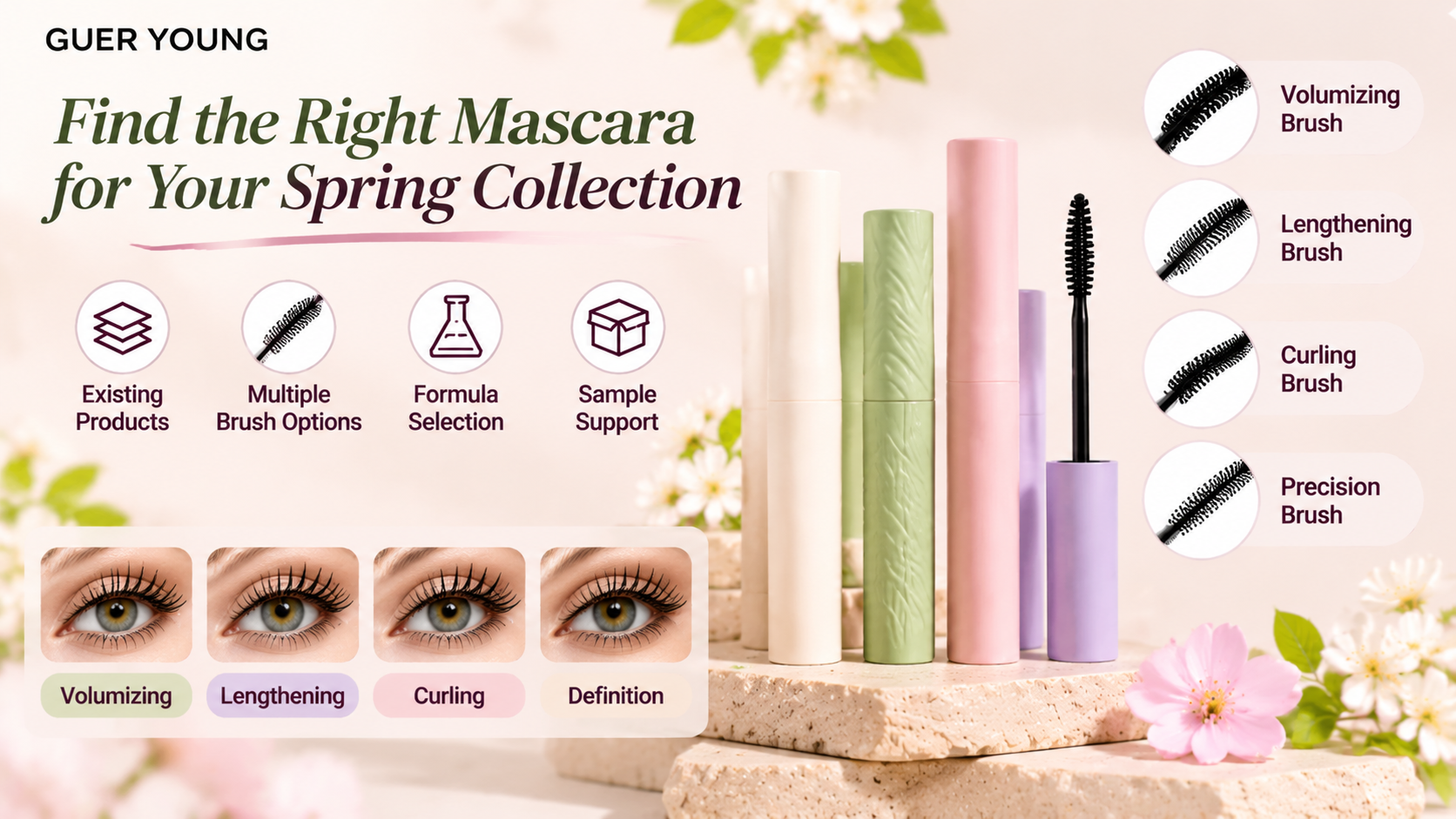
A spring mascara collection does not always require completely new products. Consider your target market, existing range, and consumer needs when selecting product types.
Common options include:
Volumizing mascara: Focuses on fuller-looking lashes.
Lengthening mascara: Emphasizes lash extension and suits natural makeup collections.
Curling mascara: Focuses on lash definition and curl.
Waterproof mascara: Targets consumers looking for water-resistant, long-wearing performance.
Colored mascara: Shades such as brown and burgundy can add variety to a spring collection.
If your brand already offers mascara products, review the positioning of existing SKUs before adding new ones. Consider introducing different benefits, shades, or packaging without making the new products too similar to your current range.
1.2 Prepare Product Specifications and Sourcing Requirements
Prepare a basic specification list to help suppliers recommend suitable existing products or assess customization options.
Confirm the following details:
Product benefits: Volumizing, lengthening, curling, or multi-effect.
Formula preferences: Waterproof, everyday use, or easy removal.
Brush type: Fiber, silicone, curved, or precision brush designs.
Product capacity: Based on brand positioning and target price.
Packaging design: Tube shape, color, finish, and logo presentation.
SKU quantities, target order quantity, and MOQ.
Expected delivery schedule.
Clear requirements make it easier for suppliers to identify suitable products and evaluate potential adjustments.
2. Sample Development and Approval: Evaluate Product and Packaging
Sample approval is an important part of working with a finished mascara supplier. Brands should assess actual samples against their requirements rather than relying only on product images or descriptions.
2.1 Select Suitable Formula and Brush Samples
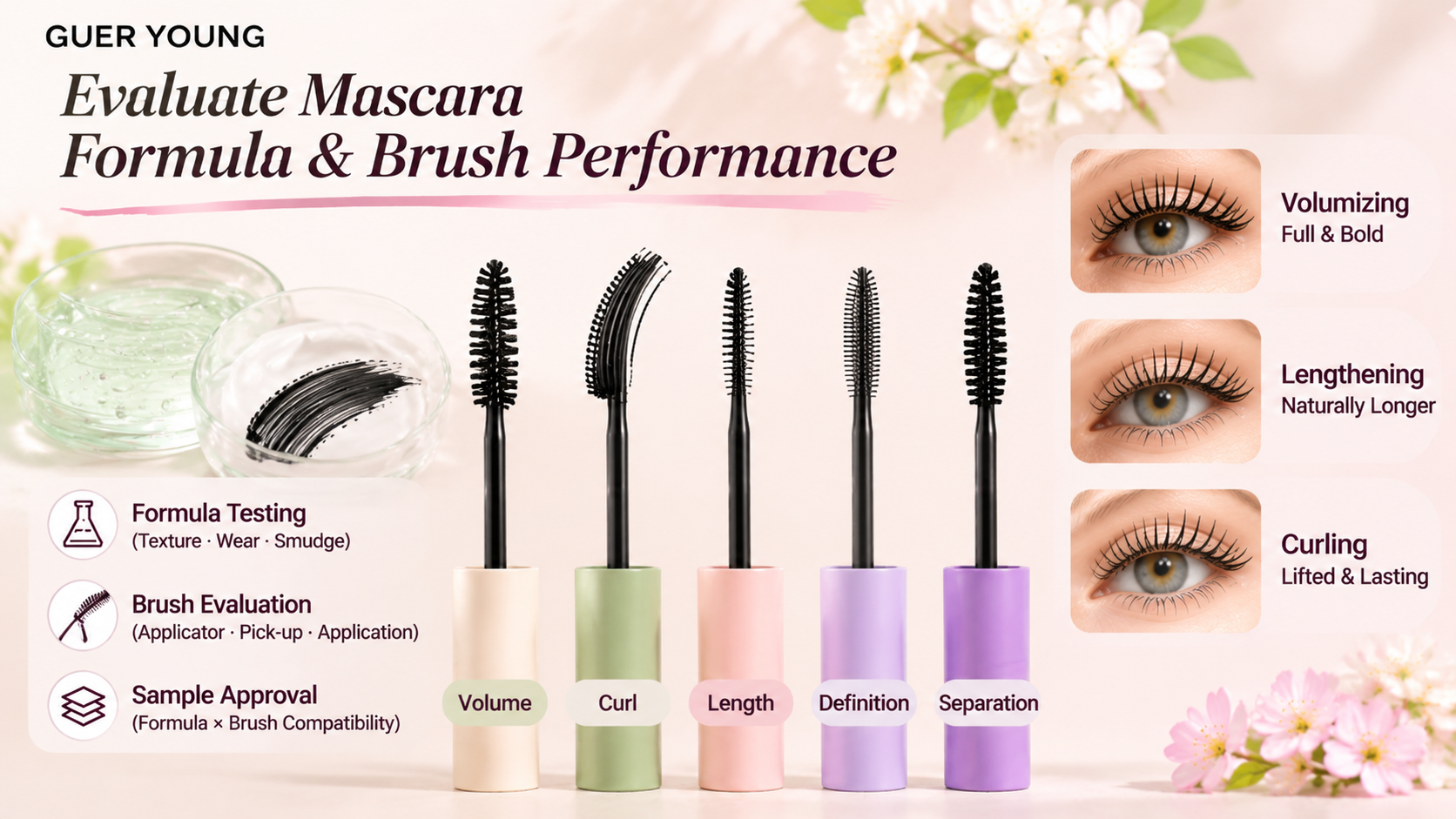
Mascara performance depends on both the formula and the applicator. Different brush designs can affect formula pickup, application control, and the final lash appearance.
Product Direction | Key Evaluation Points |
Volumizing | Formula pickup and fuller-looking lash effect |
Lengthening | Formula distribution and lash extension effect |
Curling | Brush shape and curl performance |
Precision | Brush size and control around inner and lower lashes |
Waterproof | Water resistance, wear performance, and removal experience |
When evaluating samples, check:
Whether the formula applies evenly or tends to clump.
Whether the brush provides good application control.
Whether the product delivers the intended volume, length, or curl.
Whether smudging, flaking, or other performance issues occur.
If your brand has specific formula or brush requirements, share them with the supplier. The supplier can assess possible adjustments based on existing products, technical conditions, and project feasibility.
2.2 Confirm Packaging Samples and Product Compatibility
Packaging affects both product presentation and practical suitability.
Check:
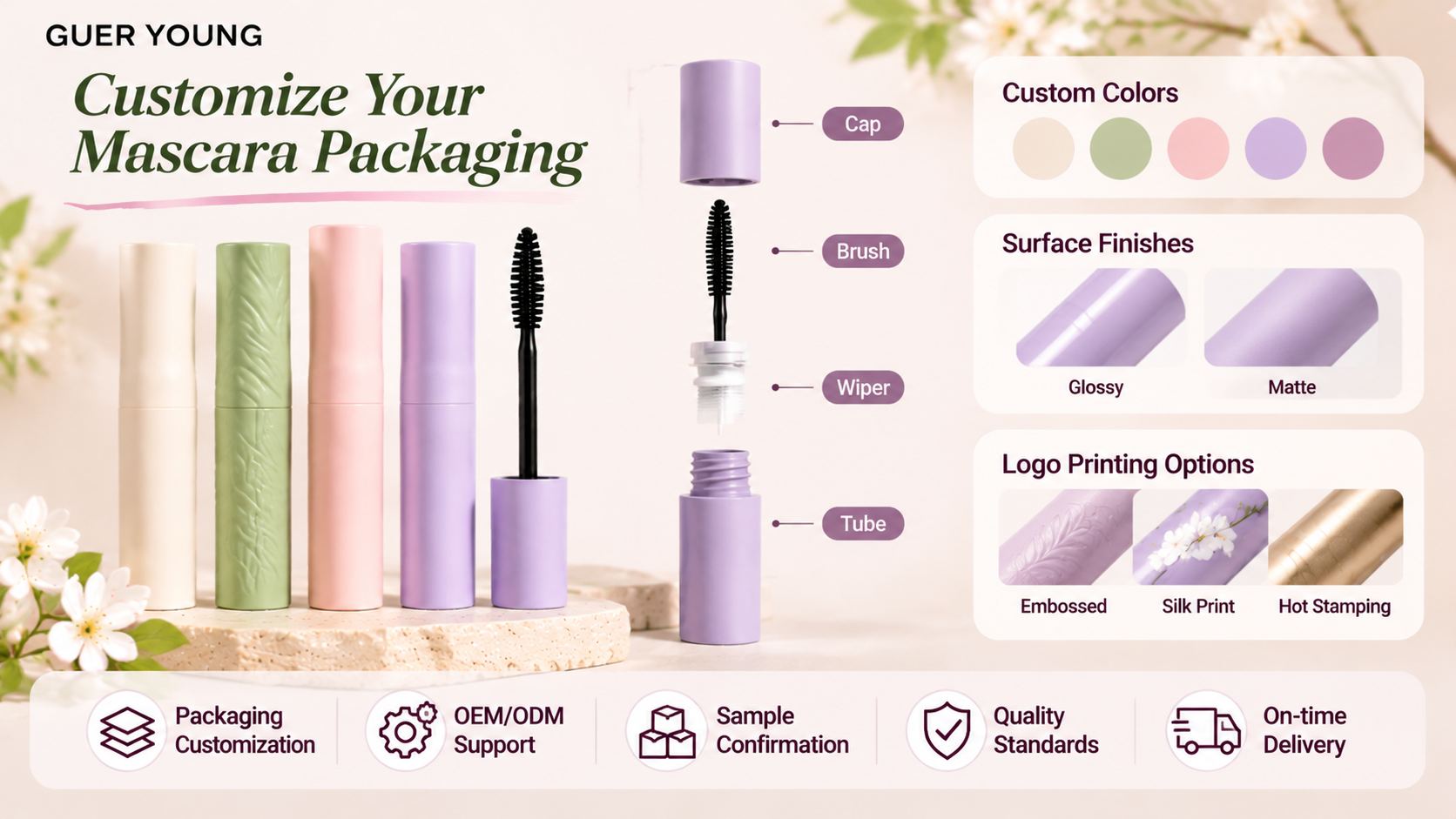
The fit and dimensions of the tube and cap.
Wand length and brush structure.
Packaging color, surface finish, and logo printing.
Compatibility between the wiper and bottle opening.
Overall product usability.
For customized packaging, first confirm tube colors, logos, printed designs, and surface finishes. If structural adjustments or mold development are involved, provide the design requirements early so the supplier can assess feasibility and the expected timeline.
Keep the approved product sample, packaging sample, and final artwork as references for bulk production.
3. Customization and Production Preparation: Choose the Right Cooperation Model
After sample evaluation, confirm the final product plan with your supplier. Identify which parts can use existing options and which may require adjustments.
3.1 Choose Existing Products or Customization Options
Brands can select a cooperation model based on their launch schedule, product differentiation needs, and budget.
Existing product selection
Suitable for brands looking to expand their range efficiently. Choose from the supplier's existing mascara formulas, brushes, and packaging options instead of starting from scratch.
Light customization
Suitable for brands that want to build product identity through adjustments such as tube colors, logos, printed designs, or surface finishes.
OEM/ODM cooperation
Suitable for brands with more specific product and packaging requirements. Depending on the supplier's capabilities, discussions may cover formula adjustments, brush structures, and packaging customization.
Not every formula, brush, or packaging structure can be customized directly. New formula development, special brush structures, and mold development require project-specific assessments based on design requirements and technical feasibility.
For a tight spring launch schedule, existing products or light customization may be worth evaluating first.
3.2 Confirm Final Specifications and Order Requirements
Before bulk production, confirm the final product and order details with your supplier:
Final formula, shade, and product benefits.
Brush, wand, and component specifications.
Packaging material, capacity, color, and printing requirements.
Logo files and approved packaging artwork.
Quantities for each SKU, MOQ, and order requirements.
Production arrangements and expected delivery schedule.
Applicable product information and compliance requirements for the target market.
Brands selling in the US and Europe should confirm relevant regulatory requirements and product documentation in advance.
For projects involving formula, brush, or packaging adjustments, confirm the final solution and the supplier's agreed scope before bulk production begins.
4. Bulk Production and Quality Control: Maintain Approved Product Standards
After product and order details are confirmed, the supplier can arrange materials, packaging components, and production schedules. The priority for brands is ensuring that bulk products meet approved samples and specifications.
4.1 Confirm Production Scheduling and Manufacturing Steps
Mascara production generally involves material and packaging preparation, formula production, filling, brush and packaging assembly, printing or labeling, and finished-goods preparation.
Confirm the following with your supplier:
Whether raw materials and packaging components are ready.
Whether production arrangements for each SKU are clear.
Whether customized packaging may affect the schedule.
Whether the production plan matches the target delivery date.
Whether order quantities and MOQ are confirmed.
For orders involving multiple shades, brush types, or packaging options, confirm the quantity and specifications of each SKU in advance.
4.2 Confirm Quality Standards for Samples and Bulk Orders
After sample approval, brands should still agree on bulk production quality requirements and acceptance standards with their supplier.
Discuss the following areas:
Materials and components
Whether formula ingredients and packaging components meet agreed requirements.
Whether brushes, wands, caps, and tubes fit together properly.
Production process
Whether filling quantities meet product specifications.
Whether assembly and packaging follow agreed requirements.
Whether printing, labels, and appearance match approved artwork.
Finished product checks
Whether product appearance, color, and packaging meet approved standards.
Whether the bottle opening, cap, and wiper fit properly.
Whether sealing checks are required based on the product structure.
Whether other agreed quality requirements are met.
Use approved samples, artwork, and specification documents as references for inspection. Specific inspection items, methods, and acceptance standards should be discussed in advance based on the product structure and order requirements.
5. Delivery and Launch Preparation: Coordinate Your Spring Launch
After production and quality checks, brands still need to arrange shipping, inventory, and launch preparation. A mismatch between production completion and the launch schedule can affect product availability.
5.1 Confirm Shipping and Delivery Arrangements
Discuss the following details with your supplier:
Expected production completion date.
Suitable shipping method for the order.
Destination and receiving requirements.
Relevant shipping and customs documents.
Estimated arrival date and inventory arrangements.
If your spring collection has a fixed launch date, work backward from the target arrival date to coordinate production and shipping. Allow some flexibility for potential schedule changes.
5.2 Prepare for Launch and Future Reorders
Before products arrive, prepare product specifications, packaging images, product benefits, and sales page content.
After launch, monitor SKU performance and review:
Which product types receive stronger responses from target consumers.
How different shades and formula benefits perform.
Consumer feedback on brushes, formulas, and packaging.
Whether SKU quantities should be adjusted for future orders.
These insights help brands refine their product range and plan future reorders.
Conclusion
Spring mascara development involves product selection, sample evaluation, packaging customization, production preparation, quality control, and delivery planning. Defining product and sourcing requirements early helps reduce repeated revisions and keeps development aligned with the launch schedule.
GUER YOUNG supports beauty brands with existing mascara product selection, sample support, Private Label, and OEM/ODM cooperation. For specific formula, brush, and packaging requirements, customization feasibility, sample arrangements, and production requirements can be evaluated on a project-by-project basis.
If you are planning a spring mascara collection, contact GUER YOUNG to explore available products and cooperation options suited to your brand's needs.


andy.li@gueryoung.com

We have 10 years of experience, focusing on the development and sales of high quality eyelash growth serum, mascara, eyebrow gel, eyebrow color and other products. We also offer custom services, from tube
design to cosmetic fillings and packaging


Room 1, C3 Factory Building, No.8803 Zhuhai Avenue, Lianwan Industrial Zone, Pingsha Town, Gaolan Port Economic Zone, Zhuhai, Guangdong,China
QUICK LINKS
D Zone,5/F, NO.8 CuiZhu 5th Street,
Qianshan Xiangzhou District,Zhuhai,
Guangdong,China,519070

lynn.zhou@gueryoung.com
winnie.zhong@gueryoung.com
niki.xu@gueryoung.com