
Spring Mascara: How to Avoid Design Homogenization and Build a Distinctive Brand Collection
Read in English | Lire en Français | Lesen auf Deutsch | Leer en Español | Leggi in Italiano
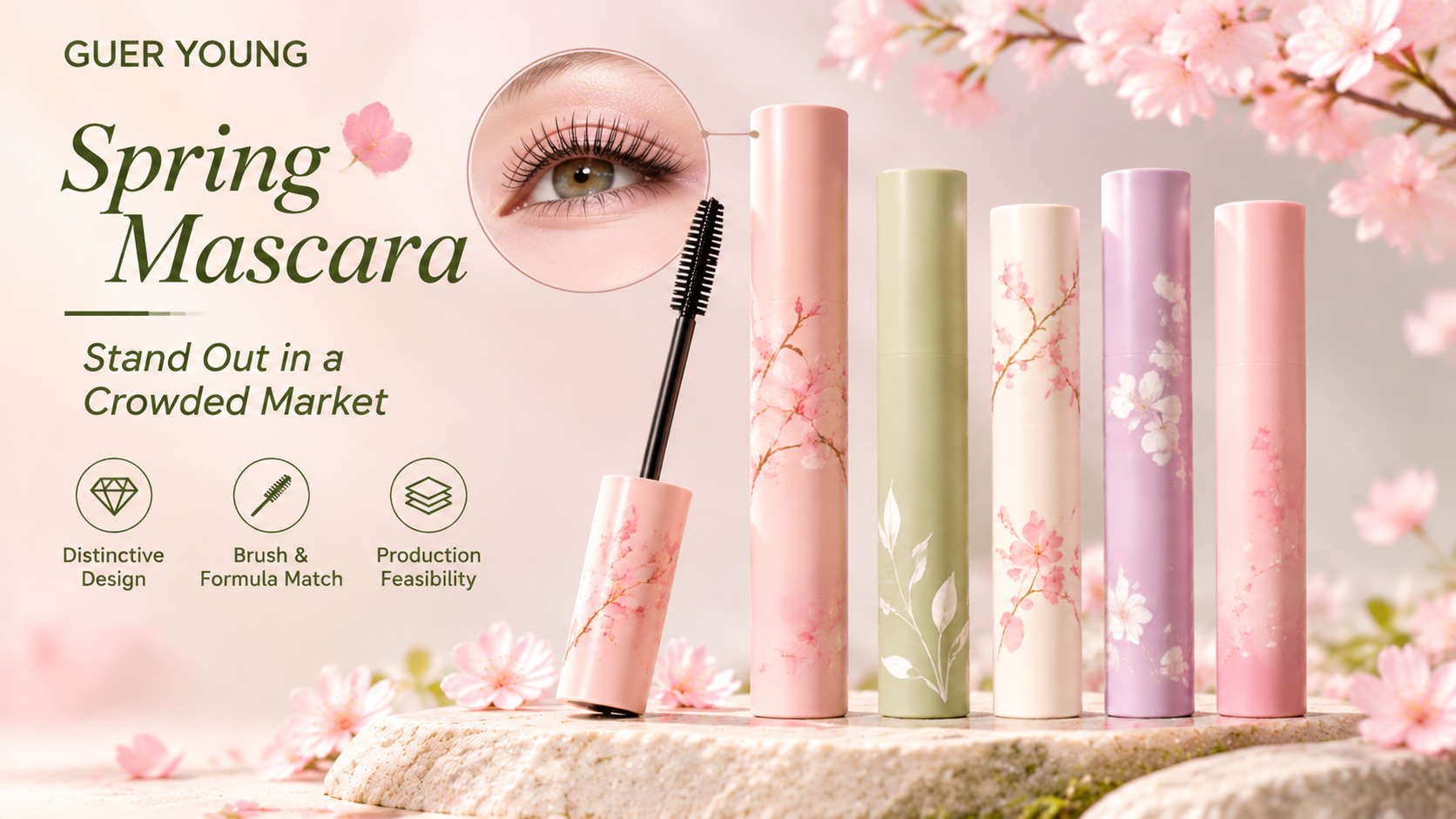
For beauty brands planning a spring launch, mascara development involves more than choosing attractive packaging. Brands also need to consider product positioning, brush selection, formula performance, customization costs, and supplier capabilities.
With many mascaras sharing similar appearances, creating a distinctive product requires more than changing the packaging color. Brands need to coordinate visual design, product functionality, and market positioning while keeping manufacturing feasibility and purchasing costs in mind.
This guide explores six key areas of spring mascara development, helping beauty brand founders, product managers, and buyers make more informed decisions about product design, customization, quality control, and supplier selection.
1. How Can Beauty Brands Build a Differentiated Spring Mascara Collection?
1.1 Identify Your Brand Positioning Before Choosing a Design
The first step in spring mascara development is defining the target customer, brand identity, and product price range.
Different brand positions call for different design directions:
Youth-oriented brands: Consider brighter colors and playful design elements.
Premium-positioned brands: Explore muted colors, refined textures, and elegant details.
Nature-inspired brands: Consider minimalist packaging, soft colors, and botanical elements.
Brands should also define the role of the new product within their existing portfolio. It could be an addition to a core collection, a seasonal limited-edition SKU, or a key product for a new brand direction.
A clear positioning strategy helps align packaging, formula, product performance, and cost decisions.
1.2 Avoid Common Design Choices That Make Products Look Similar
Pink, white, and floral elements are frequently used in spring beauty collections. However, simply changing a packaging color does not necessarily create brand recognition.
Brands can explore several areas for differentiation:
Visual combinations: Coordinate primary, secondary, and decorative colors.
Packaging silhouettes: Consider tube proportions, cap shapes, and overall structures.
Design details: Explore embossing, foil stamping, and localized printing.
Collection consistency: Maintain the brand's visual identity while highlighting the new product.
For example, a muted rose-pink tube paired with a creamy white cap and raised floral embossing can create a distinctive spring-inspired appearance through color contrast and texture.
Differentiation does not require complicated designs. Brands should balance visual appeal, manufacturing feasibility, and target costs.
2. How Can Mascara Packaging Create Stronger Brand Recognition?
2.1 Use Colors, Textures, and Finishes to Build Visual Identity
Packaging is one of the first visual elements customers notice. Spring mascara designs can use several elements to establish a recognizable product identity:
Colors: Select soft pink, creamy white, light purple, or other combinations that match the brand.
Textures: Matte finishes, glossy coatings, and embossing create different visual and tactile effects.
Decorative finishes: Foil stamping, screen printing, transfer printing, and localized printing can highlight logos or design details.
For example, a muted rose-pink mascara tube can be paired with a creamy white cap for contrast, while floral embossing reinforces the spring theme. Localized foil stamping can also be considered for a more refined appearance, depending on the budget.
2.2 Balance Packaging Creativity with Manufacturing Feasibility
Packaging should not only look attractive but also support manufacturing, filling, sealing, and transportation.
Before approving a design, brands should check:
Tube and cap dimensions, proportions, and fit.
Ease of holding, opening, and everyday use.
Whether embossing, printing, and decorative finishes suit mass production.
Whether new molds or specialized processes are required.
Whether customization fits the budget and MOQ.
Brands with limited budgets can use established packaging structures and differentiate them through colors, printing, and selected decorative finishes. Actual colors, textures, and assembly results should be confirmed during sampling rather than approved from digital mockups alone.
3. How Should Brands Choose the Right Mascara Brush and Formula?
3.1 Compare Different Mascara Brush Types
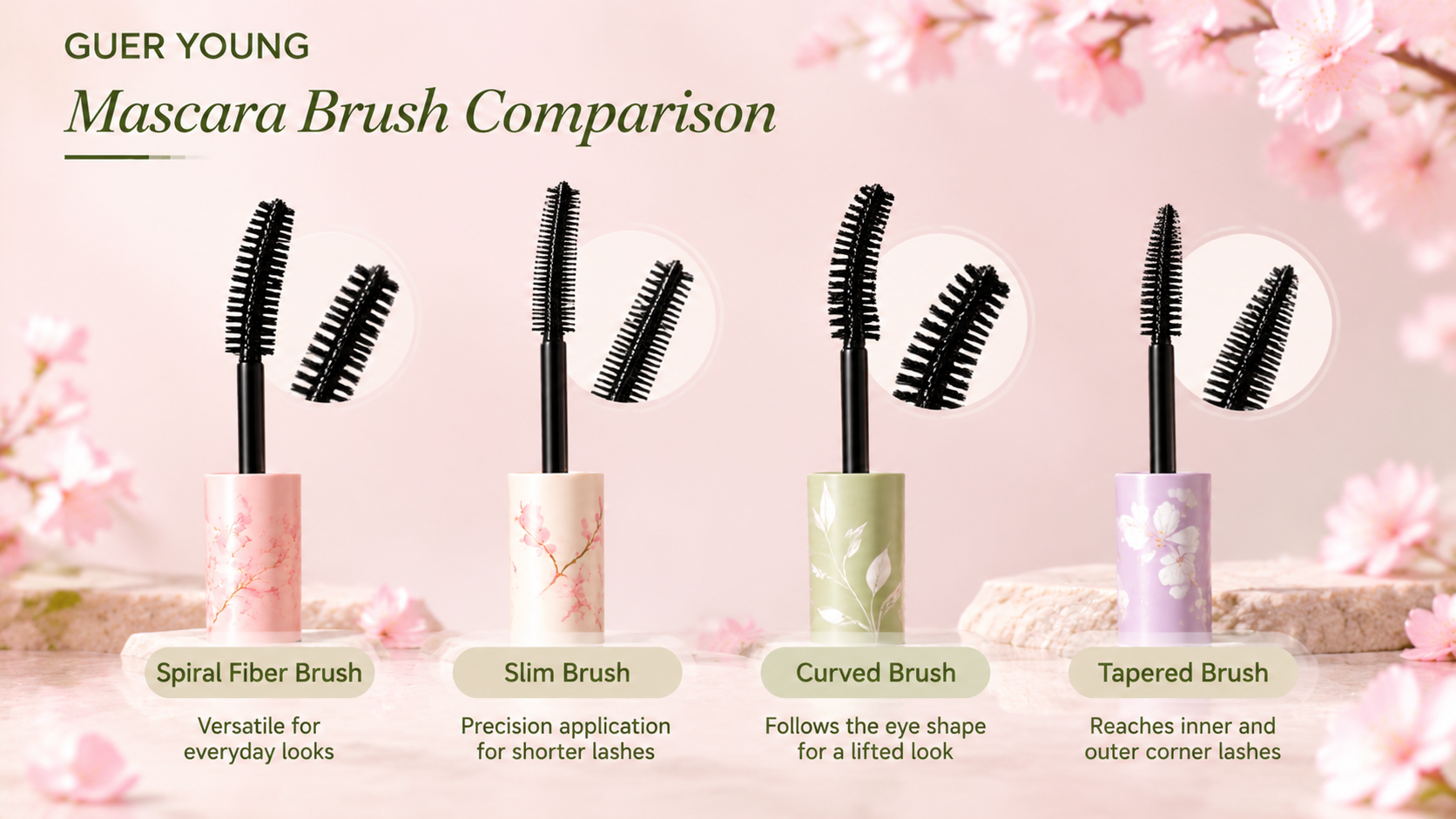
Brush structure influences formula pickup, distribution, and lash coverage. Common types include:
Spiral fiber brushes: Suitable for various everyday mascara concepts and designed to help distribute formula.
Slim brushes: Useful for detailed application and shorter lashes.
Curved brushes: Designed to support different application needs.
Tapered brushes: Feature a narrow tip for reaching areas such as the inner and outer corners of the eyes.
Brands should consider product positioning, desired lash effects, formula characteristics, and actual application experience rather than choosing a brush based on appearance alone.
3.2 Test Brush and Formula Compatibility
The brush and formula should be evaluated together. Poor compatibility may result in excessive pickup, uneven distribution, or clumping.
During sample testing, brands should check:
Whether the brush picks up an appropriate amount of formula.
Whether the formula distributes evenly.
Whether clumping or sticking occurs during application.
Whether the product achieves its intended volumizing, lengthening, or curling effect.
Whether the brush reaches shorter lashes and the corners of the eyes.
Whether the wiper opening matches the brush dimensions.
For example, a spring mascara featuring a black spiral fiber brush can be developed around a volume-and-curl concept. Actual application tests should confirm its final performance.
4. How Can Brands Control Mascara Development Costs and Quality?
4.1 Evaluate Customization Costs and MOQ
Customized mascara costs depend on packaging, brushes, formulas, finishing processes, and order quantity.
Brands should evaluate:
Packaging costs: Tube, cap, molds, and surface finishes.
Brush costs: Materials, structure, dimensions, and customization.
Formula costs: Ingredients and specific formula requirements.
Customization costs: Colors, printing, embossing, and other personalized details.
Order quantity: How MOQ and production volume affect unit cost.
Testing and documentation: Requirements based on the product and target market.
Brands seeking to control initial investment can consider established packaging structures and available brush options, then create differentiation through colors and decorative finishes.
It is advisable to confirm MOQ, sample fees, customization costs, and estimated delivery schedules before finalizing the design.
4.2 Establish Sample Approval and Batch Quality Standards
Sample approval does not automatically guarantee consistent results during mass production. Brands should confirm product specifications and inspection requirements in advance.
Key inspection areas include:
Packaging appearance: Colors, dimensions, printing positions, and surface finishes.
Packaging structure: Tube and cap fit, opening experience, and sealing.
Brush specifications: Dimensions, structure, and bristle materials.
Formula performance: Color, texture, pickup, and application results.
Batch inspection: Inspection items and records based on approved specifications.
For specific requirements such as waterproof performance or long wear, appropriate testing should be arranged to support product claims.
5. What Should Brands Look for in a Finished Mascara Supplier?
5.1 Evaluate OEM/ODM and Private Label Capabilities
Brands should look beyond quoted prices when selecting a supplier. Product selection and customization support are also important.
Consider whether the supplier:
Has experience in finished mascara manufacturing.
Offers OEM/ODM and Private Label services.
Provides different mascara, brush, and packaging options.
Supports sample development and product adjustments.
Can provide documentation relevant to the product and target market.
Clearly communicates customization scope, MOQ, and purchasing requirements.
Established finished product options may help brands launch more efficiently. Brands seeking greater differentiation can discuss customized packaging, brushes, and product specifications.
5.2 Check Production Capacity and Supply Reliability
A suitable product concept is only the beginning. Brands also need to confirm whether the supplier can execute orders consistently.
Procurement teams should review:
Factory production processes and quality management.
Sample approval and order production procedures.
Production arrangements for different order quantities.
Product inspection standards and quality records.
Documentation required for the target market.
MOQ, production lead time, and delivery arrangements.
Procedures for communicating and resolving product issues.
Documents and certifications related to FDA, CPNP, MSDS, and ISO should be verified according to the specific product, applicable scope, and target market.
A reliable finished cosmetics supplier should provide clear and consistent support throughout product selection, sampling, production planning, and quality communication.
6. How to Prepare for a Spring Mascara Launch
6.1 Plan Your Mascara Development Timeline
Brands should work backward from their intended launch date and organize product development into three stages.
Stage 1: Product Positioning and Initial Planning
Define the target market, brand positioning, and price range.
Select the mascara type, desired lash effect, and brush direction.
Choose packaging styles, colors, and customization processes.
Discuss MOQ, budget, and sample arrangements with suppliers.
Stage 2: Sample Development and Testing
Confirm packaging colors, structure, and surface finishes.
Test brush and formula compatibility.
Adjust product details based on sample feedback.
Confirm product specifications and documentation requirements.
Stage 3: Production Preparation and Quality Confirmation
Approve the final sample and order specifications.
Define bulk production inspection standards.
Arrange production and packaging according to the order plan.
Prepare logistics and launch arrangements.
Actual development schedules depend on product complexity, sample revisions, order quantity, and supplier production capacity. Sufficient time should be reserved for testing and adjustments.
6.2 Prepare Product Assets and Launch Materials
After product development, brands should prepare promotional materials that clearly communicate the product's features.
Recommended materials include:
Main product visuals: Showcase packaging design, colors, and brand identity.
Detail images: Highlight tube textures, embossing, caps, and brush structures.
Actual application results: Use real models or product testing to demonstrate application.
Product selling points: Highlight verified product features and benefits.
B2B product information: Prepare specifications, packaging details, and cooperation options.
For a spring limited-edition product, attractive packaging helps establish a seasonal theme. However, actual product performance, clear documentation, and reliable supply capabilities are equally important for brand promotion and purchasing decisions.
Conclusion: Build a Distinctive Spring Mascara Collection with the Right Supplier
Developing a distinctive spring mascara collection requires more than attractive packaging. Brands need to consider product positioning, brush and formula compatibility, customization costs, and reliable production.
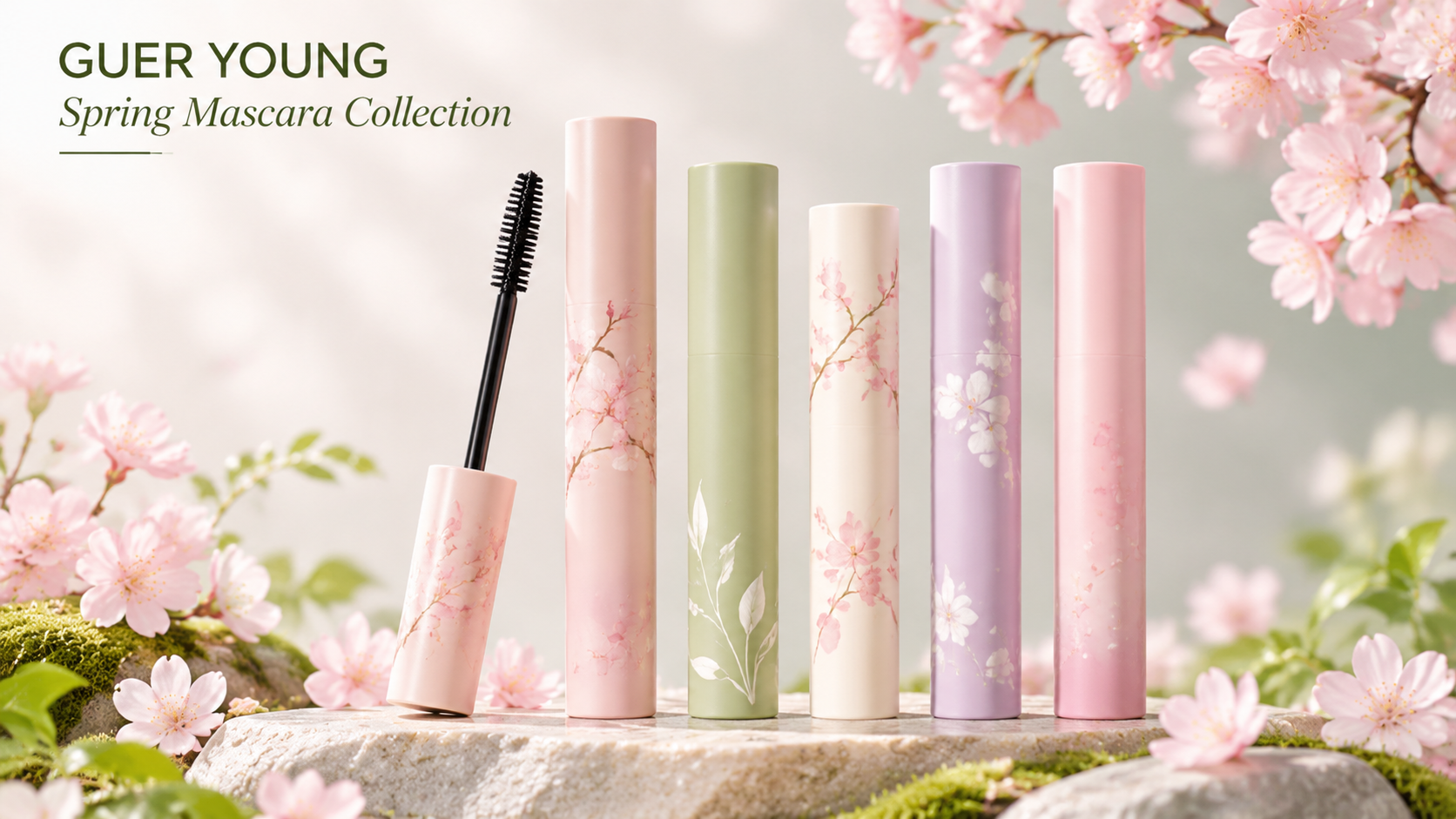
At GUER YOUNG, we explore seasonal packaging ideas through our spring-inspired mascara design concepts, featuring soft pink tones, floral details, cherry blossom patterns, and lavender textures. These visual concepts demonstrate different ways to create a cohesive yet distinctive seasonal product identity.
As a finished mascara supplier offering OEM/ODM and Private Label services, we support beauty brands in exploring product styles, packaging customization, sample development, and finished product solutions.
Looking for ideas for your next mascara launch? Contact GUER YOUNG to discuss your product concepts and customization requirements.


andy.li@gueryoung.com

We have 10 years of experience, focusing on the development and sales of high quality eyelash growth serum, mascara, eyebrow gel, eyebrow color and other products. We also offer custom services, from tube
design to cosmetic fillings and packaging


Room 1, C3 Factory Building, No.8803 Zhuhai Avenue, Lianwan Industrial Zone, Pingsha Town, Gaolan Port Economic Zone, Zhuhai, Guangdong,China
QUICK LINKS
D Zone,5/F, NO.8 CuiZhu 5th Street,
Qianshan Xiangzhou District,Zhuhai,
Guangdong,China,519070

lynn.zhou@gueryoung.com
winnie.zhong@gueryoung.com
niki.xu@gueryoung.com