
How to Evaluate Market Demand Before Launching a Spring Mascara

Read in English | Lire en Français | Lesen auf Deutsch | Leer en Español | Leggi in Italiano
Spring is an important planning period for beauty brands looking to refresh their product portfolios and introduce seasonal cosmetics. However, launching a new mascara does not automatically guarantee market interest. Before committing to product development and purchasing budgets, brand owners, product managers, and procurement teams need to answer several questions: Is there genuine demand among target consumers? Are there gaps in the existing market? Can the new product offer a clear difference from the brand's current range?
Before investing in a spring mascara launch, brands should evaluate market trends, consumer needs, competitor products, existing SKUs, purchasing costs, and supply feasibility. This helps reduce the risks associated with adding products without sufficient market evidence.
1. Understand Spring Mascara Trends and Changing Consumer Needs
The first step is to identify the mascara features and product attributes receiving attention in the target market. However, following a trend does not mean every brand should develop a product around it. Brands need to consider their positioning, target customers, and existing product range before deciding which trends are worth exploring.
Several product directions may be worth evaluating:
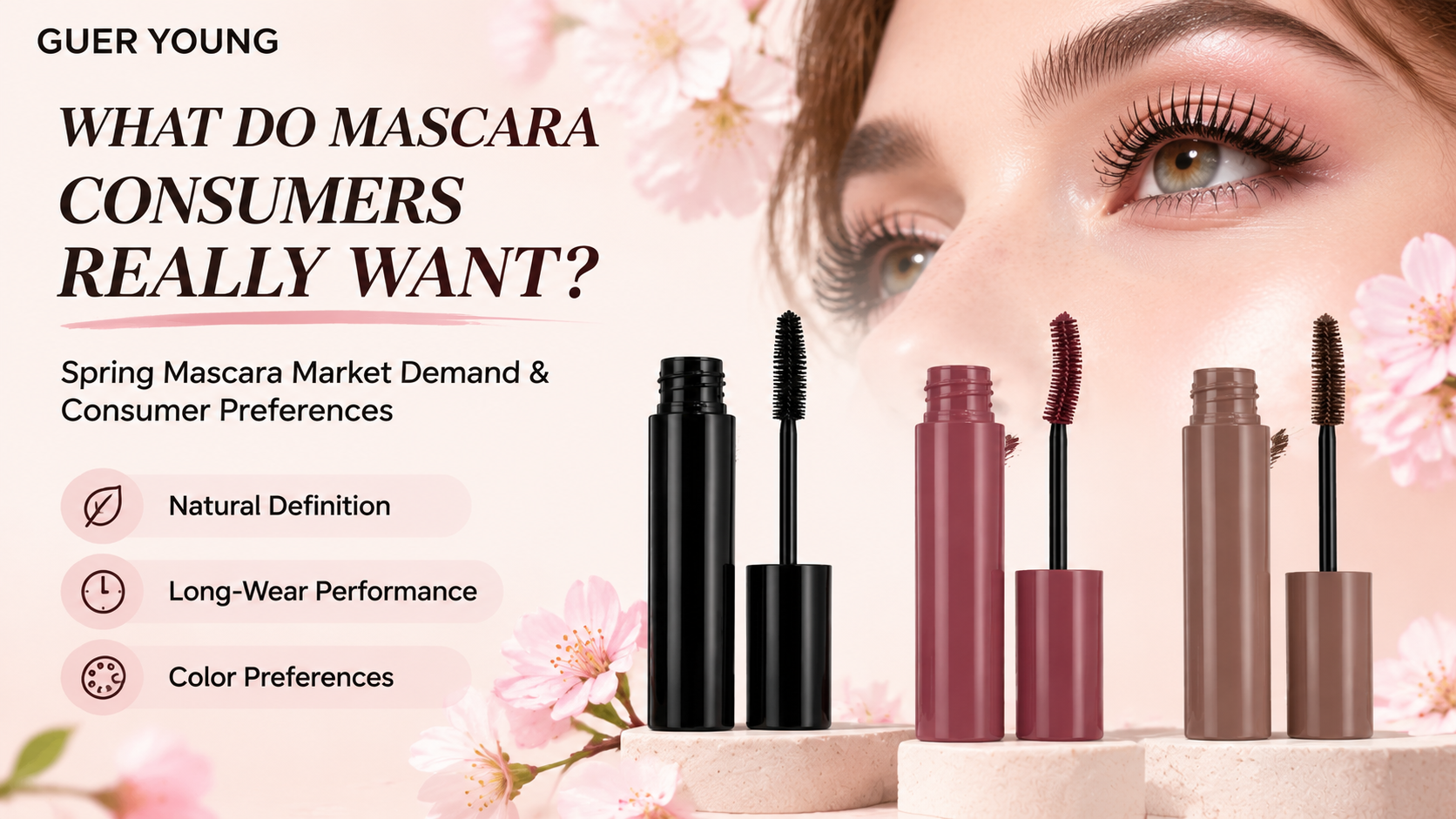
Natural-looking results: Lengthening, defined lashes, and a natural curl may appeal to consumers who prefer everyday makeup.
Long-wear performance: Smudge resistance and lasting makeup results can be relevant to consumers looking for mascara suitable for extended wear.
Color variety: In addition to classic black and brown, brands can explore whether shades such as reddish brown or burgundy fit their target customers' preferences.
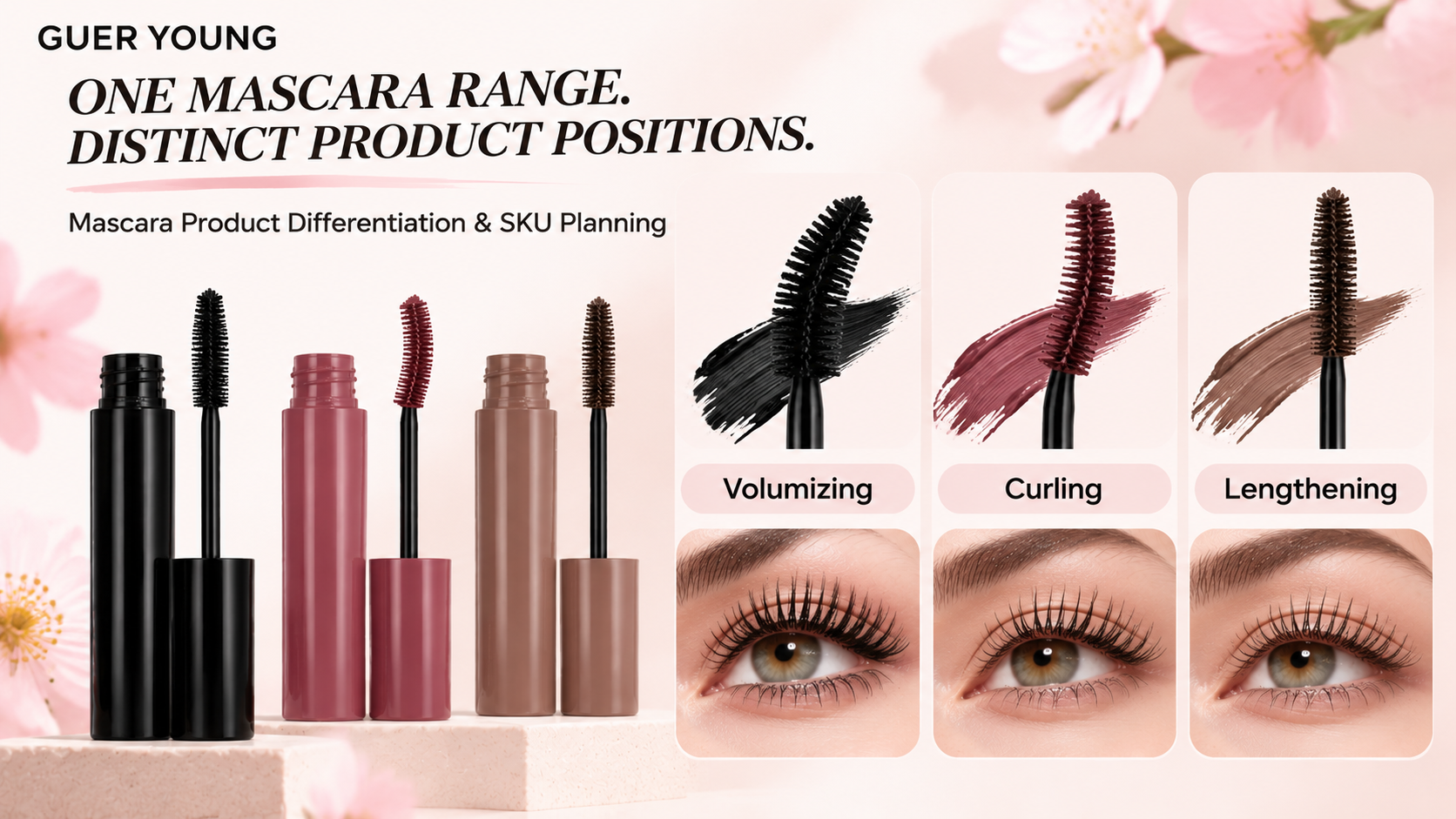
Functional segmentation: Volumizing, lengthening, curling, and multi-effect mascaras allow brands to create clearer product positioning within their ranges.
Brands can monitor these directions through Google Trends, social media content, retail reviews, and competitor product launches.
It is important to distinguish online attention from actual purchasing demand. A product trend that receives significant social media engagement does not necessarily represent a stable sales opportunity. Brands should also consider their target market, price positioning, and available sales feedback.
2. Identify Target Consumers and Validate Product Demand
After identifying potential trends, brands need to determine which consumer group the new mascara is intended to serve. Different consumers may prioritize different product features. Without a clear target audience, it can be difficult to establish a distinctive market position.
The following needs can provide a starting point for evaluation:
Consumer Need | Potential Product Preferences |
Everyday natural makeup | Natural length, defined lashes, lightweight-looking results |
Long-lasting makeup | Smudge resistance and lasting wear |
More dramatic lashes | A visibly fuller lash appearance |
Individual makeup styles | Distinctive colors, brush designs, and packaging |
Brands can validate these needs using several sources:
Search trends: Review search interest in different mascara functions, colors, and product types within the target market.
Social media feedback: Examine comments and discussions around relevant products, rather than relying only on views and likes.
Retail reviews: Study positive and negative competitor reviews to understand what consumers appreciate and where their expectations are not being met.
Brand-owned data: For brands with existing mascara products, sales performance, customer feedback, and repeat-purchase patterns can help identify popular product features.
Comparing information from multiple sources provides a more reliable basis for product decisions than relying on a single popular topic or personal assumption.
3. Analyze Competitors and Identify Product Differentiation Opportunities
Once consumer needs are better understood, brands should examine the mascara products already available in the target market. Competitor analysis involves more than comparing retail prices. It also helps brands understand how different products use functions, formulas, brushes, colors, and packaging to establish their positions.
Consider comparing the following factors:
Analysis Area | What to Examine |
Product function | Volumizing, lengthening, curling, waterproof, and smudge-resistant positioning |
Formula characteristics | Texture, application experience, and removal method |
Brush design | Brush shape, size, bristle arrangement, and intended effect |
Product colors | Black, brown, and differentiated color options |
Packaging | Tube shape, color, decoration, and overall visual style |
Price positioning | Retail price in relation to product features and packaging |
Customer reviews | Appreciated features, recurring complaints, and possible improvement areas |
For example, if many products in the target market focus on classic black volumizing mascara, a brand could investigate whether natural brown shades, lengthening-and-curling combinations, or distinctive colors represent relevant opportunities.
However, the absence of a particular feature or color in competitor products does not automatically indicate a market gap. Brands still need to establish whether consumers want that option and whether it fits the brand's positioning and price range.
4. Review the Existing Mascara Portfolio Before Adding New SKUs
For brands that already sell mascara, new product planning should not focus only on emerging market trends. It should also consider whether the current product range already meets those needs.
A portfolio review can focus on three areas:
First, identify products with stable performance.
Review existing product sales, customer feedback, and repeat-purchase patterns. If a product has already gained customer acceptance, the brand may be able to extend it through color variations, packaging changes, or different product configurations instead of developing an entirely new product.
Second, identify overlapping SKUs.
If several products offer similar functions, target similar consumers, and occupy comparable price positions, adding another similar SKU may increase product management and inventory pressure. Brands should determine whether a new product offers enough differentiation to justify its addition.
Third, identify unmet needs within the current range.
For example, a brand whose existing mascara portfolio focuses mainly on volume may have limited options for consumers looking for natural lengthening or brown shades. These directions can be evaluated as potential extensions.
Based on this review, brands can consider three possible decisions:
Add a new SKU: Existing products do not meet a clearly identified need, and the proposed product has a distinct position.
Optimize an existing SKU: The current product already has market potential and may be extended through changes in color, packaging, or configuration.
Postpone the investment: Demand evidence is insufficient, or the proposed product offers little difference from existing SKUs.
This approach helps brands avoid adding products simply to increase the size of their portfolios.
5. Evaluate Purchasing Costs and Supply Feasibility
Identifying a potential market opportunity does not necessarily mean the product is ready for investment. Brands also need to determine whether the product configuration, order quantity, and budget are realistic, and whether a supplier can meet the actual purchasing requirements.
First, define the product requirements.
Before requesting quotations, brands should prepare a basic product brief:
Purchasing Area | Details to Define |
Product positioning | Volumizing, lengthening, curling, natural results, or another direction |
Formula requirements | An existing formula or specific requirements that need evaluation |
Brush configuration | A standard brush or a special structure requiring assessment |
Packaging | Standard packaging, color variations, or other customization |
Order quantity | Estimated initial order and potential replenishment plan |
Budget | Product, packaging, and other necessary purchasing costs |
Clear requirements help suppliers recommend more relevant product options and allow brands to compare the costs of different configurations.
Second, evaluate the overall investment rather than unit price alone.
The budget may include product purchasing, packaging, customization, testing, and compliance documentation, depending on the product and target market.
Brands should also consider the expected retail price, order quantity, and sales forecast when evaluating potential margins and inventory risks. A lower unit price does not always result in a more cost-effective purchase. Ordering more products than the brand can reasonably sell may create additional inventory pressure.
Finally, select a supply approach that fits the product plan.
Different product requirements may call for different purchasing options:
Existing finished products: If a mature product already meets the brand's functional and positioning requirements, evaluating existing options may reduce unnecessary customization.
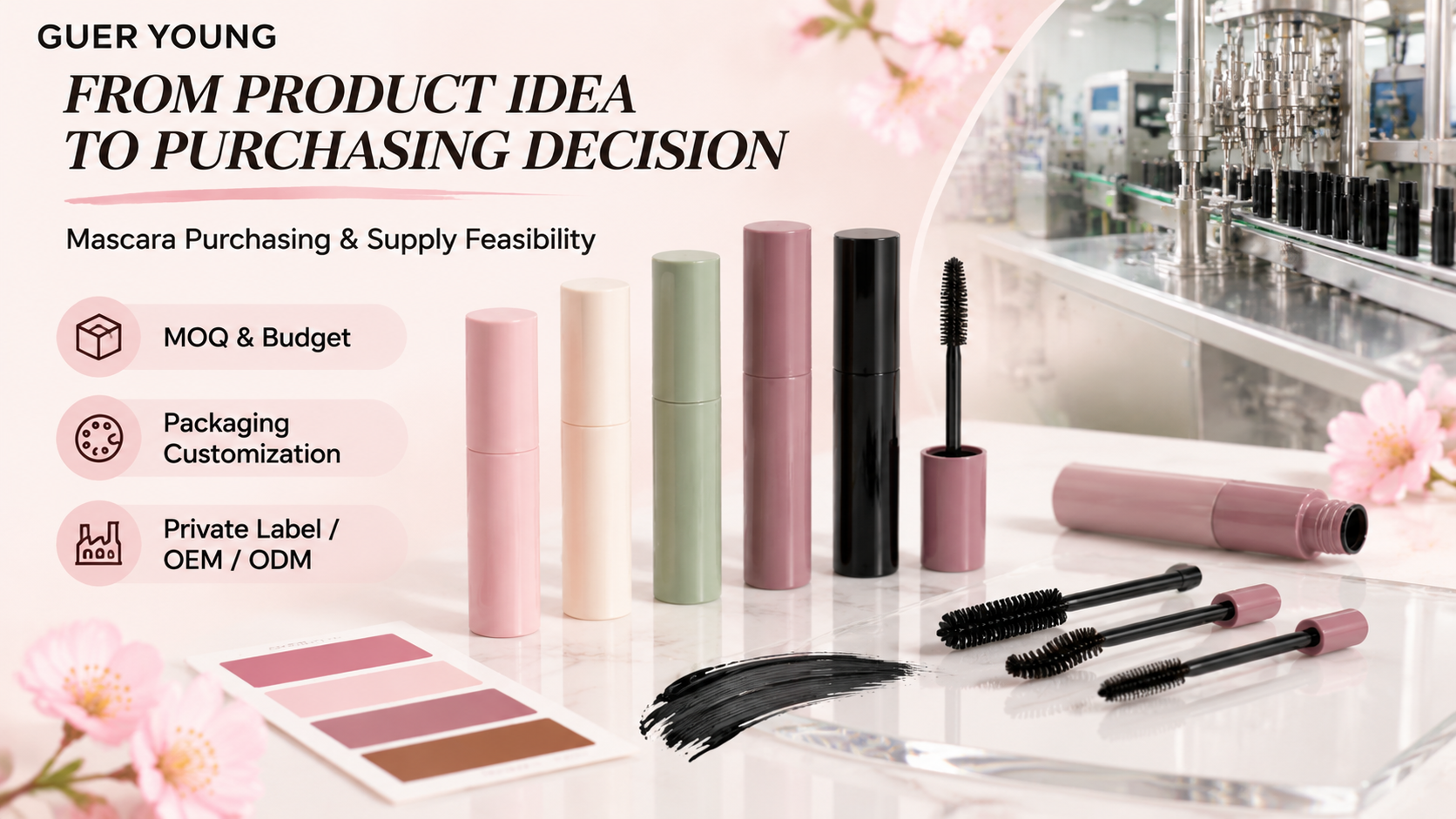
Private Label: Brands that want to use an existing product while creating their own branded range through suitable packaging or brand identification can consider Private Label purchasing.
OEM/ODM: If a brand has specific formula, brush, or packaging structure requirements, it can discuss them with the supplier. Feasibility should be evaluated according to the product, development scope, and order requirements.
When evaluating suppliers, brands should look beyond quotations. Product range, actual customization capabilities, MOQ, sample arrangements, quality requirements, and production conditions are also important. For special customization requests, the achievable scope and related costs should be confirmed in advance to avoid mismatched expectations later in the purchasing process.
If the proposed order quantity, budget, or supply conditions do not fit the brand's plan, the brand can consider adjusting the product configuration, reducing the initial order scope, or postponing the investment.
Conclusion: Align Product Opportunities with Practical Purchasing Decisions
Whether a spring mascara is worth launching cannot be determined by market trends or competitor activity alone. Brands need to consider consumer demand, their existing product portfolios, competitor differentiation, purchasing costs, and supply conditions together.
The most valuable new product is not necessarily the one with the most features or the most complex design. It is the one that addresses a clear need, complements the existing range, and fits the brand's purchasing budget and supply requirements.
GUER YOUNG offers finished mascara options along with Private Label and OEM/ODM supply services. Brands can evaluate suitable product options based on their positioning, functional requirements, packaging preferences, and purchasing plans. Projects involving special formula, brush, or packaging customization require further feasibility assessment based on specific requirements.
Before investing in a spring launch, validating the market opportunity and then selecting a suitable product and purchasing approach can help brands make more informed decisions.


andy.li@gueryoung.com

We have 10 years of experience, focusing on the development and sales of high quality eyelash growth serum, mascara, eyebrow gel, eyebrow color and other products. We also offer custom services, from tube
design to cosmetic fillings and packaging


Room 1, C3 Factory Building, No.8803 Zhuhai Avenue, Lianwan Industrial Zone, Pingsha Town, Gaolan Port Economic Zone, Zhuhai, Guangdong,China
QUICK LINKS
D Zone,5/F, NO.8 CuiZhu 5th Street,
Qianshan Xiangzhou District,Zhuhai,
Guangdong,China,519070

lynn.zhou@gueryoung.com
winnie.zhong@gueryoung.com
niki.xu@gueryoung.com