Read in English | Lire en Français | Lesen auf Deutsch | Leer en Español | Leggi in Italiano
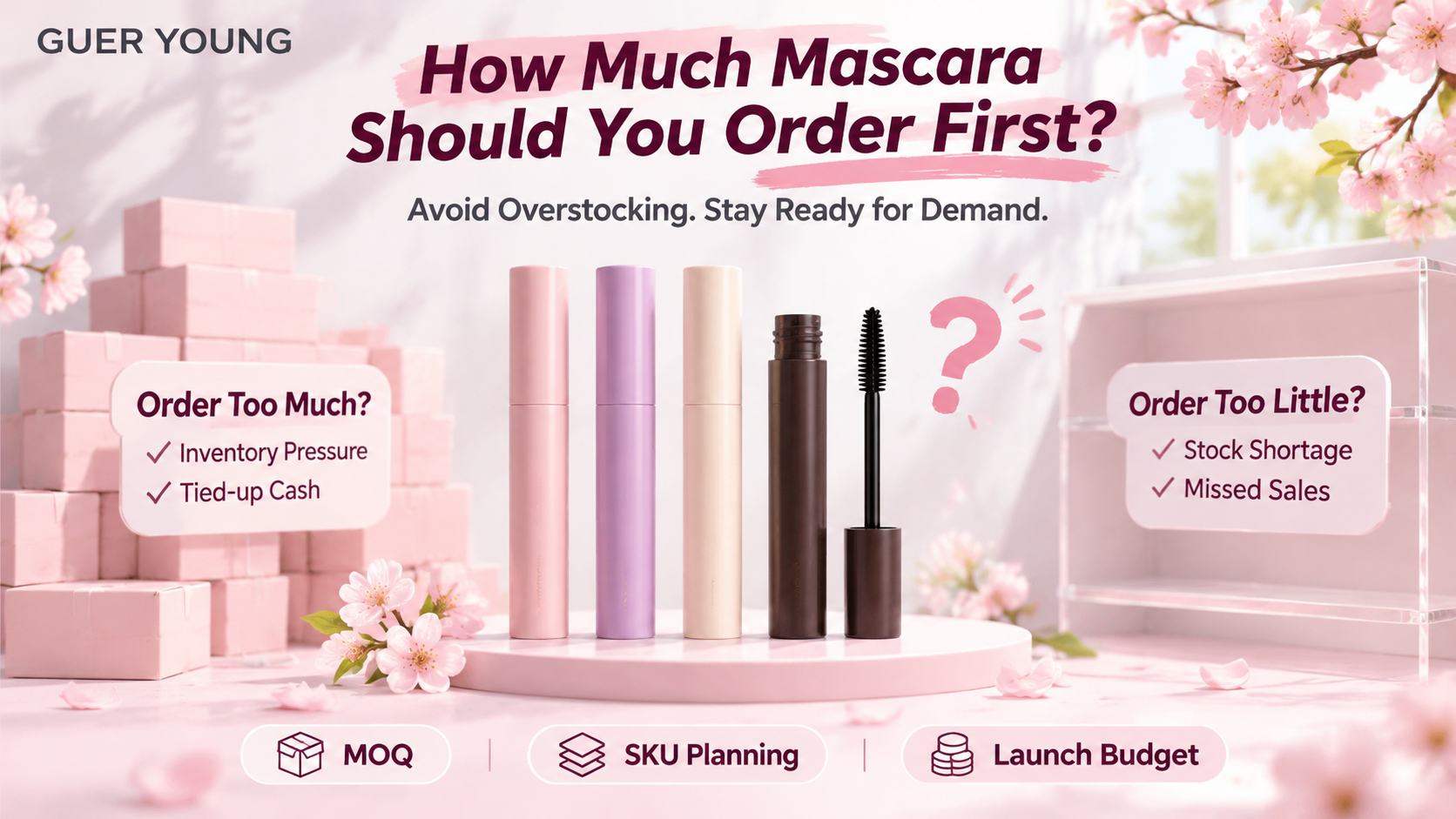
Planning the first order quantity for a spring limited-edition mascara can be challenging. Ordering too little may lead to stock shortages after launch, while ordering too much can increase inventory pressure and tie up cash.
For beauty brands, the initial order quantity should not be based on supplier MOQ alone. It needs to be planned around expected demand, SKU selection, budget, and potential replenishment options.
1. Understand MOQ Before Planning Your Order
Before planning the first order, brands need to understand the supplier's minimum order quantity (MOQ). Different mascara products, packaging configurations, and customization requirements may have different order requirements.
For example, customizing the tube color, logo, outer box, or other packaging details may affect the MOQ. Brands should clarify:
Is the MOQ calculated per SKU or across the entire order?
Do different products or packaging configurations have different MOQs?
Are there more flexible order options for existing products or standard packaging?
If the supplier's MOQ exceeds the brand's expected demand, consider reducing the number of SKUs, choosing an existing product, or simplifying packaging customization instead of increasing inventory just to meet the MOQ.
2. Decide Which Mascara SKUs to Launch
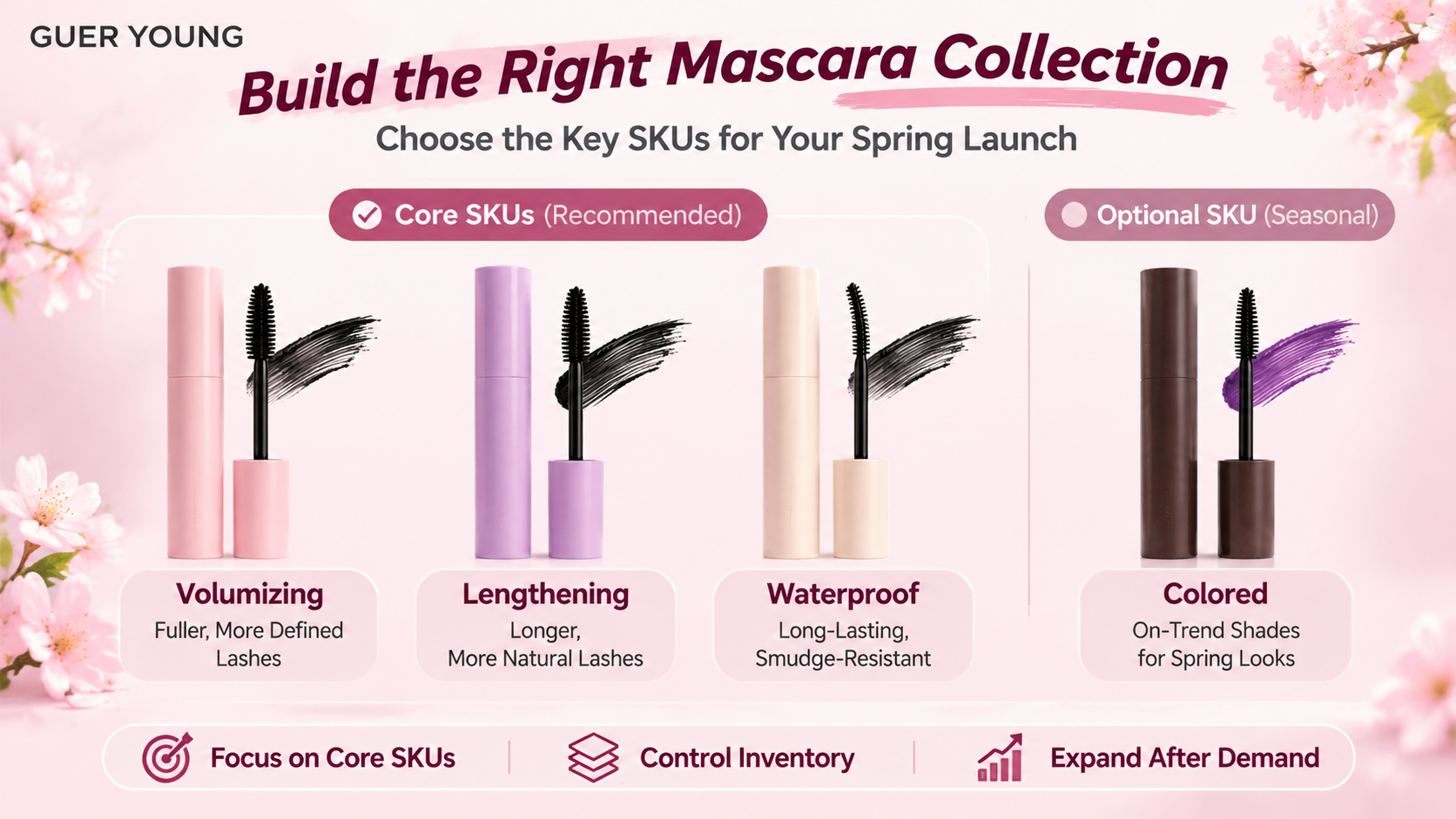
A spring limited-edition collection does not necessarily need multiple mascara SKUs. Too many product variations can increase purchasing costs and divide demand, making it harder to manage inventory.
Brands can select products based on their positioning and target market. For example:
Volumizing Mascara: For brands emphasizing fuller-looking lashes.
Lengthening Mascara: For brands focusing on a lengthening effect.
Waterproof Mascara: For positioning around wear performance and water resistance.
Colored Mascara: For seasonal makeup themes or distinctive collections.
For a first spring mascara launch, it may be more practical to focus on core products rather than introducing too many colors, functions, or packaging variations from the beginning.
Once the SKU selection is finalized, estimate demand for each product separately instead of dividing the initial order quantity equally across all SKUs.
3. Calculate Your Total Launch Budget
The initial purchasing budget should cover more than the mascara unit price. For a spring limited-edition launch, brands also need to consider packaging customization, sample approval, necessary testing, shipping, and marketing expenses.
The overall budget may include:
Product purchasing costs
Packaging and logo customization
Sample and necessary testing costs
Shipping and logistics
Product launch marketing
Funds reserved for replenishment
With a limited budget, prioritize core SKUs, essential packaging requirements, and launch marketing. Choosing existing products, simplifying packaging customization, or reducing the number of initial SKUs can help control upfront investment.
It is also advisable to reserve funds for replenishment instead of allocating the entire budget to the first order, leaving the brand with less flexibility after launch.
4. Estimate Demand and Set Your First Order Quantity
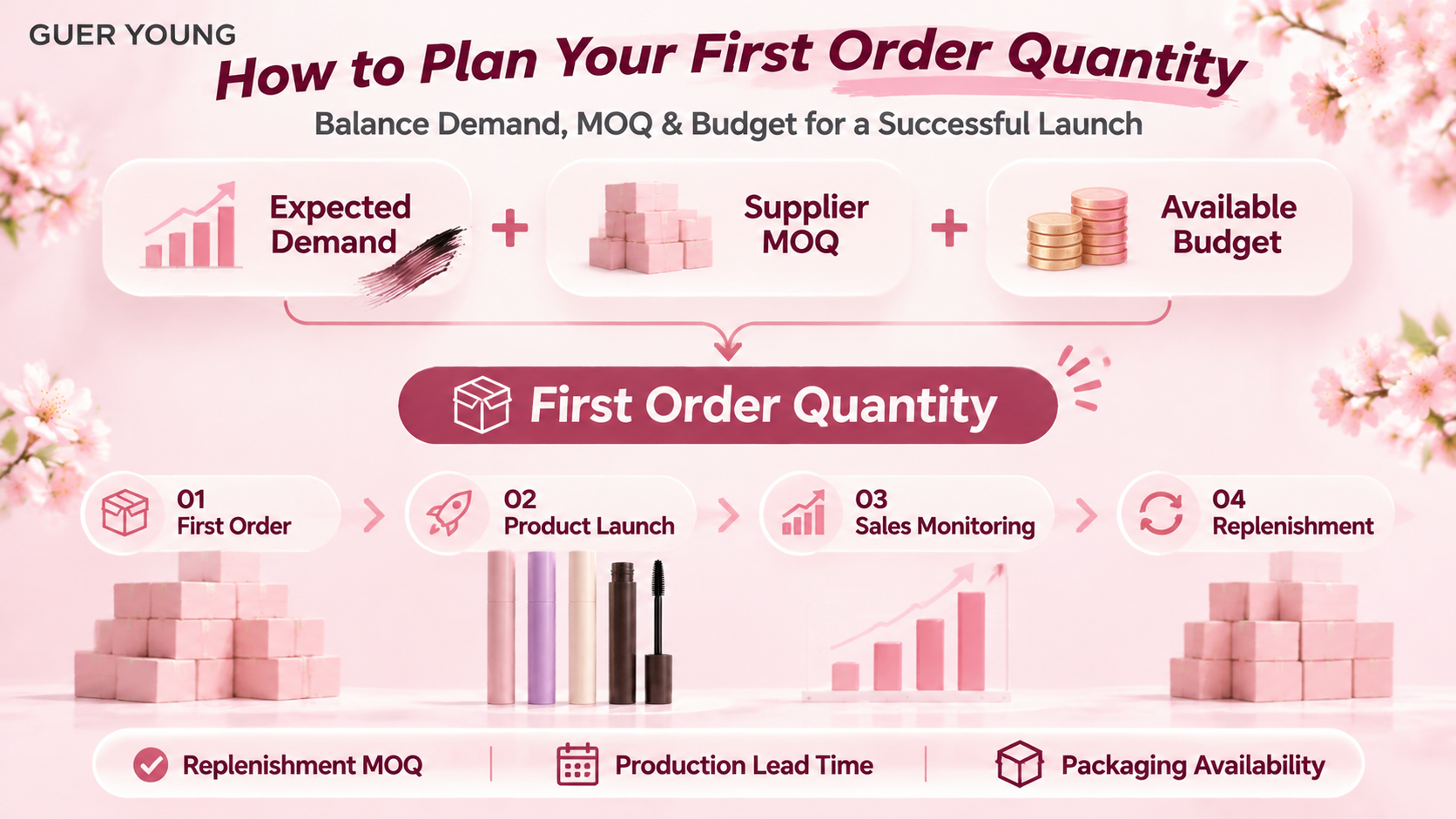
The first order quantity should be based as much as possible on expected demand rather than MOQ or assumptions alone.
Brands can consider the following information:
Sales performance of previous seasonal launches
Sales data from existing mascara products
Expected retailer, distributor, or online orders
Consumer feedback and market research
Launch marketing plans and expected selling period
Brands with historical sales data can use the performance of similar products to inform their forecasts. Brands launching mascara or a spring limited-edition product for the first time should be cautious about relying on unverified conversion rates or sales estimates.
For example, a brand expects a total demand of 1,200 units for two spring limited-edition mascaras during the initial sales period. Before placing the order, it needs to evaluate the expected demand for each SKU, supplier MOQ, and available budget rather than automatically dividing the quantity equally.
If the expected demand for a particular SKU is below the supplier's MOQ, the brand can consider reducing the number of SKUs, concentrating on core products, or adjusting the product and packaging configuration. It should also confirm whether replenishment is feasible, including the MOQ, production lead time, and availability of packaging materials.
The final initial order quantity should balance demand forecasts, supplier production requirements, and the brand's budget.
5. Confirm the Order Plan with Your Supplier
After planning the initial order quantity, brands should confirm the product and order details with the supplier to ensure the plan is feasible.
Key points to confirm include:
Formula, brush, and product specifications
MOQ and quotation for each SKU
Packaging, logo, and customization requirements
Sample approval process
Packaging approval, production, and delivery timeline
Replenishment MOQ, lead time, and packaging material availability
Confirming these details before placing the order helps brands understand purchasing costs, quantity restrictions, and delivery arrangements, reducing uncertainty when adjustments are needed later.
For a spring limited-edition mascara launch, brands can discuss suitable finished mascara options and order configurations with GUER YOUNG based on product positioning, SKU selection, packaging requirements, and the expected launch date. This helps manage the initial investment while keeping room for future sales and replenishment.






