
How to Avoid Overstocking Spring Mascara: A Guide for Beauty Brands
Read in English | Lire en Français | Lesen auf Deutsch | Leer en Español | Leggi in Italiano
Spring limited edition mascaras are often developed around seasonal makeup trends, special packaging, or promotional campaigns. While they offer beauty brands opportunities to introduce new products, seasonal collections also come with shorter selling windows and less predictable demand.
Ordering too much may leave brands with unsold inventory after the season, while ordering too little can lead to stockouts during promotions. To reduce these risks, brands should plan their first orders, SKU mix, replenishment timing, and supplier requirements before launch.
1. Plan Your First Order Quantity for Spring Mascara
The initial order affects purchasing budgets and inventory pressure. Brands should consider expected demand and purchasing conditions rather than relying solely on sales forecasts or unit costs.
Estimate Demand Before Placing Your First Order
Before confirming quantities, review the planned launch date, selling period, target market, sales channels, and marketing activities. If you already sell similar mascaras, use their sales history to estimate demand. For a new seasonal collection without comparable data, use a more conservative forecast.
Consider:
Sales history of similar products
Target markets and sales channels
Planned marketing activities
Product positioning, pricing, and selling period
Balance MOQ with Seasonal Sales Uncertainty
Supplier minimum order quantities (MOQs) and packaging customization requirements can affect the initial purchase. For seasonal products, ordering more to reduce unit costs may increase inventory pressure later.
Before placing an order, confirm product and packaging MOQs, customization requirements, initial order and replenishment conditions, and sample evaluation procedures. The purchasing quantity should balance expected demand, budget, and replenishment feasibility—not just unit price.
2. Build a Balanced SKU Mix for Spring Mascara
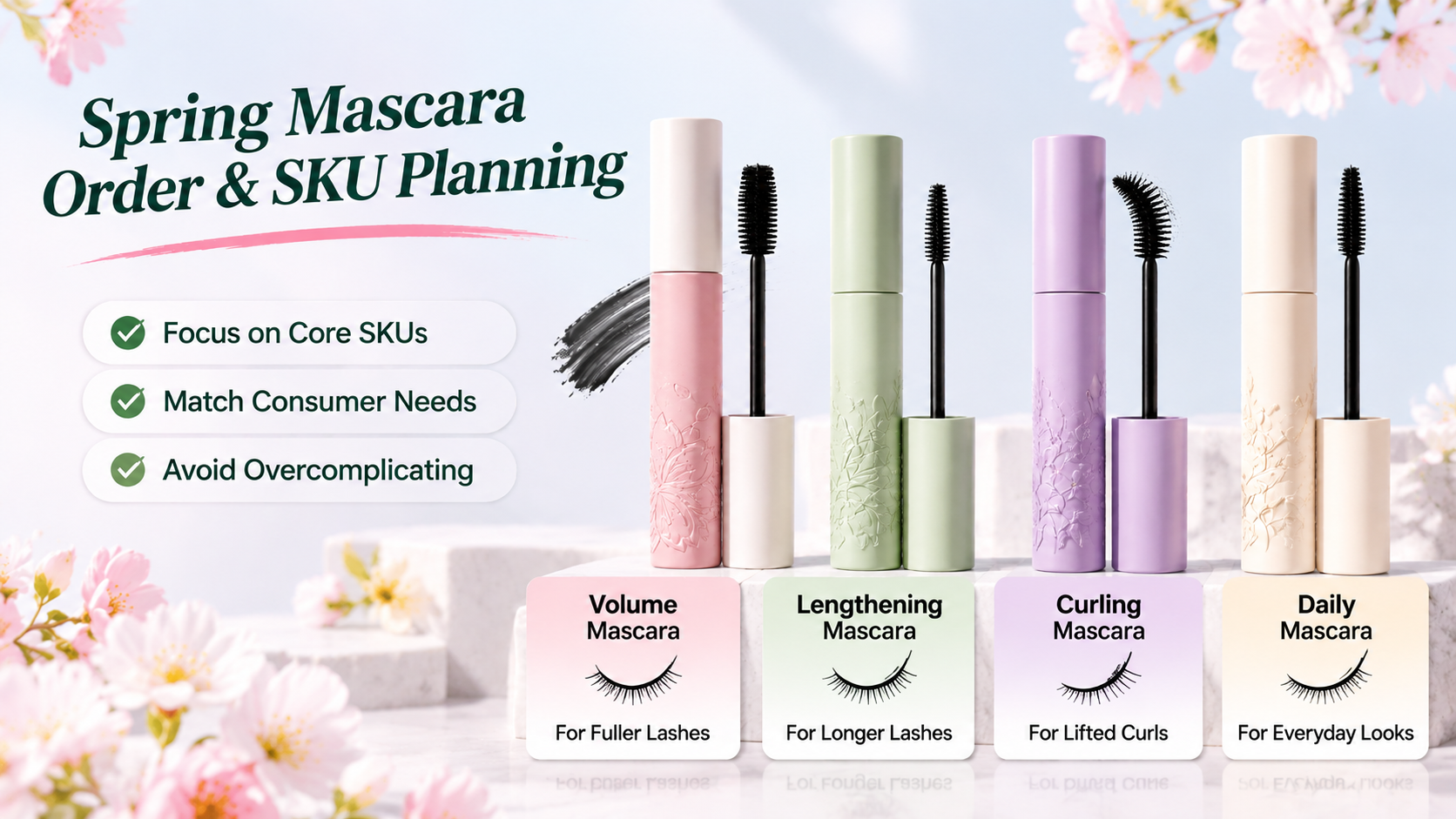
A spring collection does not necessarily need many SKUs. Too many variations can increase development, purchasing, and inventory management complexity. Brands should prioritize products with clear positioning and relevant consumer needs.
Prioritize Core Mascara Products and Seasonal Variants
Brands can select core products from their existing mascara range and introduce seasonal appeal through packaging, tube colors, or visual designs.
For example:
Volume Mascara: For fuller-looking lashes
Lengthening Mascara: For a lengthened lash effect
Curling Mascara: For enhanced curl
Daily Mascara: For everyday makeup looks
Brands do not necessarily need new formulas for every product positioning. Existing products can be combined with seasonal packaging and design updates to create a distinctive spring collection.
Avoid Overcomplicating Your Initial SKU Mix
When demand is uncertain, too many SKUs can spread inventory across products and increase purchasing pressure. Consider product differences, expected sales for each SKU, customization requirements, and purchasing costs before finalizing the collection.
Starting with a focused range of clearly positioned products makes it easier to manage development and inventory risks. Additional SKUs can be introduced based on actual sales performance.
3. Plan Replenishment Timing Before the Spring Launch
Replenishment should be planned before launch, not when inventory is nearly sold out. Production, packaging preparation, and shipping can all affect whether products arrive within the spring selling window.
Calculate Reorder Timing Based on Actual Lead Time
Brands should confirm the supplier's actual lead time and understand the steps that may affect delivery, including:
Product manufacturing time
Packaging material and customized component preparation
Printing and packaging design confirmation
Shipping arrangements after production
Special tube colors, custom printing, or limited edition packaging may require additional preparation. Understanding the full timeline before launch helps brands leave enough time for potential replenishment.
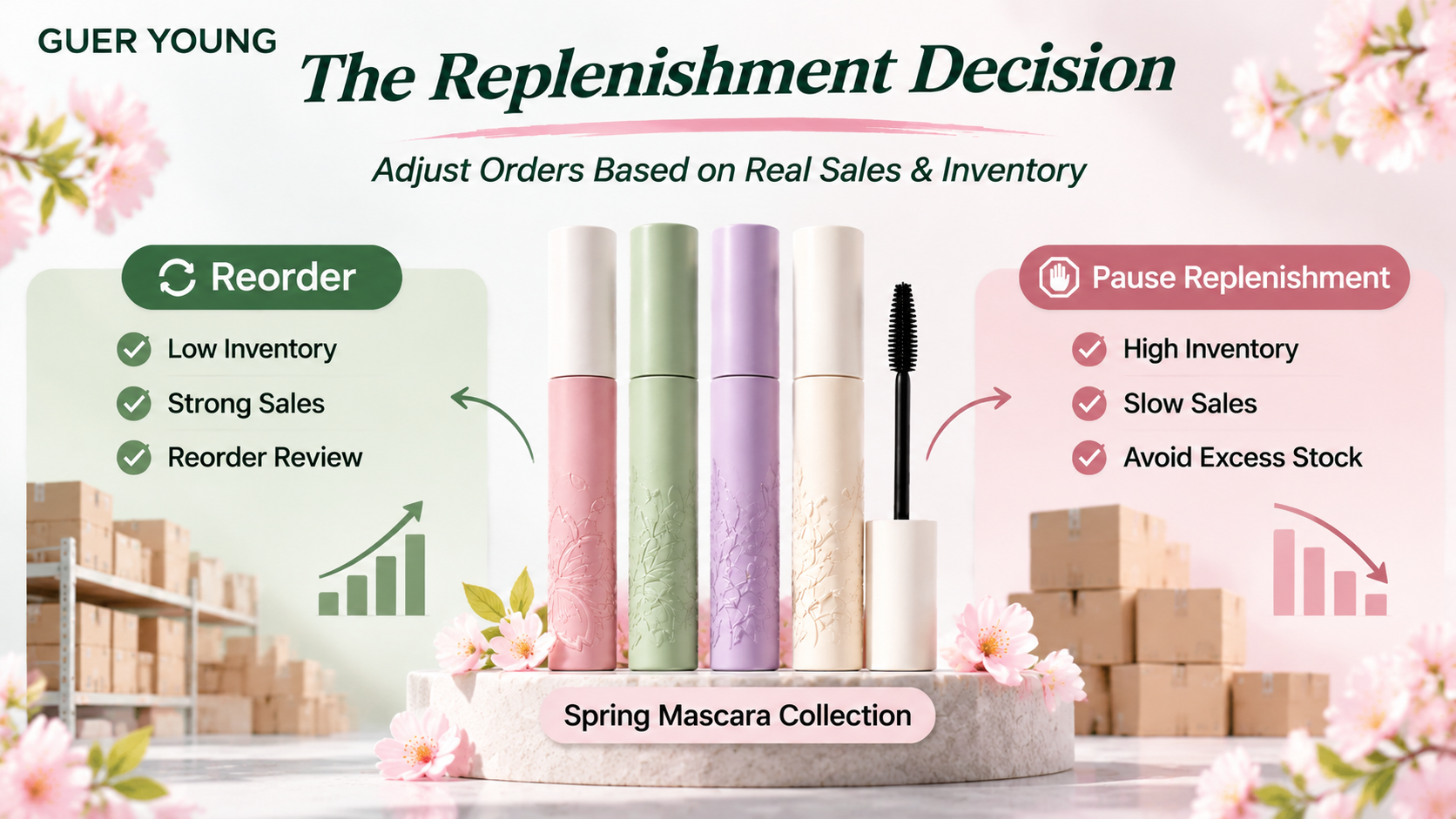
Adjust Reorders Based on Actual Sales Performance
After launch, replenishment decisions should be based on actual sales and inventory rather than pre-launch forecasts alone.
Monitor sales volume by SKU, remaining inventory, inventory depletion rate, replenishment lead time, and the remaining selling window. Strong-performing products may warrant a replenishment review, while slower-moving SKUs should be approached cautiously to avoid excess stock at the end of the season.
4. Monitor Inventory and Prevent Seasonal Overstock
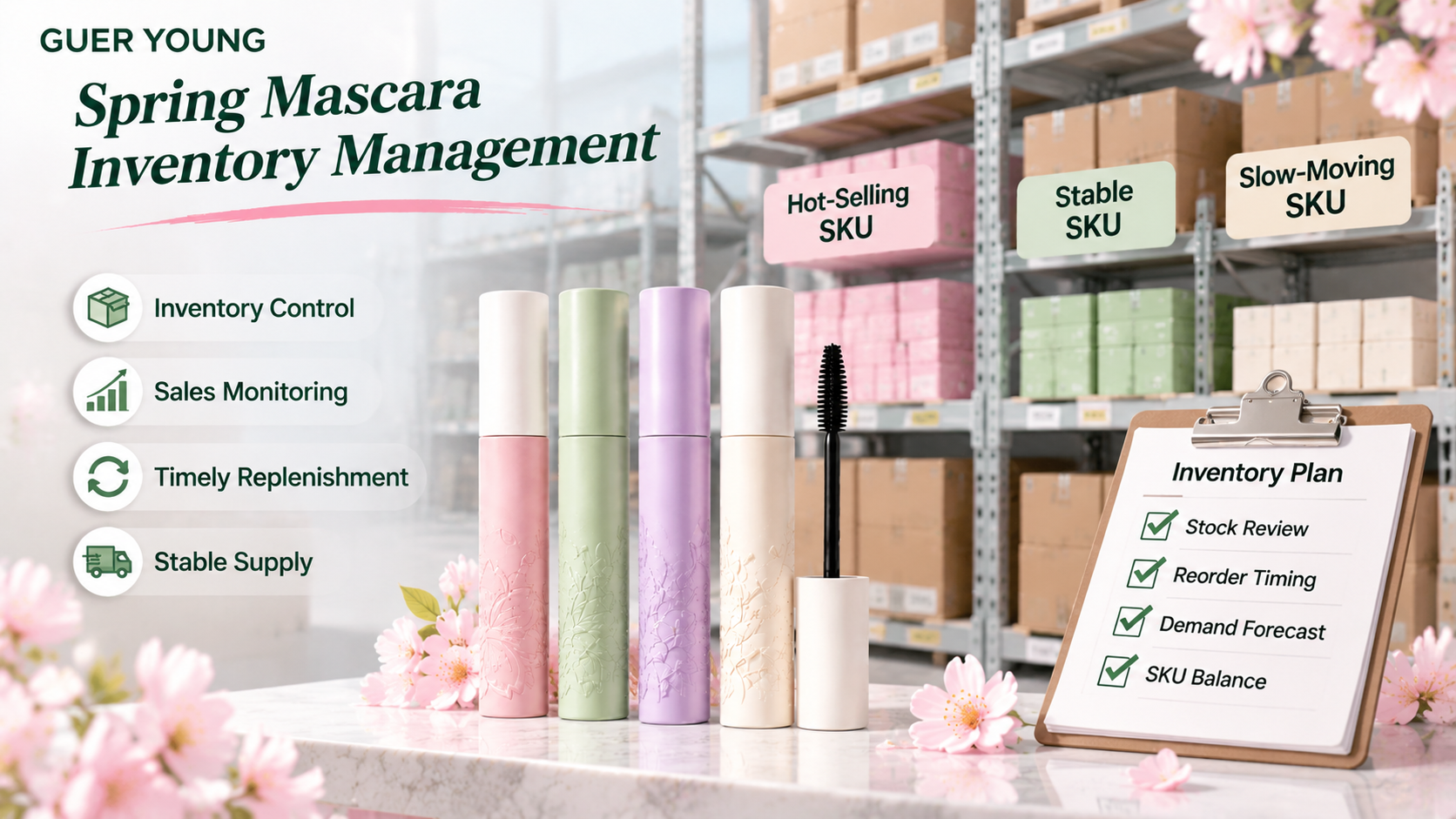
Overall collection sales do not always reflect the performance of individual products. Brands should regularly review SKU-level sales and inventory to identify products that are selling slower than expected.
Track Sell-Through Rate and Remaining Inventory
Track:
Actual sales by SKU
Current inventory and depletion rate
Sales performance across different products
How long remaining stock is expected to last
The remaining seasonal selling window
These figures help brands identify which products need more promotion and which may face excess inventory before the season ends.
Take Action Before Seasonal Inventory Becomes Excess Stock
For slower-moving spring SKUs, brands can adjust marketing strategies, sales channels, or product combinations. Possible actions include focusing promotional resources on better-performing products, changing marketing approaches, using suitable bundles, and pausing replenishment for slower-moving SKUs.
Identifying inventory issues early gives brands time to adjust before the selling window closes, rather than dealing with unsold stock after the season.
5. Choose a Mascara Supplier That Supports Seasonal Planning
Inventory risks depend not only on demand forecasts but also on supplier MOQ, production lead time, packaging preparation, and replenishment arrangements. Brands should confirm these conditions during product development to avoid delays when a successful product needs replenishment.
Confirm Product Options, MOQ, and Production Lead Time
During spring collection development, confirm:
Available mascara products and formula options
Sample application and evaluation procedures
MOQ for different products and packaging options
Tube colors, logos, printing, and packaging customization
Estimated production lead time for the initial order
MOQ and production arrangements for replenishment
These details help brands determine whether a product fits the spring collection and whether the purchasing plan is practical.
Evaluate Quality, Communication, and Replenishment Support
Supplier cooperation includes more than manufacturing the first order. It also involves sample approval, packaging development, quality requirements, and future purchasing arrangements.
Evaluate whether samples meet product requirements, quality standards are clearly defined, packaging and production processes are transparent, and order progress and replenishment arrangements can be communicated in a timely manner.
For seasonal products, a supplier's ability to support the brand's selling window and purchasing plans is worth considering alongside unit price.
Conclusion
Inventory risk management for spring limited edition mascara should start before launch. Planning initial order quantities, building a focused SKU mix, arranging replenishment timing, and monitoring inventory can help brands respond to seasonal demand changes.
Confirming supplier product options, MOQ, production lead time, and packaging customization requirements in advance can also reduce purchasing uncertainty.
Planning a spring mascara launch? GUER YOUNG offers finished mascara options and OEM/ODM support. Brands can discuss product selection, sample evaluation, MOQ, and packaging customization to explore suitable options for their upcoming spring collection.


andy.li@gueryoung.com

We have 10 years of experience, focusing on the development and sales of high quality eyelash growth serum, mascara, eyebrow gel, eyebrow color and other products. We also offer custom services, from tube
design to cosmetic fillings and packaging


Room 1, C3 Factory Building, No.8803 Zhuhai Avenue, Lianwan Industrial Zone, Pingsha Town, Gaolan Port Economic Zone, Zhuhai, Guangdong,China
QUICK LINKS
D Zone,5/F, NO.8 CuiZhu 5th Street,
Qianshan Xiangzhou District,Zhuhai,
Guangdong,China,519070

lynn.zhou@gueryoung.com
winnie.zhong@gueryoung.com
niki.xu@gueryoung.com