
How to Set Quality Requirements for a Spring Mascara Bulk Order
Approving a mascara sample is only one step in a beauty brand's sourcing process. Once bulk production begins, the next challenge is making sure the finished products remain consistent with the approved sample.
Differences in formula texture, brush design, packaging appearance, or logo printing can affect product performance and brand presentation. They may also lead to quality disputes after delivery.
Before a spring mascara bulk order enters production, brands should agree on clear, written quality requirements with their supplier. These requirements should cover product specifications, production consistency, and final inspection criteria.
1. Establish an Approved Sample as the Quality Benchmark
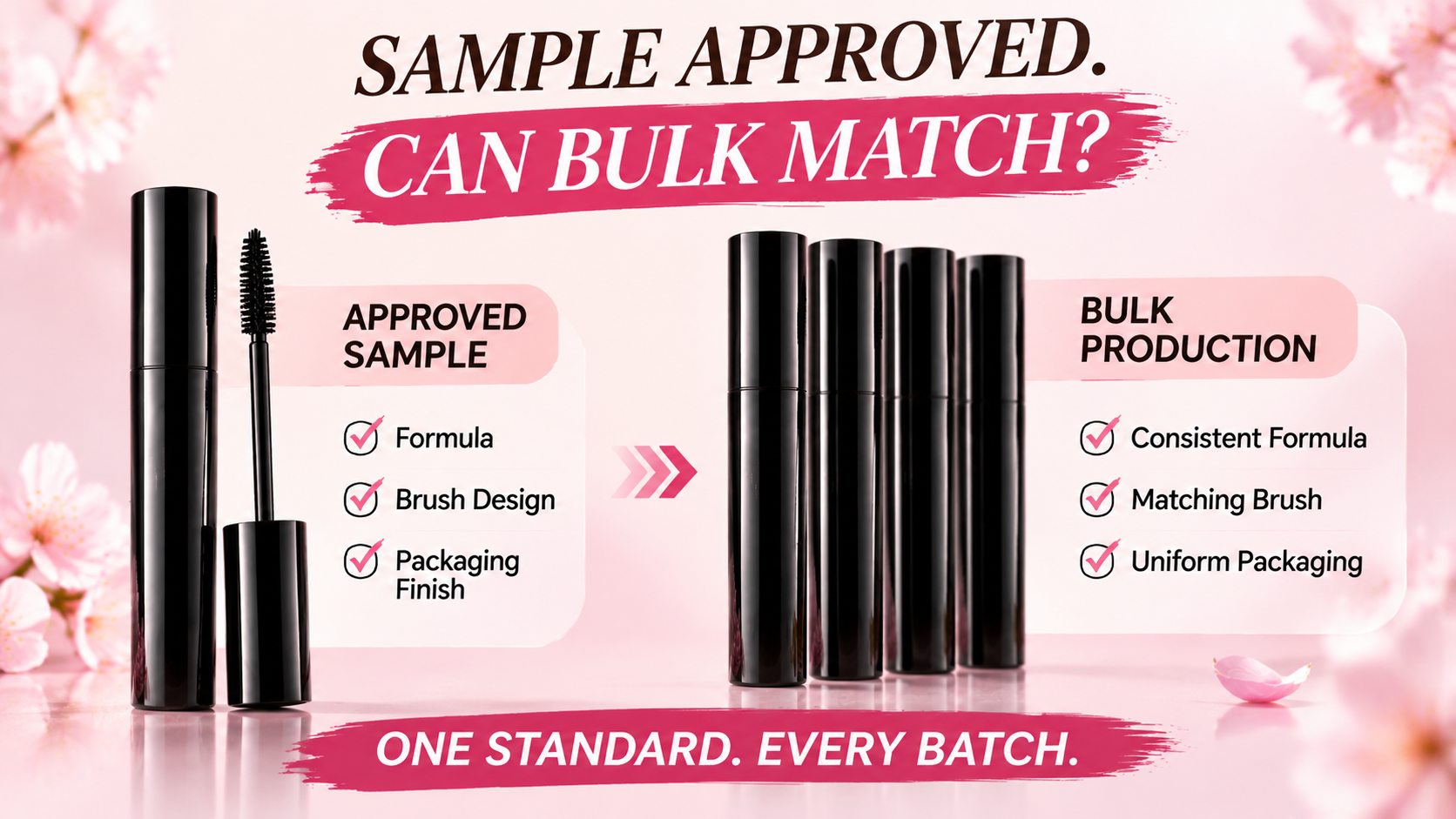
Before bulk production starts, brands need a clear reference for what the finished product should look like. The final approved sample should serve as the shared quality benchmark for production and inspection.
Confirm the Final Approved Product and Packaging
If the formula, brush, or packaging has been revised during product development, make sure the supplier is working from the latest approved version rather than an earlier sample or design.
Key details to confirm include:
Final mascara model and formula version
Brush shape, dimensions, and bristle design
Tube, cap, and other packaging components
Logo placement, printing method, and artwork
Approved colors and surface finishes
If any product or packaging details change after approval, both parties should review and confirm the revisions. This helps prevent outdated specifications from being used during production.
A reliable finished mascara supplier should be able to use the brand's approved sample and documented specifications as the reference for bulk production. Keeping product versions and confirmed changes clearly recorded helps both parties avoid misunderstandings.
Document Key Sample Specifications
Keeping a physical sample is important, but it is not enough on its own. Brands should also ask the supplier to document the key specifications associated with the approved sample.
These may include the product model, formula version, brush specifications, packaging materials, colors, printing requirements, and relevant dimensions.
For visual requirements, approved images, artwork files, and written confirmation records can also help reduce misunderstandings during production.
2. Define Mascara Formula and Brush Quality Requirements
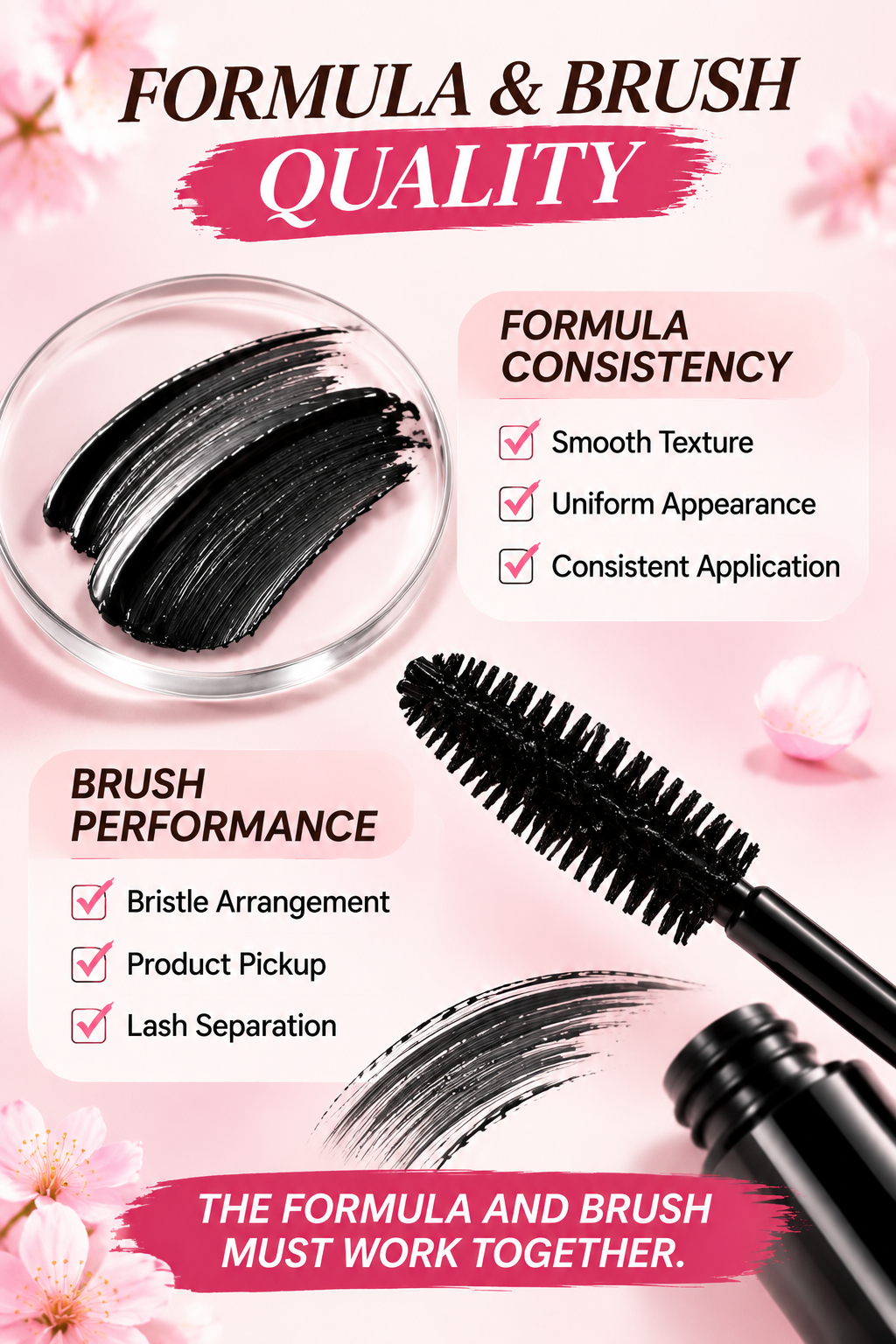
The formula and brush directly affect how a mascara performs. They should therefore be clearly covered in the bulk order quality requirements.
Brands do not necessarily need to create complicated factory inspection procedures. However, they should identify the product characteristics that must remain consistent with the approved sample.
Set Formula Consistency Requirements
Different mascara products serve different positioning needs. Some focus on volume, while others emphasize length, curl, or a more natural finish.
Brands should communicate the expected formula characteristics to their supplier based on the intended product positioning.
Consider specifying:
Formula color and overall appearance
Texture, consistency, and uniformity
Smooth application and product pickup
Whether the formula shows visible clumping, drying, or uneven texture
Whether the finished product matches the approved performance expectations
These requirements should be based on the approved sample and the agreed product specifications.
If formula adjustments or raw material changes become necessary during production, the supplier should communicate them in advance and obtain the brand's approval. An unapproved change should not automatically become part of the bulk order.
Confirm Brush and Applicator Quality Standards
Brush construction and assembly also influence the final application experience.
Brands can specify the brush shape, dimensions, bristle arrangement, wand structure, and connection between the brush and cap.
The wiper should also be considered. It needs to function properly without obvious resistance when the brush is removed, loose bristles, or abnormal product buildup.
Different brush designs may require different quality priorities. For example, a lengthening brush may need closer attention to bristle arrangement and lash separation, while a volumizing brush may require greater attention to product pickup and application control.
The key requirement is that bulk products should match the approved brush design and expected application performance, not simply look similar.
3. Set Packaging and Appearance Inspection Standards
For private label mascara projects, packaging protects the product and represents the brand visually. Its quality should be defined separately from formula and brush requirements.
Check Packaging Components and Functionality
Brands should confirm that the packaging components used in bulk production match the approved version and work properly together.
Important details include:
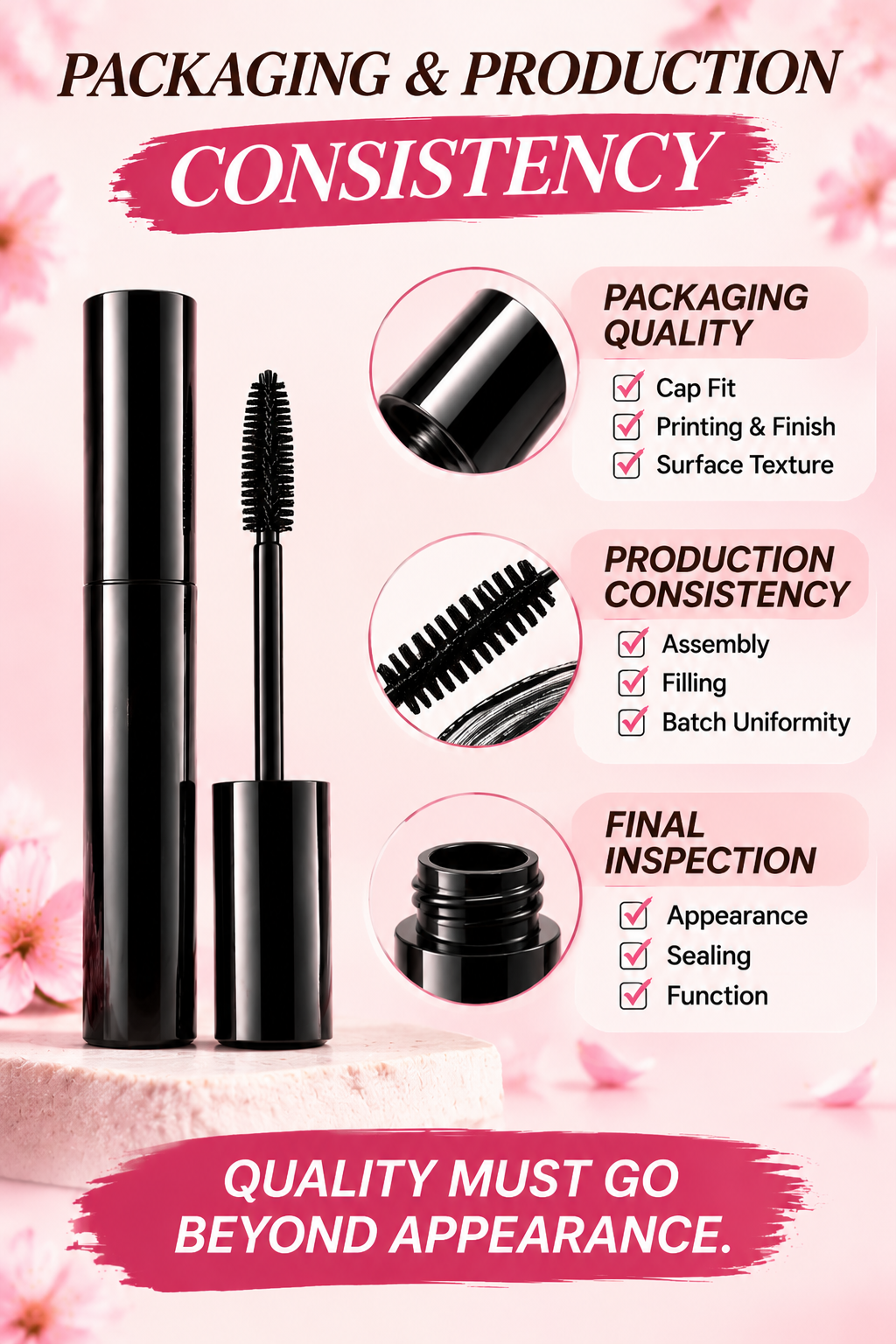
Tube and cap materials, colors, and structures
Fit between the cap and tube
Assembly of the brush, wand, and wiper
Product sealing and leakage performance
Outer boxes, labels, and other packaging components
Packaging should meet both appearance and functional requirements. Issues that could affect sealing, product pickup, or product protection should be clearly addressed in the agreed quality standards.
Define Visual Quality and Branding Requirements
Logo printing, packaging colors, and surface finishes all influence how the finished product represents the brand.
Brands should establish acceptable visual standards before production to avoid discovering noticeable differences after the bulk order is completed.
Consider confirming:
Logo position, size, and orientation
Accuracy of printed text and product information
Packaging colors against the approved design
Visible scratches, stains, or coating damage
Obvious deformation, damage, or printing defects on tubes and outer boxes
If color accuracy or printing quality is especially important, use approved artwork, color references, or physical samples as the basis for inspection.
4. Maintain Quality Consistency During Bulk Production
Even after product specifications have been confirmed, brands should pay attention to possible variations during bulk manufacturing.
Quality should not depend on a single inspection before shipment. It needs to be considered throughout the production process.
Identify Key Production Quality Checkpoints
Brands can discuss important production checkpoints with their supplier and confirm whether relevant inspection records can be provided.
For finished mascara, these checkpoints may include:
Raw materials and the approved formula version
Formula mixing and filling
Assembly of brushes, tubes, and other components
Packaging printing and product labeling
Finished product appearance and packaging integrity
The specific checkpoints will depend on the product structure and manufacturing process. Brands should agree on the relevant items with their supplier rather than assume every mascara follows exactly the same production procedure.
Brands can also ask whether the supplier maintains relevant production and inspection records. These records help clarify how key product requirements are monitored and provide a reference when reviewing quality issues.
Address Batch Variations and Quality Issues
If bulk production shows differences in formula appearance, brush assembly, packaging color, or other key specifications, the supplier should document the issue and communicate it to the brand.
Before production begins, both parties should clarify:
Which variations are acceptable under the agreed specifications
Which issues require further review or a production hold
Whether a revised sample must be submitted for approval
How nonconforming products will be isolated, reworked, or handled
Major changes involving the formula, packaging materials, or product appearance should not be applied to the bulk order without the brand's confirmation.
5. Agree on Final Inspection and Acceptance Criteria
Once production is complete, brands need a clear way to determine whether the bulk order meets the agreed requirements.
Well-defined acceptance criteria help reduce disagreements before shipment and delivery.
Define Inspection Methods and Defect Categories
Brands should confirm which product features will be inspected and how the supplier will determine whether the finished products meet the agreed standards.
Defects can be grouped into different categories according to their impact:
Critical defects: Issues that may involve product safety, regulatory compliance, or serious problems affecting normal product use.
Major defects: Problems that noticeably affect product function, appearance, or agreed brand requirements.
Minor defects: Small appearance or detail differences that do not significantly affect product function.
For bulk orders, brands and suppliers can also agree on a sampling inspection plan based on order size, product risk, and purchasing requirements.
Avoid applying a fixed sample quantity or defect rate without considering the actual inspection plan. The sampling method and acceptance criteria should be clearly documented in the purchase agreement or quality requirements.
Confirm Pre-Shipment Inspection and Acceptance Procedures
Before shipment, brands should confirm that the supplier has completed the agreed finished-product inspection and clarify which quality records or inspection results need to be provided.
If the inspection identifies products that do not meet the agreed requirements, both parties should already have a plan for handling them. Possible solutions may include reworking, reinspection, replacement, or another mutually agreed arrangement.
It is also important to define how quality issues will be reported, reviewed, and resolved. This helps avoid disagreements about acceptance standards when the shipment deadline is approaching.
Conclusion
Setting quality requirements for a spring mascara bulk order involves more than checking whether the formula and packaging look right. Brands need to turn the final approved sample into clear, written standards that can be followed throughout production and inspection.
From formula and brush specifications to packaging appearance, production consistency, and final acceptance, each requirement should be discussed and confirmed with the supplier in advance.
As a finished mascara supplier, GUER YOUNG supports beauty brands with ready-made mascara products, private label packaging customization, and OEM/ODM services. Brands can select suitable product options based on their positioning and packaging needs. From product selection and packaging customization to bulk order quality requirements, we work with brands to align product specifications with their project needs and support smoother production and delivery.
Whether developing a new spring collection or expanding an existing eye makeup range, brands can explore our finished mascara solutions to find suitable products for their next launch.


andy.li@gueryoung.com

We have 10 years of experience, focusing on the development and sales of high quality eyelash growth serum, mascara, eyebrow gel, eyebrow color and other products. We also offer custom services, from tube
design to cosmetic fillings and packaging


Room 1, C3 Factory Building, No.8803 Zhuhai Avenue, Lianwan Industrial Zone, Pingsha Town, Gaolan Port Economic Zone, Zhuhai, Guangdong,China
QUICK LINKS
D Zone,5/F, NO.8 CuiZhu 5th Street,
Qianshan Xiangzhou District,Zhuhai,
Guangdong,China,519070

lynn.zhou@gueryoung.com
winnie.zhong@gueryoung.com
niki.xu@gueryoung.com