
How to Plan a Spring Mascara Collection for Year-Round Sales
Read in English | Lire en Français | Lesen auf Deutsch | Leer en Español | Leggi in Italiano
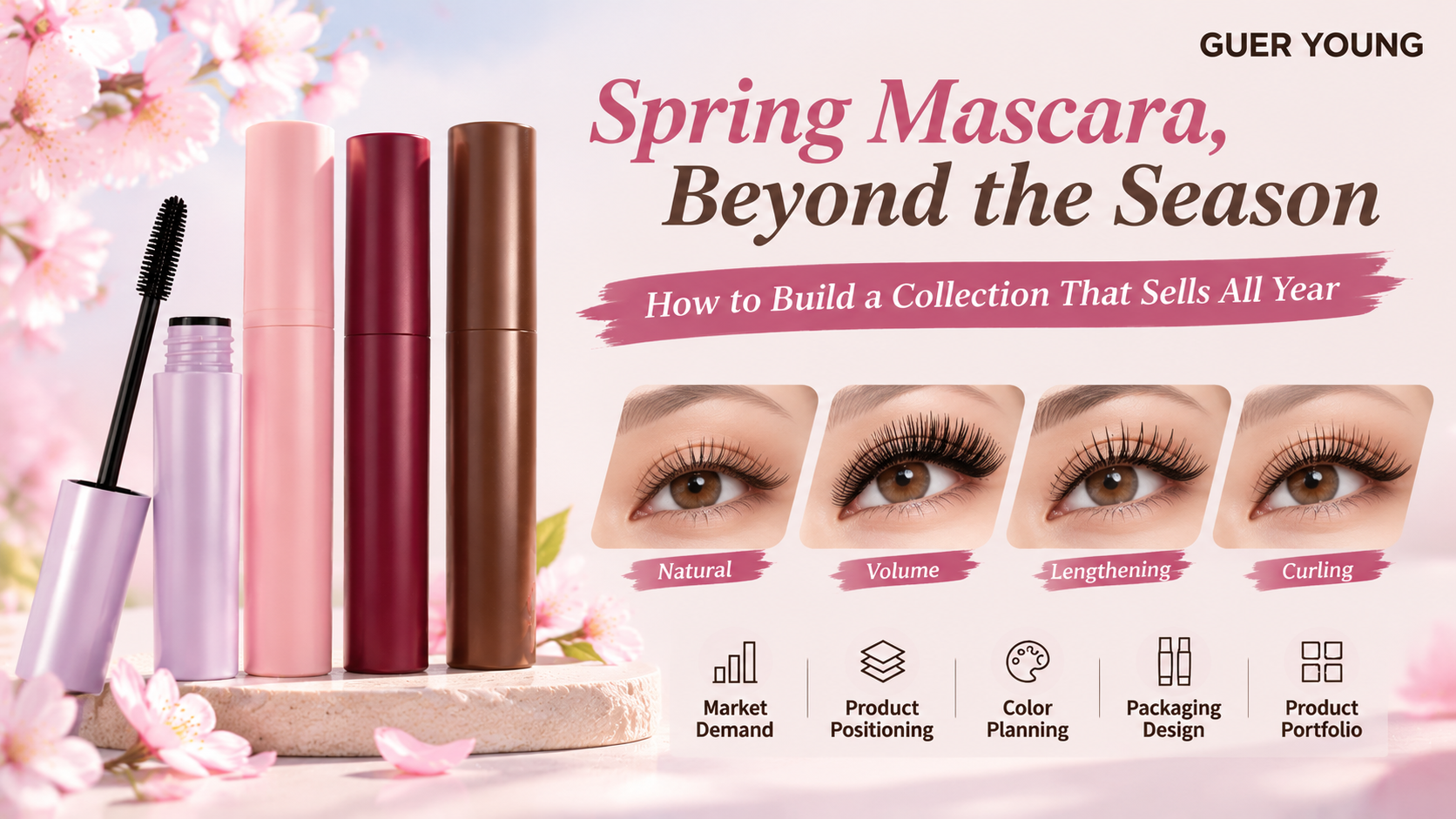
Spring is an opportunity for beauty brands to launch new products, refresh their ranges, and test new product directions. However, developing spring mascara involves more than changing a color or packaging design. Brands need to consider whether the product meets consumer needs, justifies the development investment, and can continue selling after the season ends.
Products that rely heavily on seasonal design or short-term marketing may have a limited sales window. Combining seasonal appeal with everyday usability can help brands create products with potential beyond spring.
For brands planning a spring mascara launch, early planning around product positioning, colors, packaging, and product assortment can reduce unnecessary development and help new products fit into the existing range.
1. Evaluate Market Demand Before Developing Spring Mascara
Don't Choose a Product Direction Based on Seasonal Trends Alone
Spring is often associated with fresh makeup looks, softer colors, and lightweight finishes. However, these trends may not suit every brand. Product decisions should reflect the target market, existing range, and consumer demand.
Before development, brands should review:
Existing product performance: Which mascaras sell consistently, and which have growth potential?
Consumer feedback: Do customers prioritize volume, length, curl, natural-looking lashes, or wear performance?
Product range gaps: Is there a missing shade, function, or everyday-use option?
Competitor products: What are similar brands launching, and which product positions are already crowded?
These insights help brands determine whether a spring launch represents a genuine product opportunity rather than simply following seasonal trends.
Consider Sales Potential Beyond Spring
Not every spring mascara needs to be discontinued when the season ends. For example, a brown mascara positioned for natural-looking lashes can be promoted through spring makeup themes while remaining suitable for everyday wear and other seasons.
Before development, consider:
Is the product primarily relevant to spring?
Will consumers still have a reason to buy it after seasonal promotions end?
Can its sales cycle be extended by changing the marketing theme rather than the product itself?
If a mascara has year-round usability, spring can be the starting point for its promotion rather than the end of its sales opportunity.
2. Define Product Positioning Instead of Simply Adding More SKUs
Identify the Role of the New Mascara in Your Existing Range
Brands need to determine what the new product should offer and how it differs from existing products.
Common mascara positioning includes:
Natural-looking: Subtle lash definition for everyday wear.
Volumizing: Fuller-looking lashes.
Lengthening: More visible lash length and definition.
Curling: Focus on lash shape and curl.
Specialty: Waterproof, water-resistant, or other products for specific needs.
Brands do not need to develop every type. The priority is choosing a direction that fits the brand and its consumers. If the current range already includes a well-established volumizing mascara, a new product could offer a different shade, finish, or usage occasion instead of duplicating the same positioning.
Build Differentiation Through Clear Positioning
Before development, define the following:
Planning Factor | Key Question |
Target consumer | Who is this product designed for? |
Core need | What does the consumer want to achieve? |
Main selling point | Which feature or experience should stand out? |
Usage occasion | Everyday wear, office makeup, natural looks, or special occasions? |
Product difference | Why would consumers choose this new product? |
Clear positioning helps keep product selection, color planning, packaging, and marketing consistent.
As a finished mascara supplier, GUER YOUNG can be a product-selection resource for brands evaluating different product directions based on their positioning and market needs.
3. Plan Spring Mascara Colors for Seasonal Appeal and Everyday Wear
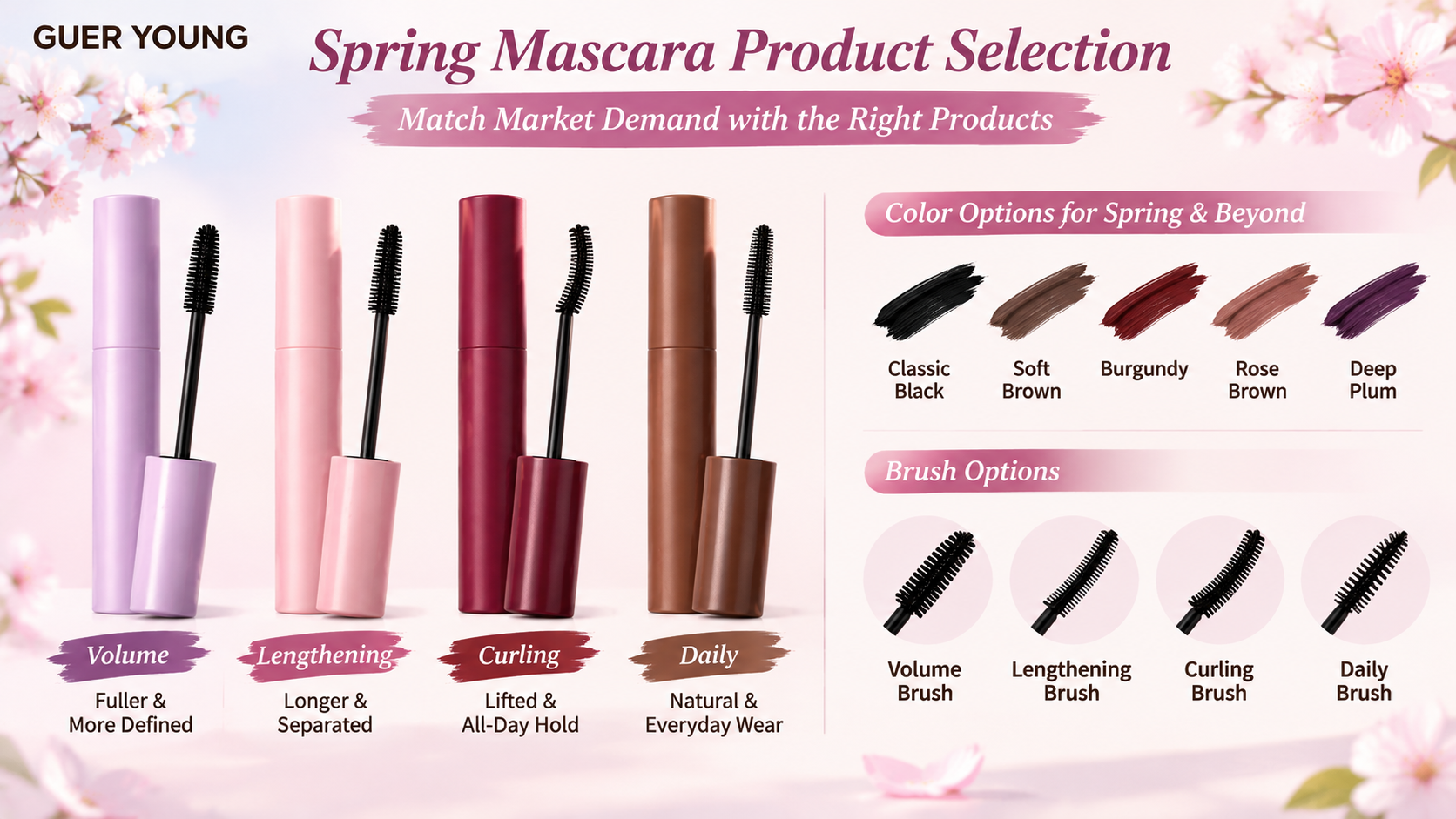
Color is a direct way to introduce a seasonal theme, but brands do not need to launch too many specialty shades.
Potential color directions include:
Black: A classic shade suitable for everyday makeup and a wide range of looks.
Brown: A softer option for natural and lower-contrast makeup.
Burgundy: Adds color variation for more expressive eye makeup.
Navy: An alternative to black that can still complement different makeup styles.
Limited-edition colors: A small selection of specialty shades based on brand positioning and demand.
Avoid Inventory Pressure from Too Many Shades
Every additional shade may create more SKUs, packaging, and inventory to manage. For brands testing a spring collection for the first time, starting with one or two shades with a clear demand rationale may be more practical.
If the brand already sells black or brown mascara, a new shade could complement the existing range. Specialty colors can be tested through seasonal promotions before deciding whether to retain them as permanent products.
The goal is not to offer as many colors as possible, but to ensure that each shade has a clear market position.
4. Design Spring Packaging with Year-Round Sales in Mind
Add Seasonal Appeal Without Overly Seasonal Packaging
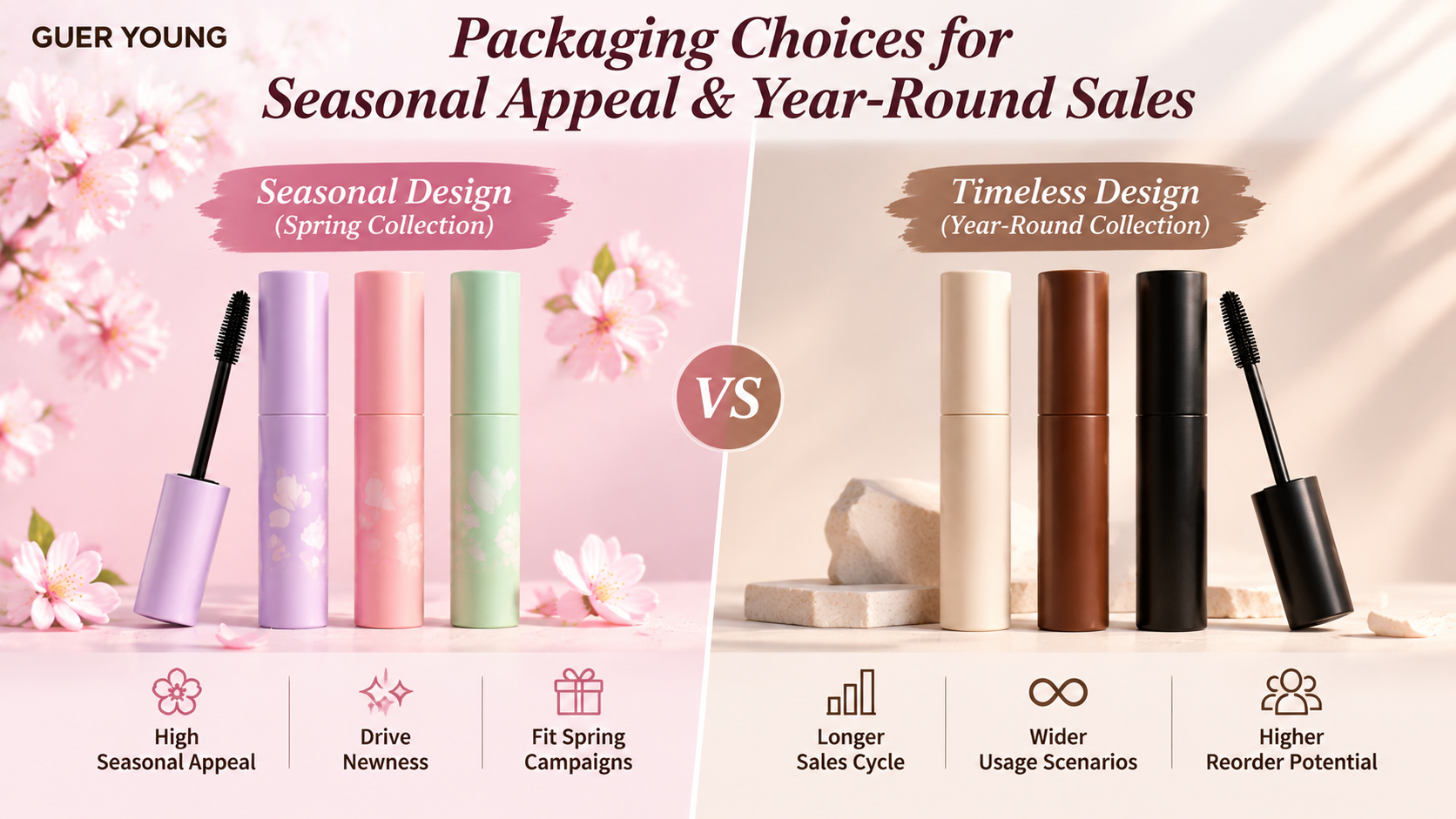
Spring packaging can introduce seasonal appeal through colors, finishes, and decorative details. Soft pink, lavender, or green tones, matte finishes, metallic accents, and subtle floral or nature-inspired details are possible directions.
However, packaging should remain consistent with the brand's visual identity. A seasonal design should not make the product difficult to recognize as part of the brand or limit its sales potential after spring.
Choose Packaging That Can Continue Beyond Spring
If the brand wants its spring product to remain on sale in other seasons, consider:
Using a tube design that can remain in the product range.
Retaining the brand logo and core visual elements.
Keeping seasonal decoration limited to selected details.
Choosing designs that can be adapted or extended for future collections.
This approach adds seasonal appeal while reducing the risk of a product becoming difficult to sell after the spring campaign ends.
5. Build a Practical Product Portfolio and Adjust It Based on Performance
You Don't Need to Launch a Complete Collection at Once
A spring launch does not necessarily require multiple colors, functions, and packaging options. For brands with limited budgets or those testing a new direction, starting with one core product and expanding based on market feedback may be more practical.
Product Role | Planning Direction |
Hero product | One mascara with clear positioning |
Core product | Familiar shades such as black or brown |
Seasonal product | One spring-inspired shade or packaging direction |
Future expansion | Additional colors, functions, or sizes based on demand |
The actual product mix should depend on the existing range, budget, target market, and development timeline.
Use Launch Performance to Decide Whether to Expand
After launch, brands should look beyond initial sales and social media exposure. Key indicators include:
Sales performance across different shades or product versions.
Repeated consumer feedback.
Returns, complaints, and product-use concerns.
Whether consumers are willing to purchase again.
Whether demand continues after spring promotions end.
If a product performs consistently, the brand may consider adding it to the permanent range. If performance is weaker than expected, review the positioning, shade, marketing, or product assortment before adding more SKUs.

Conclusion
Spring mascara development is not simply about following seasonal trends. It is about balancing seasonal promotion with long-term consumer demand.
From market demand and product positioning to color, packaging, and product assortment, brands should define the value of a new product before development and understand how it fits into the existing range.
A well-planned spring collection does not necessarily require numerous SKUs or complicated designs. What matters is clear positioning, meeting consumer needs, and maintaining the potential to sell beyond the spring campaign.
For brands planning a spring mascara launch, GUER YOUNG can be a resource for exploring finished mascara product options and planning new products. By considering brand positioning and target markets, brands can evaluate product directions more purposefully and prepare for future launches.


andy.li@gueryoung.com

We have 10 years of experience, focusing on the development and sales of high quality eyelash growth serum, mascara, eyebrow gel, eyebrow color and other products. We also offer custom services, from tube
design to cosmetic fillings and packaging


Room 1, C3 Factory Building, No.8803 Zhuhai Avenue, Lianwan Industrial Zone, Pingsha Town, Gaolan Port Economic Zone, Zhuhai, Guangdong,China
QUICK LINKS
D Zone,5/F, NO.8 CuiZhu 5th Street,
Qianshan Xiangzhou District,Zhuhai,
Guangdong,China,519070

lynn.zhou@gueryoung.com
winnie.zhong@gueryoung.com
niki.xu@gueryoung.com